
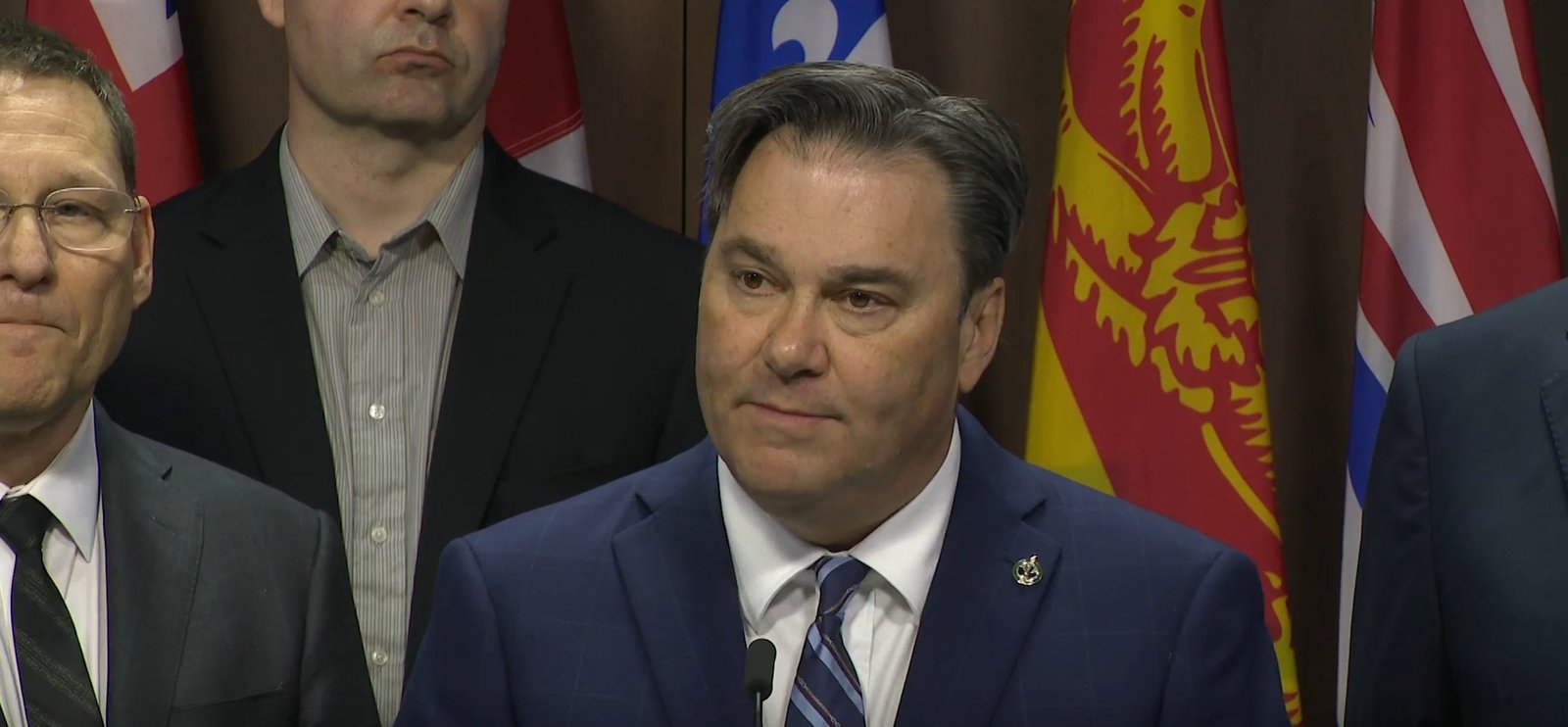
The NDP introduced a private member’s bill on Monday that aimed to include management in anti-scab legislation. Bill C-248 is meant to close a loophole in Canada’s anti-scab laws that workers say has already been exploited by at least one employer.
The Canada Labour Code currently prohibits the employer from using services from any employee whose regular workplace is different from the one where a strike or lockout is taking place. The current language of the law means employers can transfer management from other workplaces to perform the duties of workers who are locked out or on strike.
“That is not what the anti-scab legislation was intended to allow,” said NDP leader Avi Lewis. “It flies directly in the face of the law and the spirit of it, and it’s exactly why the loophole we’re addressing today must be closed.”
The loophole in the anti-scab legislation has already been used by Rogers Communications, according to the United Steelworkers. During a labour dispute in Abbotsford, workers represented by USW 1944 went on strike to fight for wages that matched what other workers in the profession made in the area. Rogers brought in out-of-town managers to cross the picket line.
“The strike lasted far too long,” said Michael Philips, president of USW local 1944. “It was prolonged by this loophole and by the company being able to use scabs to replace workers.”
Philips highlighted that the use of scab labour has also soured relationships at work for the foreseeable future. Striking workers watched the company bring in replacement labour while they fought for fair wages, then had to return to the workplace and work under people who undermined their strike.
“I’m not sure if employers understand the degree to which their own workplace culture is devastated when they use scabs in this way,” Philips said. “I think they’re probably getting the idea now after a few months of having folks back on all the tools, and you know, the morale situation that exists in Abbotsford.”
Marty Warren, USW national director for Canada said the low morale in Abbotsford further highlights why strong anti-scab legislation must exist. When employers go down the path of using scabs, it can harm labour relationships for generations. These toxic dynamics can be avoided when a deal is reached at the table.
Fighting for free and fair collective bargaining is key to ensuring healthy labour relations persist.
“A law designed to protect the right to strike that allows employers to bypass it is not strong enough, and must be fixed,” Warren said. “If employers can keep operations running by shifting work outside the bargaining unit, workers’ leverage is weakened and disputes go on and on and on. That’s bad for workers, families, and their communities. Any scab legislation must be clear, enforceable, and strong enough to protect the integrity of collective bargaining.”
NDP labour critic, Don Davies, framed this bill as a continuation of the NDP’s fight to bolster workers’ rights. He highlighted that this bill comes after Leah Gazan introduced a bill to remove section 107 from the labour code and after Heather McPherson introduced a bill that would prohibit employer-friendly unions.
