
Benchmark oil prices rose to $90 per barrel Monday morning after the first flare-up in fighting between the U.S. and Iran in over a month.
U.S. stocks dipped, and Brent crude prices rose after the U.S. military struck two Iranian missile launchers on Larak Island on Sunday, saying the Islamic regime was planning to launch mines into the Strait of Hormuz.
President Trump on Monday posted an artificial intelligence-generated video depicting attacks on Iran’s Kharg Island, its main oil depot.
“Kharg Island being blown to smithereens!!!” the president posted.
Iran responded Monday by claiming it targeted a U.S. base in the United Arab Emirates. However, the UAE said the claim was false and that, separately, it had intercepted an Iranian drone over its waters.
Iran also shot rockets at air bases in Jordan as it tries to expand the fight across the Middle East and make the situation uncomfortable for U.S. allies in the Gulf region.
U.S. investors are sensitive to developments in the war. The Dow Jones Industrial Average and other major indexes sank into negative territory at the start of the trading week Monday after the weekend violence, driven lower by higher oil prices.
The flare-up is notable because both sides had, of late, been relying on economic pressure rather than missiles and bombs in the six-month-old war.
Mr. Trump, working with Israel, launched airstrikes on Iran on Feb. 28 to prevent Tehran from gaining a nuclear weapon.
Iran retaliated by closing the Strait of Hormuz, a critical oil waterway, resulting in months of diplomacy, fighting and economic pressure.
Mr. Trump says the regime will be forced to accept his terms as it wilts from economic problems at home.
Treasury Secretary Scott Bessent, hosting G20 finance ministers in North Carolina, said Monday that Iran is “lashing out kinetically, because they are losing economically.”
Mr. Bessent said the U.S. will continue to exert economic pressure on Iran and countries that do business with Tehran’s regime.
“They’re taking it very seriously,” Mr. Bessent said of Iranian leaders. “They’re in shock at the state of their economy.”
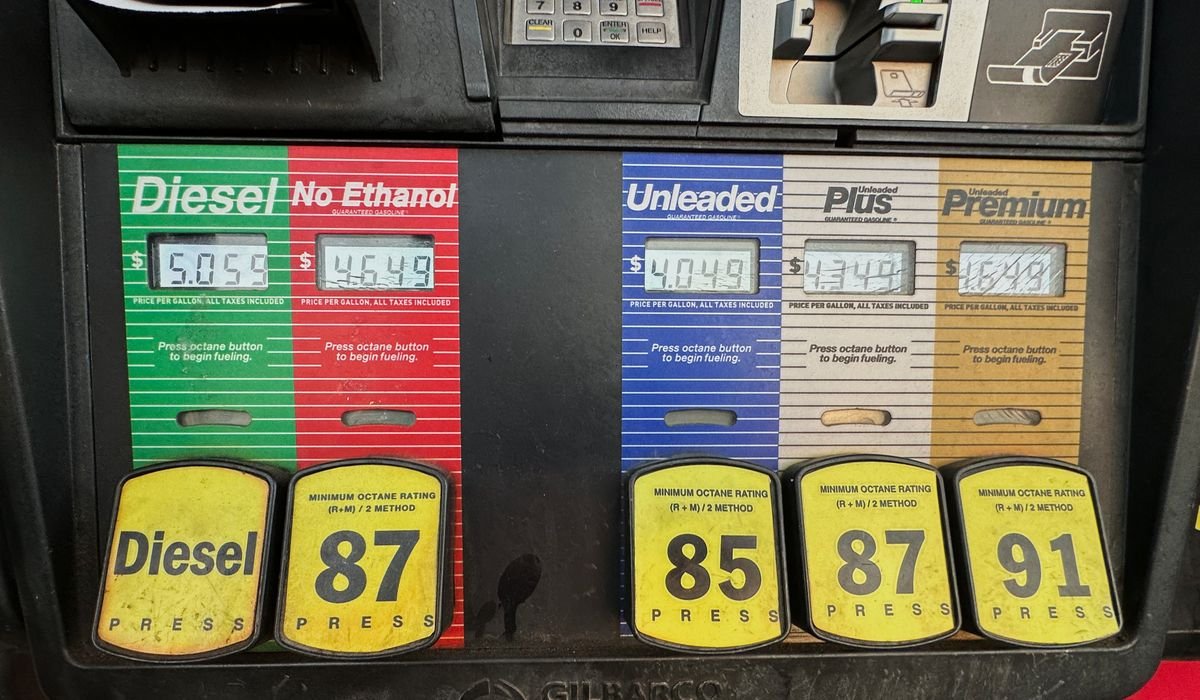
The U.S. is feeling the effects of the war in the form of higher gas prices.
The average U.S. price of gas has been pinned above $4 for most of the summer, compared to about $3 when the war began, according to the AAA motor club.
