
You may have seen it: a group of high-flying performers, dressed in a colorful array of traditional garments, climbing a 100-foot-tall pole in a group of four, before diving into the air, upside down, to spin as a human cyclone — held only by a rope tied to their feet — while a fifth member sits atop the pole, performing a ceremonial dance and song with a flute and small drum.
The UNESCO-recognized tradition can be traced back to Tajín, an archaeological site that once served as the capital of the Totonac Mesoamericans from A.D. 800. Today, it is one of Mexico’s most celebrated and active Indigenous rituals, known as the “Danza de los Voladores,” or “Dance of the Flyers.”
Interestingly, the Totonac did not invent the dance — that was likely the Nahua of Central Mexico — but they have preserved it, inextricably linking the practice to their history and culture in the process.
Ancient traditions in the modern world
These airborne avatars of the Totonac people are native to the northern region of Veracruz, where the modern Pueblo Mágico of Papantla can be found, roughly four hours northeast of Mexico City. They are famed throughout the country, with representatives performing their millennia-old routine in tourist centers such as Mexico City’s Bosque de Chapultepec and Xcaret Park in Playa del Carmen.
The voladores maintain their practices and Indigenous language through generations of flyers and community-supported programs, including the Escuela de Niños Voladores in Papantla. They are one of Veracruz’s greatest cultural exports and have inspired an inside joke among Mexicans, who sometimes shout “Papantla, tus hijos vuelan!” when something funny or unexpected happens in daily life.
Female voladoras both challenge and preserve an ancient rite
And yet, as impressive and fun as the voladores are on a sweltering summer day, the region has also gifted Mexico, and the world, even more than its high-flying customs: Papantla is the global cradle and origin of vanilla.
I drove four hours north of Xalapa along the Gulf Coast to Papantla — admiring the decaying majesty of its tropical vastness and curving, mountainous shoreline — to visit the historical ruins and learn about its contemporary tastes.
‘The city that perfumed the world’
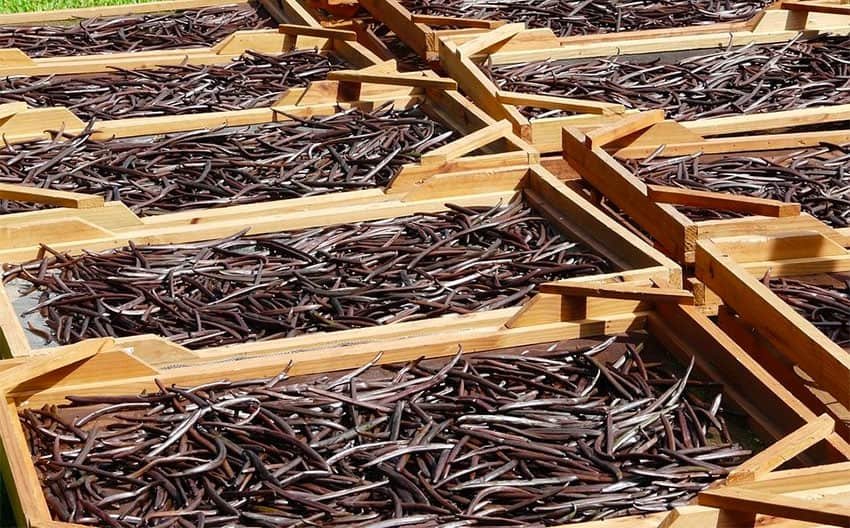
Papantla, a town of 55,452 inhabitants according to national census data, was once the global leader in vanilla exports. From 1870 to 1910, the modest pueblo in Veracruz state — located on steep, labyrinthine roads in the middle of a tropical forest — became the epicenter for vanilla, one of the most expensive spices in the global market. Much of it was exported to Europe and the United States, and the region was dubbed “the city that perfumed the world” for the sweet, refreshing scent that vanilla emits.
Sadly, naturally grown vanilla from Papantla — which a researcher at UNAM designated as one of Mexico’s greatest contributions to global cuisine, along with cacao, amaranth, chile peppers and tomatoes — is no longer what it used to be. Nowadays, artificial vanilla dominates, and the market value of small-batch vanilla bean production from Papantla is nowhere near what it once was — in many ways a metaphor for the greater significance of Veracruz as a state.
The rise and fall of the vanilla trade
Historical documents reveal that vanilla cultivation dates back to the Totonac peoples, who gathered the fruit of orchid plants in surrounding areas before any other known society. Writing in her journal article “The History and Ecology of Vanilla,” Dr. Mariana Hernández Apolinar, a biologist and faculty member in UNAM’s science department, notes that for more than 200 years, “Mexico was the world’s only supplier of vanilla, bringing the country considerable profit.”
That declined in the mid-19th century when Europeans intervened. According to Hernández Apolinar, “it was discovered that vanilla flowers could be fertilized manually. This made it possible to produce the fruit on plantations outside its natural area and led to intensive vanilla cultivation in different tropical regions, making its production intensely commercial.”
Fast-forward to today, and the vanilla economy has been at risk for more than a decade. As NPR reported in 2019, local farmers have found themselves the target of robberies and violence at the hands of organized criminal gangs. In addition, a group of Mexican professors and biologists have outlined how issues of deforestation, soil erosion, shifting weather patterns and the marginalization of rural communities have negatively impacted modern vanilla productivity in the region.
At the same time, efforts to restore vanilla’s potential within the Mexican agricultural sector have been underway, including Papantla’s growing tourism sector.
Exploring ‘The Vanilla Route’
Originally known as “xanat” or “xanath” in the local dialect, the region upholds a proud legacy of vanilla. Vanilla tours are widely available, allowing visitors to tour nearby plantations that grow the spice. Family-owned shops abound, selling everything under the sun with an added touch of vanilla: ground coffee mixed with vanilla extract, vanilla-flavored cigarillos, vanilla sodas, horchata with vanilla, bottled vanilla concentrate, vanilla-scented candles, vanilla perfumes, vanilla liqueurs and more. Each shop explains the benefits and uses of its products. For example, vanilla’s aroma is considered an effective aromatherapy treatment for stress, while eating it is believed to offer digestive and anti-aging properties.
For a deeper immersion, there are excursions like “The Vanilla Route,” which spans two days of history and includes guided visits to the Xanath ecological park, a 54-acre plot of land that is preserved for sustainable vanilla growing, as well as a visit to a family-owned vanilla farm, where guests can witness firsthand how vanilla is turned into artisanal products.
Savoring local gastronomy
I made it a point to find as much local gastronomy as I could during my visit. I stayed at a small hotel with classical architecture dating back to the 18th century, less than a block away from the town’s main plaza, which stays abuzz at all hours and where street vendors sell goods and regional treats, such as homemade vanilla ice cream and atole morado, an iced, purple corn beverage to stave off the jungle’s humidity.
For breakfast, a trek up the nearby hillsides led to Saberes Ancestrales de la Vainilla, a family-owned business with two locations, one of which offers a vanilla museum and sweeping vista of the town. “Saberes” is the Spanish word for “knowledge,” and embodies the spirit of the restaurant and museum, which was founded to preserve the culinary essence of vanilla in its multitudinous forms.
Here, I began my self-guided tour of Papantla with a café de olla, a traditional coffee brewed in a clay pot and doused with natural vanilla, giving it a rich, natural sweetness to balance the drink’s dark bitterness.
Indigenous flavors and regional dishes
To eat, we had bocoles, a Huastecan dish featuring girthy tortillas made from bean or chicharrón masa stuffed with a protein of choice, as well as espolvoreadas de pipián, a lard-rubbed heap of thick tortillas, served in a pancake-style stack, and topped with ground pumpkin seed powder. The dish is simple, but in its simplicity, the orchestra of corn, pumpkin and oily grease is a representation of Mexico’s indigenous flavors without any unnecessary pomp.
The meal was so good that my family and I returned to Saberes Ancestrales de la Vainilla’s original location near our hotel in the main zócalo, where I ordered a chicken breast simmered in a smoky vanilla-pepper sauce. It was tangy and piquant, reminiscent of an American Southern barbecue dish, but in a tropical context.
For dinner, we visited Nakú, a restaurant named in honor of the Totonac word for “heart.” Its outdoor eatery offers tours and artisanal products, while highlighting an indigenous diet specific to northern Veracruz.
The story of Zarzaparilla, an Indigenous root beer from Veracruz
Art, history and unforgettable flavors
There are hard-to-find dishes like zacahuil, served on Sundays only, and pulaklh, which are regional varieties of tamales with ingredients such as sesame seeds and acoyo, popularly known as hoja santa. Other unique offerings include tachula xa talhtsi, a bowl of buttery beans coated with crumbled pumpkin seeds; liwa xalak kakwin, rabbit in a spicy al chiltepín salsa; and pollo en salsa de vainilla y pulque, chicken bathed in a chilpaya, pulque and vanilla sauce, served with steamed vegetables and a stack of espolvoreadas de pipián.
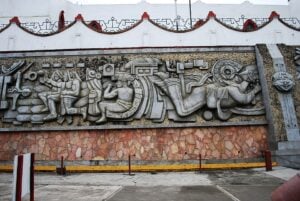
Any visit to Papantla and nearby Tajín should include more than vanilla. One highlight that may surprise tourists is the murals and work of Teodoro Cano García, a Papanteco sculptor, painter and muralist who was mentored by Diego Rivera and who gifted the town a massive mural depicting the historical evolution of the Totonac people in the town square, to go along with a monument of the voladores de Papantla.
An overlooked attraction
In addition, the small but impressive Teodoro Cano Museum offers a rare contemporary art space in the pueblo, housing his paintings alongside Totonac artifacts, and is open to the public for free. Regardless of interests, Papantla is a historically significant, if not overlooked, part of Veracruz’s — and Mexico’s — rich past, and remains a culturally informative, intensely flavorful visit that will not break your bank.
Alan Chazaro is the author of “These Spaceships Weren’t Built For Us” (Tia Chucha Press, 2026), “Notes from the Eastern Span of the Bay Bridge” (Ghost City Press, 2021), “Piñata Theory” (Black Lawrence Press, 2020), and “This Is Not a Frank Ocean Cover Album” (Black Lawrence Press, 2019). He is a graduate of June Jordan’s Poetry for the People program at UC Berkeley and was selected as a Lawrence Ferlinghetti Poetry Fellow at the University of San Francisco. His work can be found in NPR, The Guardian, SLAM, GQ, L.A. Times, and more. He is currently based in Veracruz.
