
An Ontario man who’d recently travelled to Ethiopia has tested negative for Ebola while no further cases of hantavirus linked to a virus-hit cruise ship have been found in Canada, the country’s chief doctor announced Friday
The Ontario traveller was tested for Ebola “out of an abundance of caution” after developing symptoms “consistent with a range of illnesses,” said Dr. Joss Reimer, Canada’s chief public health officer.
Initial testing conducted in Ontario as well as confirmatory testing at the National Microbiology Laboratory in Winnipeg were negative, Reimer said.
“This is a good example of how quickly measures are activated, even when the likelihood of Ebola here in Canada is low,” she said.
Reimer added that there have been no more cases of hantavirus identified in Canada beyond one case confirmed over the weekend by B.C.’s Provincial Health Officer, Dr. Bonnie Henry. The individual, part of a couple from the Yukon in their 70s, is one of four people isolating on Vancouver Island after arriving in Canada from the hantavirus-infected MV Hondius cruise ship.
Earlier this week, an Air France flight bound for Detroit was diverted to Montreal after a Congolese passenger boarded when departing Paris, violating entry restrictions put into place in the U.S. to reduce the risk of the Ebola virus.
The traveller was assessed by a Public Health Agency of Canada quarantine officer, found not to have any symptoms and returned to Paris.
The World Health Organization has declared the outbreak of Ebola in the eastern Democratic Republic of Congo (DRC) and Uganda a public health emergency of international concern “due to the evidence of cross-border spread, uncertainty around the true size of the outbreak” and the potential for wider regional and global impact, Reimer said.
“It’s important to be clear that while this is a serious and evolving situation, cases remain localized and the global risk is low,” Reimer said.
The risk to people in Canada is also considered low, she said. “There has never been a case of Ebola disease imported into Canada, despite Ebola outbreaks in the affected region.”
At least 177 people are suspected to have died from the virus, almost all in the DRC, where the bulk of at least 750 suspected cases are located.
On Friday, WHO director-general Tedros Adhanom Ghebreyesus said the outbreak is spreading rapidly within the region. However , the risk remains low at global levels, he said.
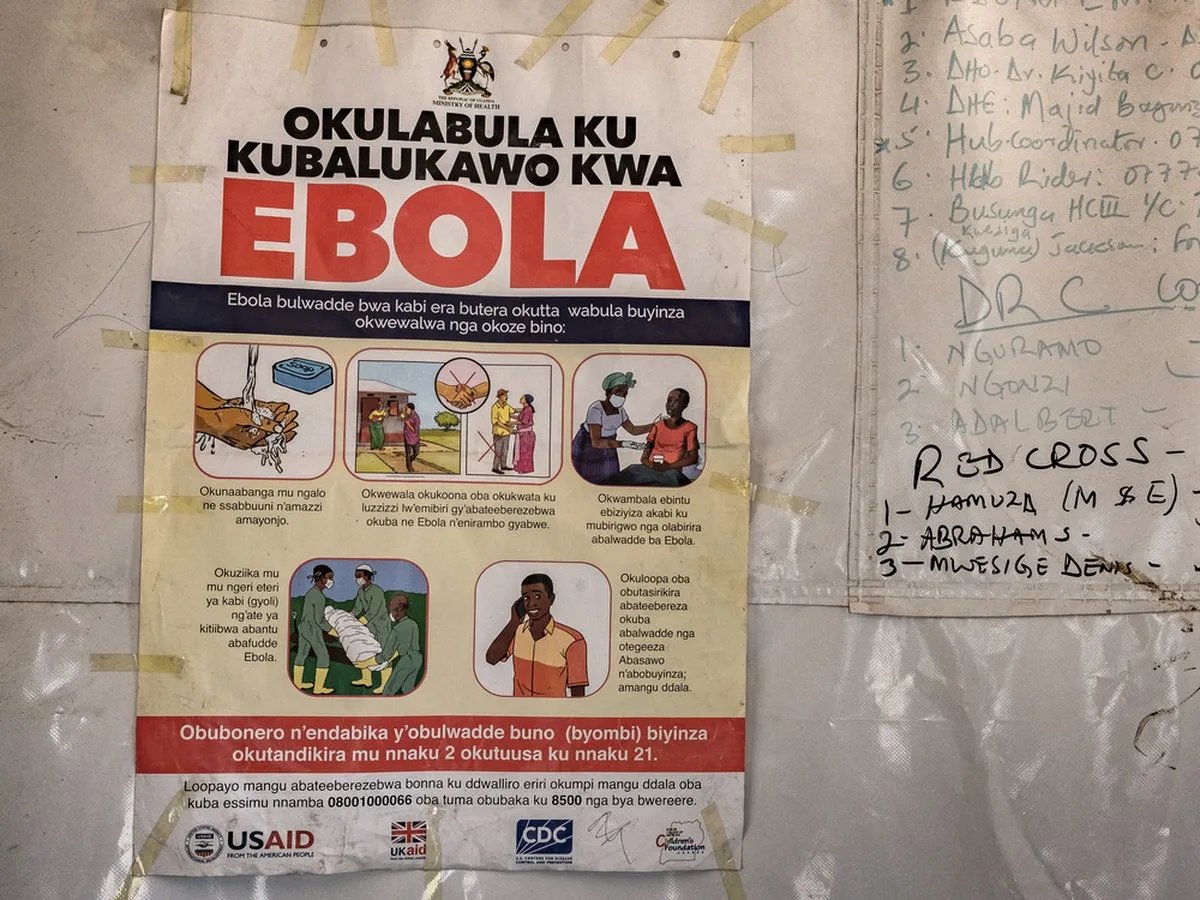
Ebola is transmitted through direct contact with the bodily fluids of an infected person who is showing symptoms, or through contact with infected animals or contaminated materials, Reimer said. “It is not spread through casual contact and it does not spread through the air like respiratory viruses.”
Unlike the U.S., Canada has not imposed travel bans on foreign travellers who have been in the affected regions in the past 21 days.
Reimer said any decision around border measures must be made by cabinet ministers. “However, I will be providing advice to cabinet on this very fluid, rapidly evolving situation,” in collaboration with WHO and Africa Centers for Disease Control and Prevention, she said.
“Today, it is not possible to predict what will evolve and change from one day to the next.”
Reimer said enhanced screening questions were implemented on May 20 at airport kiosks across Canada for travellers who have been in the DRC or Uganda within the past 21 days.
Travellers are now asked whether they’ve been in the countries and if they’re experiencing symptoms, or whether they may have been in contact with someone with Ebola, Reimer said.
Additional quarantine and screening officers have also been deployed at key airports, she added.
When asked why Canada had to accept the diverted flight from Paris, Reimer said those discussions don’t fall within her agency’s purview.
Anyone returning from affected regions should watch for symptoms for 21 days, she said. If symptoms develop, “it is critical that they isolate immediately away from others and contact local public health authorities before seeking in-person care,” Reimer said.
The Ebola outbreak is being driven by the Bundibugyo strain of the severe, often fatal disease. Early “dry” symptoms include fever, aches and pains and fatigue, and later “wet” symptoms such as diarrhea, vomiting and unexplained bleeding, according to the U.S. Centres for Disease Control.
National Post
Our website is the place for the latest breaking news, exclusive scoops, longreads and provocative commentary. Please bookmark nationalpost.com and sign up for our daily newsletter, Posted, here.
