
This is the second in CBC Sudbury’s three-part series on what’s being done to meet electricity demands in northern Ontario.
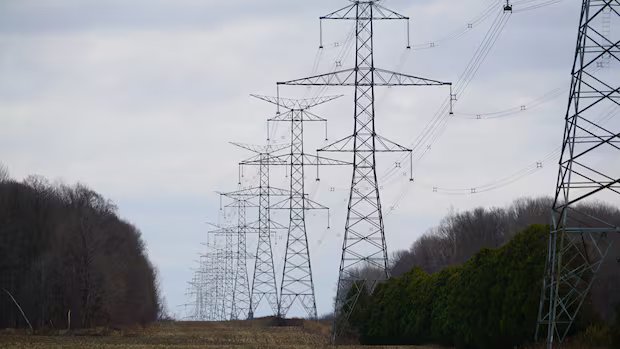
Ontario’s plans to fast-track a major new transmission line between Barrie and Sudbury is raising eyebrows about the possible impact on the environment.
Advocates including Brennain Lloyd are questioning how the project — a 500-kilovolt line by Hydro One — could affect wetlands, lakes, wildlife habitat and species at risk.
“This will be an expensive project, an expensive proposition,” said Lloyd, project co-ordinator at Northwatch, a regional environmental advocacy organization focused on resource and energy issues in northeastern Ontario.
“There should be a very clear purpose or need established before it moves forward.”
Lloyd said Northwatch has not yet studied the full corridor in detail, but the broad study area crosses parts of northeastern and central Ontario where there’s largely undeveloped land.
“There will be areas of ecological value that are transected by the line.”
The business case for the new line
Hydro One expects to begin construction of the line in 2029 and for it to be fully operational by 2032.
The province announced the fast-tracking of the line — meaning it’s a priority project — in February. It said it will help meet rising electricity demand, support northern industries and strengthen the power grid to help meet rising electricity demand, support northern industries and strengthen the power grid.
The line would run about 290 kilometres between the Hanmer transformer station in Greater Sudbury and the Essa transformer station near Barrie. It is one of two major power lines the province is advancing in northern Ontario, alongside a 230-kilovolt line between Dryden and Red Lake.
In an interview with CBC News, Energy and Mines Minister Stephen Lecce said Ontario needs to build energy infrastructure before demand outpaces the grid.
But both Lecce and Hydro One insist the project will be undertaken under strict environmental scrutiny.
Lecce said faster approvals don’t mean weaker environmental protections.
“We’ve introduced and passed legislation that strengthens enforcement regimes,” he said, pointing to penalties that can include jail time and multimillion-dollar fines. “The signal is zero tolerance. We have a strong record in this province, but we will be on guard and fully committed to safeguarding our natural environment, human health.”
In the interview, Lecce emphasized the importance of planning ahead to meet electricity needs.
He said the province is trying to plan ahead instead of “scrambling for transmission and generation after the fact.”
“Our transmission just does not have capacity to reliably supply and meet that demand forecast.”
Electricity demand in northern Ontario is forecast to grow by 81 per cent by 2050, driven by mining, housing, agriculture and industrial growth, the minister noted.
The most recent annual planning outlook by the Independent Electricity System Operator (IESO) — the body that manages Ontario’s electricity system — says the increase in demand could grow from 38 per cent to 98 per cent by 2050, depending on factors including how much decarbonization happens in the economy and geopolitical trade issues.
The time is now to build using all the accelerating tools we have to really electrify the region.– Stephen Lecce, Ontario’s energy and mines minister
The Barrie to Sudbury project could create about 9,000 jobs and trigger major spending on Ontario and Canadian-made materials, said Lecce. He didn’t specify how many of those jobs would be temporary, related to the construction of the line.
“It means the entire supply chain gets fired up. People work, families and kids get to stay in the communities they were raised in.”
Hydro One says public input part of planning
During a virtual open house hosted by Hydro One last month, attendees had questions related to the impact on snowmobile trails and cottage areas as well as how Indigenous rights will be respected in the project process.
Some attendees also asked how the project could affect lakes, wildlife, species at risk, habitats and key wetlands.
Hydro One staff told them that the power line will be subject to a review known as the Class Environmental Assessment (CEA) for Transmission Facilities, a planning process that includes public and community input.
The utility said it will issue a notice of commencement later this year to formally start the CEA. At that point, Hydro One plans are to hold a second round of community open houses and share route alternatives with the public.

Over the coming months, environmental consultants will carry out field studies to better understand local conditions that would help determine the preferred route for the power line.
The work will include surveys of vegetation, wildlife, water features and other natural areas that Hydro One said will help identify any potential impact the power line may have on vegetation, wildlife, water features and other natural areas, and develop mitigation measures. In selecting the site, technical, socio-economic and natural environment considerations will be assessed. Hydro One said each alternative route will be studied before a preferred route is chosen in 2027.
The utility said it plans to continue engagement and data collection through 2026 and 2027, and release a draft environmental study report for public review and comment.
Concern over environmental assessment process
Lloyd said Northwatch is concerned the CEA process may not provide enough scrutiny for a project of this scale.
She said that based on the organization’s experience, the CEA “generally has limited potential for public engagement actually affecting the decisions.”
Lloyd added that fast-tracking major infrastructure could reduce oversight and limit the public’s ability to shape decisions.

Peter Beckett is a professor emeritus of reclamation, restoration and wetland ecology at Laurentian University and a board member with the Junction Creek Stewardship Committee.
Beckett said his concerns about a power line are more about where and how it will be built.
He said new lines should follow existing corridors where possible, instead of cutting through undisturbed forest.
Clearing bush and building access roads can affect wetlands, water levels and wildlife movement, he added.
“It would certainly impede some of the animals, particularly turtles which live in the wetlands, and certainly the Barrie to Sudbury line will be coming through an area which is noted for endangered species.”

Certain turtle species endangered
Several turtle species found in northeastern Ontario can be especially vulnerable during nesting season, which typically runs from May to July. During that period, females may travel over land in search of nesting sites in loose soil, sand or gravel near roadsides.
According to the Ontario Turtle Conservation Centre, three turtle species in the province are endangered: spiny softshell turtles, spotted turtles and wood turtles.
Beckett said transmission expansion may be necessary for northern Ontario’s future, especially if the alternative is more hydroelectric development on northern rivers, but he’s concerned that fast-tracked projects may not receive enough environmental scrutiny.
Lecce said Ontario is committed to both economic growth and environmental protection.
He said the province plans to reach 99 per cent non-emitting electricity by 2050 by expanding hydroelectric and nuclear power.
“We’re very committed to a greener future.”
