
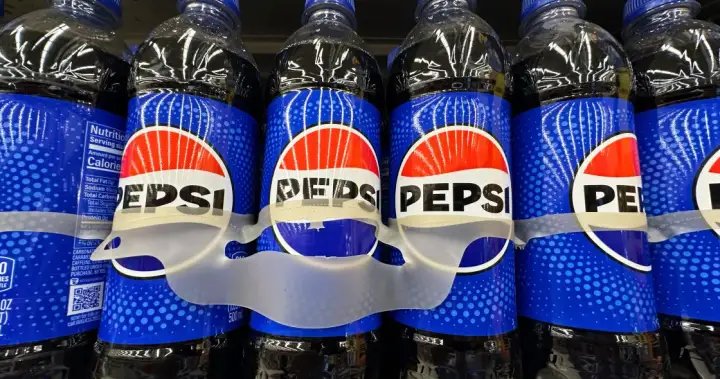
PepsiCo reported its beverage sales in North America have been falling as rising inflation and higher gas prices force consumers to keep up with the cost of living.
The food giant is the maker of dozens of food and beverage brands, including Pepsi-Cola, Mountain Dew and Gatorade, as well as snacks like Doritos and Lays potato chips.
In the second quarter of this year, PepsiCo said beverage sales in North America fell four per cent in the second quarter compared to a year earlier, while the market’s food sales volumes were essentially unchanged.
“Performance moderated with consumer budgets tightening due to rising inflationary pressures,” said CEO Ramon Laguarta in the earnings release Thursday.
Since February, PepsiCo has cut prices on brands such as Lay’s and Doritos by up to 15 per cent in North America to lure back budget-conscious consumers, who are increasingly shifting toward cheaper alternatives and smaller pack sizes amid persistent inflation concerns.
PepsiCo’s results underscore the challenges facing packaged food companies as they cut prices and invest heavily in healthier offerings to adapt to shifting consumer preferences and the rise of GLP-1 weight-loss drugs.
Related Videos

Consumers in Canada saw food and non-alcoholic drink inflation accelerate to 4.4 per cent in May, up from a year earlier, according to Statistics Canada.

Get daily National news
Get daily Canada news delivered to your inbox so you’ll never miss the day’s top stories.
High gas prices also weighed on consumers amid the war in Iran, leaving less cash to buy snacks and drinks after filling up at the pump.
“What we learn is that, yes, because of the consumer environment and the fact that gasoline prices were higher, consumers felt a little bit more [of] the economic impact,” said Laguarta in a conference call with analysts after the earnings release.
“I think the consumer is worse than what we had anticipated, and it’s driven mainly by gas prices.”
Already trying to win over cost-conscious consumers, food and beverage producers face the added challenge of rising fuel costs.
“We’re seeing the consumer changing behaviours, basically an acceleration of some of the behaviours we saw in the past,” said Laguarta.
“Will it change in the coming months? It all depends on the price of gas. Clearly that’s something that is beyond our control.”
Dollarama reported earnings last month, and said at the time that consumer confidence “appears to be weakening” amid higher gas prices.
Walmart also highlighted in May that it was noticing lower-income consumers are being “more budget conscious and perhaps navigating financial distress.”
Pepsi referred in its earnings release that it continues to make what it calls “affordability initiatives.”
Laguarta told analysts Thursday that the company is working to “make sure that our brands are in consumers’ lives in the portions and prices that consumers can afford today.”
On the positive side of the ledger, PepsiCo said its organic revenue, or sales from its core food and beverage products, increased by 2.4 per cent in the second quarter compared to a year earlier. This was mainly the result of higher sales in international markets like Germany, Poland, the U.K, India and China, among others.
© 2026 Global News, a division of Corus Entertainment Inc.
