
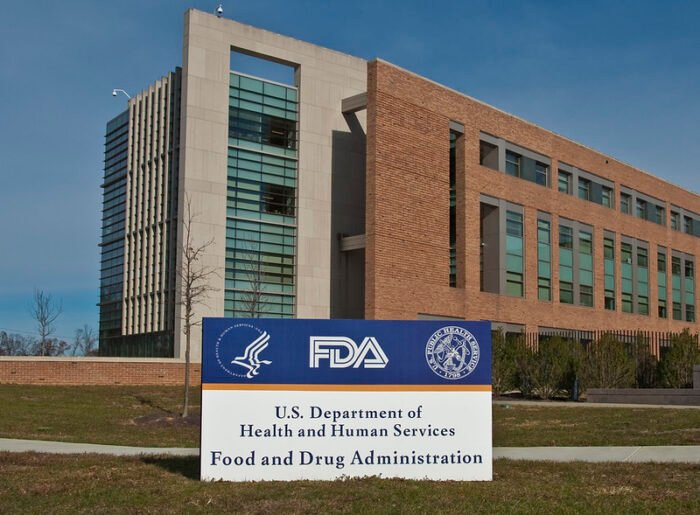
Earlier this year, the FDA announced a breakthrough that could fundamentally transform how medical evidence reaches patients. For the first time in the agency’s history, regulators will monitor clinical trial data in real time, viewing safety signals and treatment outcomes as they occur rather than waiting months or years for final submissions. AstraZeneca and Amgen are piloting this approach, with FDA scientists able to see immediately when a patient develops a fever, is hospitalized or shows tumor shrinkage.
Former Commissioner Marty Makary called it “a bold new approach that could fundamentally transform the clinical trial landscape.” He’s right. But the implications extend far beyond drug development. This announcement signals a future where evidence generation keeps pace with clinical need, where the right information reaches decision-makers in real time rather than through the traditional five-year cycle from discovery to medical guidelines..
For years the healthcare system has relied on the slow machinery of research — and that system is failing the people it was built for. It was designed for a world that operated with an abundance of caution and lacked the modern tools of today. That world no longer exists.
Because it is so easy to ask questions, they are abundant. They come from patients using large language models to self diagnose. They come from clinicians facing patients whose conditions have never been studied in combination. They come from pharmaceutical companies trying to expand the use of existing drugs. And they come from payors trying to decide what to cover.
Consider a patient with pulmonary arterial hypertension. For years she experiences fatigue and shortness of breath while being told she is out of shape or anxious. She is treated for asthma and then Covid. By the time she is correctly diagnosed, her pulmonary vasculature has been remodeling for two years. She has lost time that cannot be recovered. This demonstrates the first evidence gap: where the system cannot recognize her disease.
The second gap is even more profound. Only 14 percent of daily medical decisions are backed by high-quality evidence. The other 86 percent are made in the absence of it, through clinical intuition, extrapolation from imperfect analogies, or institutional habit. These are not bad doctors. These are excellent professionals doing the best they can with what the system gives them. What the system gives them 86 percent of the time is silence.
This silence exists because clinical trials are expensive and take years. A single randomized controlled trial can cost hundreds of millions of dollars and take a decade from conception to publication. The result is a lengthy bottleneck that keeps life-saving discoveries from reaching the bedside. From idea to medical guideline takes approximately five years. During those years, every patient with a complex combination of conditions is treated without evidence.
We also face an inclusion problem. Seventy percent of patients have at least one comorbidity, diabetes and hypertension, or heart failure and kidney disease. Yet 70 percent of trials exclude comorbid patients to produce clean results. This creates a structural inversion where the system knows the most about the patients who need it least and the least about the patients who need it most. The elderly, women, children, and racial minorities are systematically underserved.
The FDA’s move toward real-time trials addresses the time element bottleneck directly. While clinical trials remain the gold standard to scale this approach beyond drug development, the industry must shift from retrieving existing evidence to generating new evidence on demand. Retrieval only summarizes what is already known. Generation discovers what is not yet known.
The timing of this announcement carries strategic importance. American biomedical competitiveness requires speed. With this FDA change, the velocity for life science companies to generate real world evidence is accelerating and will allow for clinical trials to be completed faster. Using more evidence allows life science companies to identify patterns across massive datasets and run rigorous observational studies in roughly 20 seconds. This matches the FDA’s intended goals. This is a monumental opportunity for our industry to move faster together. At the same time, we need infrastructure that makes evidence generation not just faster, but fundamentally more responsive to clinical need.
The FDA has built trust through decades of overseeing the safety and efficacy of new treatments and medications. As the FDA and our industry accelerates toward an evidence-rich future powered by AI and real-world data, we face a critical choice: build systems that are transparent and trustworthy or risk undermining the very evidence revolution we’re trying to create.
This is not an academic concern. While others base their recommendation based on only the published literature available, our AI tools recommend a treatment based on patterns in millions of patient records, the reasoning must be as clear as the recommendation itself. Every algorithm that generates clinical evidence must be explainable. Every dataset must be traceable. Every conclusion must be reproducible. The math behind medical decisions cannot be a black box that patients, clinicians and regulators are expected to trust blindly.
We are at a pivotal moment. The same technologies that enable real-time evidence generation can either build unprecedented trust in medical decision-making or destroy it entirely. If we rush to deploy AI systems that produce answers without showing their work, we will trade one crisis, evidence scarcity, for another: evidence that no one believes.
The stakes are too high for anything less than complete methodological transparency. Patients deserve to understand how their treatment decisions are made. Clinicians deserve to evaluate the reasoning behind AI-generated recommendations. Regulators deserve to see inside the systems they’re approving. This transparency is not a nice-to-have feature. It’s the foundation that makes real-time evidence generation sustainable and trustworthy.
Evidence is the currency of healthcare. When that currency is incomplete or absent, every transaction in the system is degraded. Payers make coverage decisions without full information. Doctors make treatment decisions without direct evidence. The FDA’s pilot signals that the regulatory system is heading toward a world where evidence can be abundant and specific to the patient in front of you.
We have an obligation to act on this possibility. If we have the ability to generate evidence for every patient and we choose not to, it is a moral failure. If a grandmother on seven medications could have evidence-informed care and we do not provide it because the system was not designed for her, that is a choice. The evidence gap is an artifact of a system built for a different era. That era has ended. The technology has caught up.
The FDA’s announcement proves that transformation is not just possible. It’s beginning. The question is not whether we can build a healthcare system rooted in real-time evidence. The question is how quickly we can scale that vision beyond clinical trials to every clinical decision, and whether we’ll build it on a foundation of trust or quicksand. Now, we must bridge the gap.
Photo source: FDA, Flickr
Dr. Brigham Hyde is CEO and co-founder of Atropos Health since August 2022. Hyde has a significant track record of building businesses in the health tech and real-world data (RWD) space and most recently served as President of Data & Analytics at Eversana. Before that role, Mr. Hyde served as a healthcare partner at the AI venture fund Symphony AI, where he led the investment in, co-founded, and operated Concert AI, an oncology RWD company – most recently valued at $1.9B. Hyde held previous roles as Chief Data Officer at Decision Resources Group, which was acquired by Clarivate for $900M in 2020. He has also served on the Global Data Science Advisory Board for Janssen, as a research faculty member at MIT Media Lab, and as an adjunct faculty member at Tufts Medical School.
This post appears through the MedCity Influencers program. Anyone can publish their perspective on business and innovation in healthcare on MedCity News through MedCity Influencers. Click here to find out how.
