
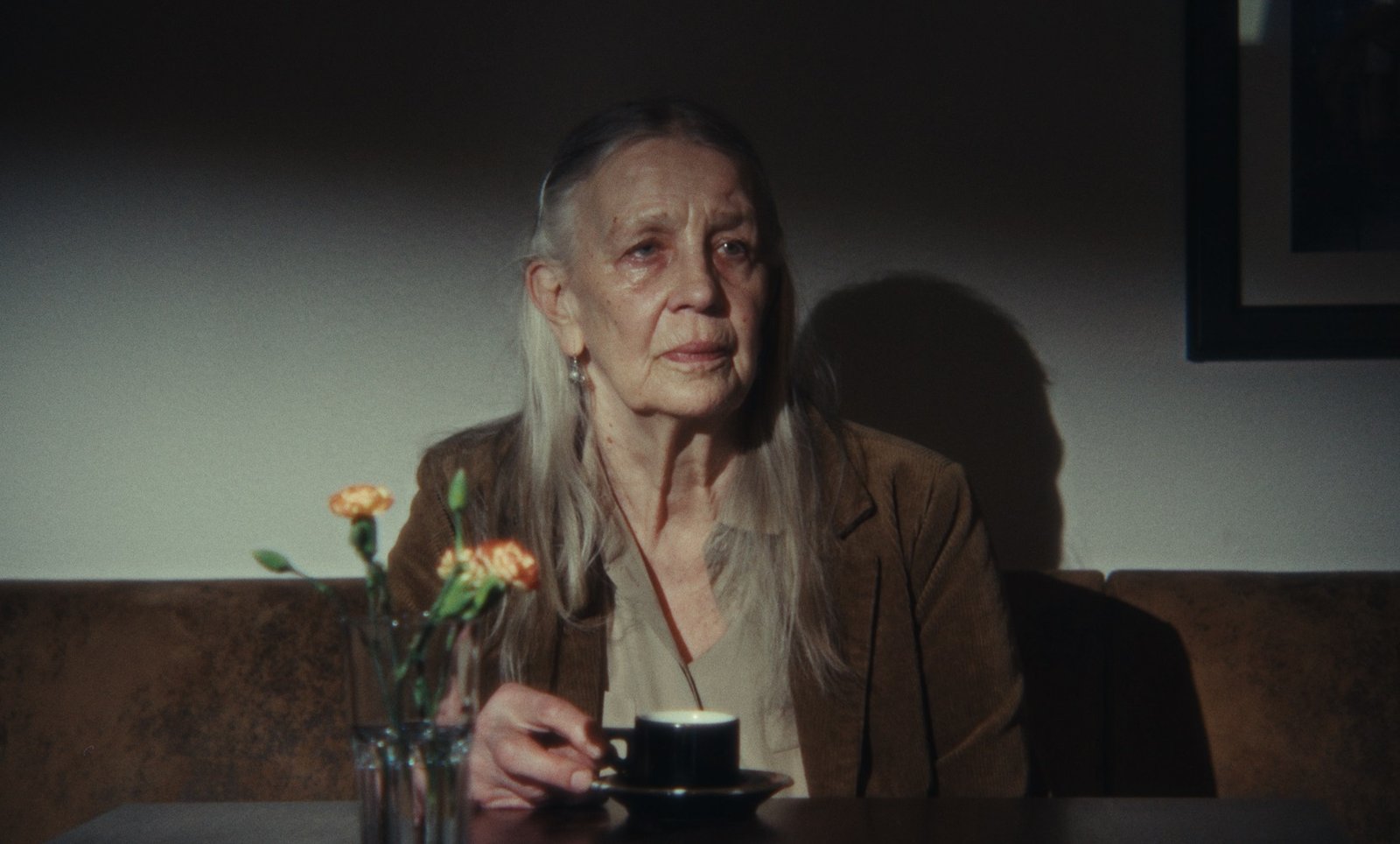
– Sawandi Grosking skilfully weaves a minimalist, inventive and atmospheric tale about the strange bond that forms between the Devil and a retired crime investigator
“I want you to seek something that soothes your soul.” Mini-golf, nocturnal wanderings through unsolved crime scenes in the urban forest of eastern Helsinki, William Blake’s poem ‘The Lamb’ (“Who made thee, do you know? Who gave thee life and made thee feed? By the brook, in the meadow”) recited at a retirement party that felt like a funeral, an Ashiatsu massage, an eye test, a mysterious Pandora’s box, a gentle, exhausted devil arriving on Earth through a time portal like the Terminator: it is a very peculiar twilight atmosphere that Sawandi Groskind (a filmmaker whose mother is Finnish-Swedish and whose father is American) weaves with the unusual Staubwelt (a German title that can be translated as “a world of dust”), which had its world premiere in the international competition at the 37th FIDMarseille.
“Be on your guard. An encounter with the Devil can change the course of a life.” This marks the end of a career as a criminal investigator for Agnes (Vivan Groskind), a lonely, sad woman, worn down by time and seemingly carrying a very heavy burden. Haunting the woods of the Finnish capital at night (“a perfect city for murderers”) in search of elusive clues to try and solve old cases, or shut away in her candlelit flat snorting cocaine stolen from the evidence room, our anti-heroine is offered new insights by a most curious character who has emerged from another dimension and works as a photographer for the police. This is the Devil (Shamsil Balkis). How do we know this? “There are some things one just knows.” A devil who wishes to turn a new page in his very long existence (in other words, to die) and who enjoys Agnes’s company without any ulterior motives. A most unusual companionship develops as the nights go by…
Stretching time as if in a sense of eternity on the verge of running out, Staubwelt (the director’s second feature following XXL) treads a very fine narrative line, prioritising an atmosphere that straddles the boundary between the dreamlike and the peaceful intimacy between its two protagonists. What emerges is a fantastical, anti-event-driven tale with mystical undertones, rooted in an ultra-minimalist realism that plays on offbeat, detached humour. Fuelled by great inventiveness (though at times verging on ostentatious flights of fancy), multilingual in nature and lulled by music composed of choruses of whispers, the film succeeds in achieving a great deal with very little, in forging its own voice and its own space, and in imposing its unconventional vision through a skilful series of small adjustments; it opens up an interesting philosophical avenue for those wishing to venture in search of “the causality that sparked the flame”. This existential question will unfold over an even broader arc in a grand experimental finale, with a nebulous atmosphere (and subliminal images?) reminiscent of (though in a more modest version) 2001: A Space Odyssey.
Staubwelt was produced by Swedish company Post Post AB.
(Translated from French)
