
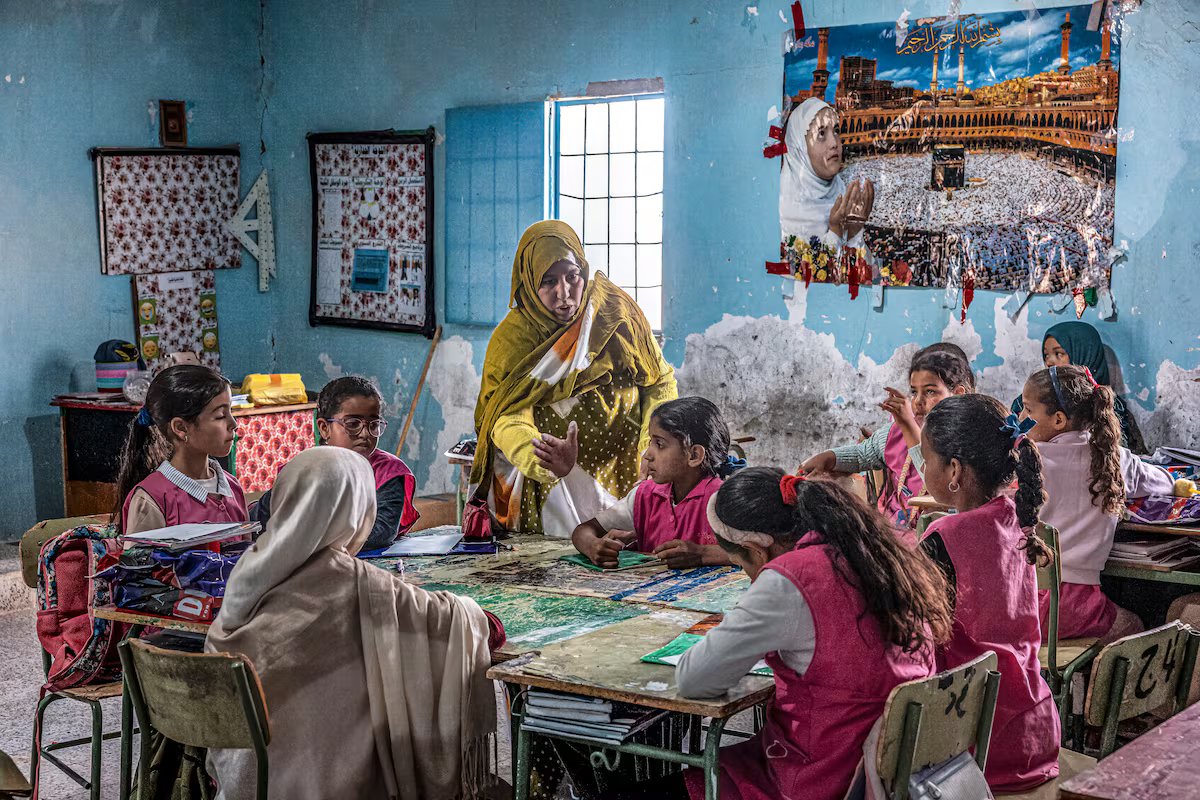
A round of applause from lawmakers marked the approval in Spain’s Congressional Justice Committee, convened in an extraordinary session, of a bill granting Spanish nationality to Sahrawis born when the African territory was still a Spanish colony, and to their descendants. The result of the vote clears the path for the future law, although it still must be approved by the lower chamber of parliament—the vote is scheduled for September—and then pass the Senate.
The bill opens up Spanish nationality to all those born in the former Spanish colony before September 29, 1977, even if they are not currently legal residents in Spain. The date was chosen because it was the summer of 1977 when the deadline for Sahrawis to opt for Spanish nationality expired — a right they were effectively unable to exercise because their territory was already being occupied by Morocco and Mauritania at that time.
The dispute over Western Sahara has been affecting diplomatic relations in the Maghreb region since 1975, when Spain gave up what was once its 53rd province. Considered by the United Nations a non-self-governing territory, Morocco controls much of the territory de facto, while a Sahrawi government-in-exile operates out of Tindouf, in Algeria. The issue extends beyond these countries: Morocco agreed to reopen its diplomatic mission in Tel Aviv in 2020, as part of the Abraham Accords signed during Donald Trump’s first term. In return, the U.S. president recognized Moroccan sovereignty over Western Sahara. Last year, the U.S. government said it was preparing to authorize major investments by its companies in the Morocco-controlled parts of Western Sahara.
The move to grant citizenship to Sahrawis is the latest in a series of similar initiatives by the Spanish government. In June 2022, the so-called “Grandchildren law” allowed descendants of Spaniards who went into exile or emigrated during the Spanish Civil War and dictatorship to apply for citizenship.
In this week’s vote in Spain, the bill obtained far more support than expected: 19 votes in favor and three against (from the far-right party Vox), with 15 abstentions from the mainstream conservatives of the People’s Party (PP).
Despite the outcome, the session was not without intrigue: the Socialist Group submitted two last-minute amendments on Wednesday to remove references in the bill’s preamble to the “Sahrawi people” and replace them with “Sahrawi population” or simply “Sahrawis,” with the aim of avoiding offense to Morocco. Instead, the amendments upset its leftist parliamentary partners. The two amendments were voted on separately and defeated.
Proving their status
To prove Sahrawi status, applicants may show a variety of documents, including a receipt proving registration on the United Nations roll for the Western Sahara self-determination referendum (which never took place because Rabat refused to allow it); a driver’s license; a pension payment receipt; and any other document issued by a Spanish administration showing birth in the territory before September 29, 1977.
After the law takes effect, those born when Western Sahara was a Spanish province will have a three-year window, extendable to four years, to submit the corresponding application.
The law will allow roughly 70,000 Sahrawis to become Spanish citizens, but also their direct descendants in the first degree of consanguinity, who will have five years, after their parents are registered in the civil registry, to apply for Spanish nationality. The initiative’s sponsors estimate that, on average, this could raise the number of potential beneficiaries to between 100,000 and 200,000 people.
Furthermore, Sahrawis will also be able to access nationality by residence via an accelerated route, needing only two years of legal residence in Spain instead of the 10 years generally required, putting them on par with citizens from Ibero-American countries, Sephardic Jews and nationals of the Philippines, Equatorial Guinea and Portugal.
Sign up for our weekly newsletter to get more English-language news coverage from EL PAÍS USA Edition
