
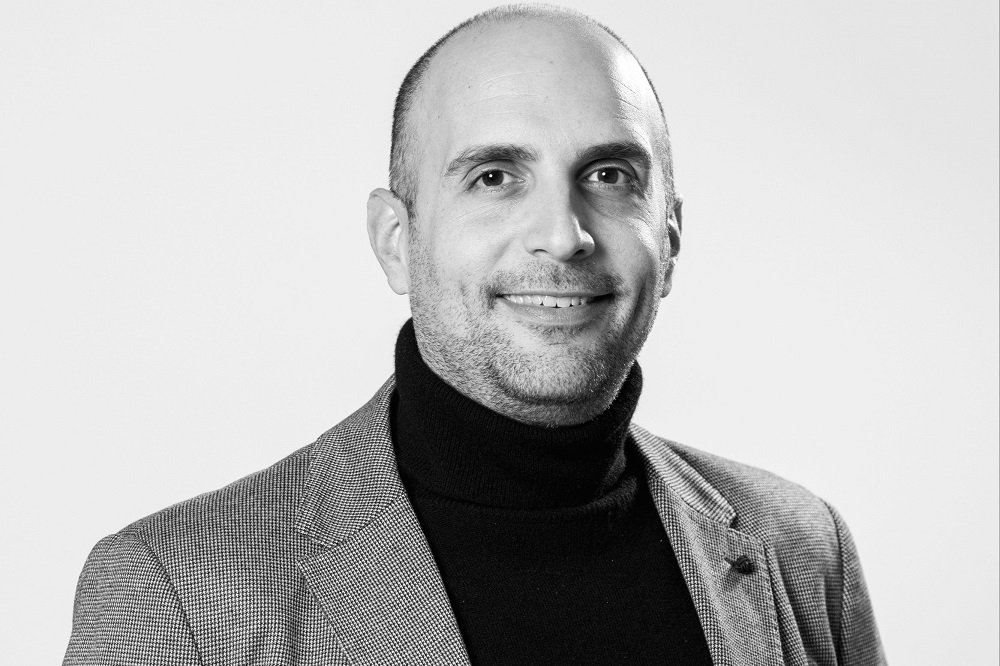
“I approach each film as a journey for both myself and the audience to understand different perspectives on humanity”
– The Italian producer chatted with us about his passion for Asian and Latin American cinema and his approach to cinema capable of connecting with audiences
Selected as part of European Film Promotion’s Producers on the Move programme, Italian producer Stefano Centini is the founder of Volos Films, a company known for visually striking cinema that interconnects different cultures. His work includes The Settlers, Viet and Nam, Stranger Eyes, Waking Hours and now Jorge Thielen Armand’s Death Has No Master, which has been selected for the Directors’ Fortnight at the Cannes Film Festival. We spoke with him about his choices and philosophy.
Cineuropa: Let’s start with Death Has No Master, which was selected for the Director’s Fortnight. What made you decide to produce it?
Stefano Centini: The film depicts the descent into violence of the heiress of a cacao plantation (Caro, played by Asia Argento), who left home as a child and returns believing that nothing has changed. Instead, she finds the plantation workers living in her family house and determined to stay. The conflict between them soon turns violent, in a land whose memories are drenched in blood.
The director, Jorge Thielen Armand, contacted me after watching some of the films I produced and we began collaborating on several aspects of the project, including the depiction of violence, casting, and financing. What stood out to me in the script was how effectively the genre elements intertwined with the political discourse, especially at a time when Venezuela was no longer in the headlines (we began working together at the end of 2023).
I was also particularly struck by Jorge’s visual language, which establishes him as a distinctive voice in South American cinema. We also participated in several industry platforms, including the Cannes Investor Circle, the Venice Gap-Financing Market, and TIFFCOM, where we gradually refined the project and brought it to fruition piece by piece.
It was an unforgettable experience for me to be on set in Venezuela, witnessing the professionalism of the crew and how easily we bonded as a team. This is also why we are currently developing Jorge’s next project, which we hope to reveal more details about soon.
What was the philosophy behind your decision to make films such as The Settlers, Viet and Nam, Stranger Eyes and Waking Hours?
I want to create cinematic stories that use the camera to explore the intricacies of humanity — both from philosophical and political perspectives — while remaining deeply connected to the land from which they originate. Although cinema is a visual medium, I believe it has the power to transcend physical boundaries and transport us into territories we do not yet know.
I approach each film in this way: as a journey for both myself and the audience towards understanding different perspectives on humanity, with the humility to discover unknown parts of ourselves and the conviction that many elements unite our cultures and our lives. These works share a strong political dimension, paired with a deeply human approach to characters and their emotions.
Could you tell us the story of Volos Films, which was founded in Taipei and now has an office in Italy?
Volos Films was born out of my passion for Asian cinema, and in particular for the Taiwanese New Wave. In the 1990s, I attended Asian film festivals whenever possible in order to discover the work of the directors I had grown up with. After graduating from the Centro Sperimentale di Cinematografia in Milan, I moved to Paris, where I also completed a degree in Chinese studies. This path eventually brought me to Taiwan, where I enrolled at the National Taiwan University of the Arts. While studying there, I had the opportunity to meet not only filmmakers from my own generation, with whom I began collaborating, but also leading figures of the Taiwanese New Wave, who gradually became collaborators as well. I would particularly like to mention Tu Duu-Chih, the legendary sound designer known, among many other works, for In the Mood for Love and Yi Yi: A One and a Two – who did exceptional work on The Settlers.
After a few years, I began considering a return to Italy, where I felt a new generation of filmmakers was emerging. I believed it was important to give something back to the industry there. Thanks also to a fortuitous meeting with an extraordinary producer — my colleague Serena Alfieri — I founded Volos Films Italia as the other end of an imaginary bridge linking Italy with Asia, Latin America and any other place that shares our vision of cinema.
What ideas will you bring to the European Film Promotion Producers on the Move meetings in Cannes, and what are your expectations of the programme?
At European Film Promotion’s Producers on the Move, I’m really looking forward to meeting peers who share a similar outlook — people who, like me, believe in a cinema that is free, open and engaged with reality, but also deeply human and capable of connecting with audiences.
I tend not to approach these experiences with fixed expectations; I prefer to stay open and see what emerges. But I’m sure I’ll come away with valuable insights, meaningful encounters and, hopefully, new collaborators and friendships that will continue beyond the programme.
(Translated from Italian)
