
);
}
function setButtonState(button, state) {
const hint = button.parentElement && button.parentElement.querySelector(‘[data-author-follow-hint]’);
const followLabel = button.dataset.followLabel || ‘Follow’;
const followingLabel = button.dataset.followingLabel || ‘Following’;
const signinLabel = button.dataset.signinLabel || ‘Sign in to follow’;
const loadingLabel = button.dataset.loadingLabel || ‘Saving…’;
const pendingAuthLabel = button.dataset.pendingAuthLabel || ‘Loading…’;
button.classList.remove(‘is-following’, ‘is-loading’, ‘is-auth-required’);
if (state === ‘loading’) {
button.classList.add(‘is-loading’);
button.disabled = true;
button.textContent = loadingLabel;
if (hint) {
hint.textContent=”Updating your followed authors…”;
}
return;
}
if (state === ‘pending-auth’) {
button.classList.add(‘is-loading’);
button.disabled = true;
button.textContent = pendingAuthLabel;
if (hint) {
hint.textContent=”Checking your sign-in status…”;
}
return;
}
button.disabled = false;
if (state === ‘following’) {
button.classList.add(‘is-following’);
button.textContent = followingLabel;
if (hint) {
hint.textContent = followingLabel === ‘Unfollow’
? ‘Remove this writer from your followed list.’
: ‘Click again to unfollow.’;
}
return;
}
if (state === ‘signin’) {
button.classList.add(‘is-auth-required’);
button.textContent = signinLabel;
if (hint) {
hint.textContent=”Sign in to follow writers and manage your list.”;
}
return;
}
button.textContent = followLabel;
if (hint) {
hint.textContent=”Click to follow.”;
}
}
function renderWidgets(scope) {
const root = scope || document;
root.querySelectorAll(‘[data-author-follow-widget]’).forEach(function (widget) {
const button = widget.querySelector(‘[data-author-follow-button]’);
if (!button) {
return;
}
const staffId = widget.dataset.staffId;
const hasToken = !!getBearerToken();
if (!isPianoIdentityReady() && !hasToken) {
setButtonState(button, ‘pending-auth’);
return;
}
if (!hasToken) {
setButtonState(button, ‘signin’);
return;
}
if (followedAuthorsMap.has(String(staffId))) {
setButtonState(button, ‘following’);
} else {
setButtonState(button, ‘follow’);
}
});
}
function renderManageList(container) {
if (!container) {
return;
}
const hasToken = !!getBearerToken();
if (!isPianoIdentityReady() && !hasToken) {
container.innerHTML = (
‘
‘
);
return;
}
if (!hasToken) {
container.innerHTML = (
‘
‘
);
return;
}
const followedAuthors = Array.from(followedAuthorsMap.values());
if (!followedAuthors.length) {
container.innerHTML = (
‘
‘
);
return;
}
container.innerHTML = followedAuthors
.map(function (author) {
return (
‘
‘
);
})
.join(”);
bindEvents(container);
renderWidgets(container);
}
async function refresh(scope, options) {
const forceFetch = !!(options && options.force);
if (!hasFollowWidgets(scope)) {
return;
}
// Wipe the cached map BEFORE the first render so a user-switch can’t
// momentarily display the previous user’s “Following” state.
discardCacheIfTokenChanged();
renderWidgets(scope);
const manageContainer = document.querySelector(‘[data-author-follow-manage-list]’);
const managePreferencesContainer = document.querySelector(‘[data-author-follow-manage-preferences]’);
const hasToken = !!getBearerToken();
if (!isPianoIdentityReady() && !hasToken) {
renderWidgets(scope);
renderManagePreferences(managePreferencesContainer);
renderManageList(manageContainer);
return;
}
if (!hasToken) {
renderManagePreferences(managePreferencesContainer);
renderManageList(manageContainer);
return;
}
try {
await loadFollowedAuthors(forceFetch);
renderWidgets(scope);
renderManagePreferences(managePreferencesContainer);
renderManageList(manageContainer);
} catch (error) {
console.warn(‘Unable to load followed authors.’, error);
if (error && error.code === ‘AUTH_REQUIRED’) {
renderWidgets(scope);
renderManagePreferences(managePreferencesContainer);
renderManageList(manageContainer);
}
}
}
function startLoginPoll() {
if (loginPoll) {
clearInterval(loginPoll);
}
let attempts = 0;
loginPoll = setInterval(function () {
attempts += 1;
if (getBearerToken() || isLoggedIn() || attempts > 25) {
clearInterval(loginPoll);
loginPoll = null;
refresh(document, { force: true });
}
}, 1000);
}
function stopPianoReadyPoll() {
if (pianoReadyPoll) {
clearInterval(pianoReadyPoll);
pianoReadyPoll = null;
}
}
function startPianoReadyPoll() {
stopPianoReadyPoll();
let attempts = 0;
pianoReadyPoll = setInterval(function () {
attempts += 1;
if (isPianoIdentityReady() || getBearerToken() || attempts > 40) {
stopPianoReadyPoll();
// Non-forced: if bindPianoInitRefresh already fetched, the TTL
// dedupes this call. If it lost the race, this call wins.
refresh(document);
}
}, 500);
}
function bindPianoInitRefresh() {
if (pianoInitBound) {
return;
}
pianoInitBound = whenPianoReady(function () {
// The Piano init callback is the canonical “identity is ready” signal;
// cancel the fallback poll so it can’t issue a redundant second fetch.
stopPianoReadyPoll();
refresh(document, { force: true });
});
}
async function handleWidgetClick(widget, button) {
const staffId = widget.dataset.staffId;
if (!getBearerToken()) {
setButtonState(button, isPianoIdentityReady() ? ‘signin’ : ‘pending-auth’);
if (typeof window.showPianoLogin === ‘function’) {
window.showPianoLogin();
startLoginPoll();
}
return;
}
// If the identity changed since the cache was last filled, drop the stale
// map before the follow/unfollow decision below — otherwise the click
// could issue the wrong action against the previous user’s state.
discardCacheIfTokenChanged();
setButtonState(button, ‘loading’);
try {
if (followedAuthorsMap.has(String(staffId))) {
await apiRequest(apiBaseUrl + “https://www.washingtontimes.com/” + staffId, { method: ‘DELETE’ });
followedAuthorsMap.delete(String(staffId));
removePushlyFollowedAuthorId(staffId);
} else {
const author = await apiRequest(apiBaseUrl + “https://www.washingtontimes.com/” + staffId, {
method: ‘PUT’,
body: JSON.stringify({
push_enabled: followDeliveryPreferences.push_enabled,
email_fallback_enabled: followDeliveryPreferences.email_fallback_enabled,
}),
});
followedAuthorsMap.set(String(staffId), author);
appendPushlyFollowedAuthorId(staffId);
}
saveStoredFollowDeliveryPreferences(
deriveFollowDeliveryPreferences(Array.from(followedAuthorsMap.values())),
);
syncPushlyFollowedAuthorsProfile();
renderManagePreferences(document.querySelector(‘[data-author-follow-manage-preferences]’));
renderWidgets(document);
renderManageList(document.querySelector(‘[data-author-follow-manage-list]’));
} catch (error) {
console.warn(‘Unable to update followed author.’, error);
if (error && error.code === ‘AUTH_REQUIRED’) {
setButtonState(button, ‘signin’);
}
renderWidgets(document);
}
}
function bindEvents(scope) {
const root = scope || document;
root.querySelectorAll(‘[data-author-follow-widget]’).forEach(function (widget) {
if (widget.dataset.followWidgetBound === ‘true’) {
return;
}
widget.dataset.followWidgetBound = ‘true’;
const button = widget.querySelector(‘[data-author-follow-button]’);
if (!button) {
return;
}
button.addEventListener(‘click’, function () {
handleWidgetClick(widget, button);
});
});
root.querySelectorAll(‘[data-author-follow-manage-preferences]’).forEach(function (container) {
if (container.dataset.followGlobalPreferencesBound === ‘true’) {
return;
}
container.dataset.followGlobalPreferencesBound = ‘true’;
async function handlePreferenceChange() {
const pushInput = container.querySelector(‘[data-author-follow-global-pref=”push”]’);
const emailInput = container.querySelector(‘[data-author-follow-global-pref=”email”]’);
if (!pushInput || !emailInput) {
return;
}
const previousPreferences = {
push_enabled: followDeliveryPreferences.push_enabled,
email_fallback_enabled: followDeliveryPreferences.email_fallback_enabled,
};
const payload = {
push_enabled: !!pushInput.checked,
email_fallback_enabled: !!emailInput.checked,
};
// Drop a stale map if the identity changed before iterating — we
// don’t want to issue follow updates against the previous user’s
// authors with the current user’s bearer token.
discardCacheIfTokenChanged();
const followedAuthors = Array.from(followedAuthorsMap.values());
saveStoredFollowDeliveryPreferences(payload);
managePreferencesPending = true;
pushInput.disabled = true;
emailInput.disabled = true;
try {
await Promise.all(
followedAuthors.map(function (author) {
return updateFollowPreferences(author.id, payload);
}),
);
renderManagePreferences(container);
renderWidgets(document);
renderManageList(document.querySelector(‘[data-author-follow-manage-list]’));
} catch (error) {
console.warn(‘Unable to update author follow preferences.’, error);
saveStoredFollowDeliveryPreferences(previousPreferences);
pushInput.checked = previousPreferences.push_enabled;
emailInput.checked = previousPreferences.email_fallback_enabled;
} finally {
managePreferencesPending = false;
pushInput.disabled = false;
emailInput.disabled = false;
}
}
container.addEventListener(‘change’, function (event) {
const target = event.target;
if (!target || !target.matches(‘[data-author-follow-global-pref]’)) {
return;
}
handlePreferenceChange();
});
});
}
function init(scope) {
const root = scope || document;
if (!hasFollowWidgets(root)) {
return;
}
bindEvents(root);
renderWidgets(root);
bindPianoInitRefresh();
startPianoReadyPoll();
refresh(root);
}
window.WTAuthorFollow = {
init: init,
refresh: refresh,
};
document.addEventListener(‘DOMContentLoaded’, function () {
init(document);
});
window.addEventListener(‘focus’, function () {
if (hasFollowWidgets(document)) {
refresh(document);
}
});
document.addEventListener(‘visibilitychange’, function () {
if (!document.hidden && hasFollowWidgets(document)) {
refresh(document);
}
});
} else {
window.WTAuthorFollow.init(document);
}
})();
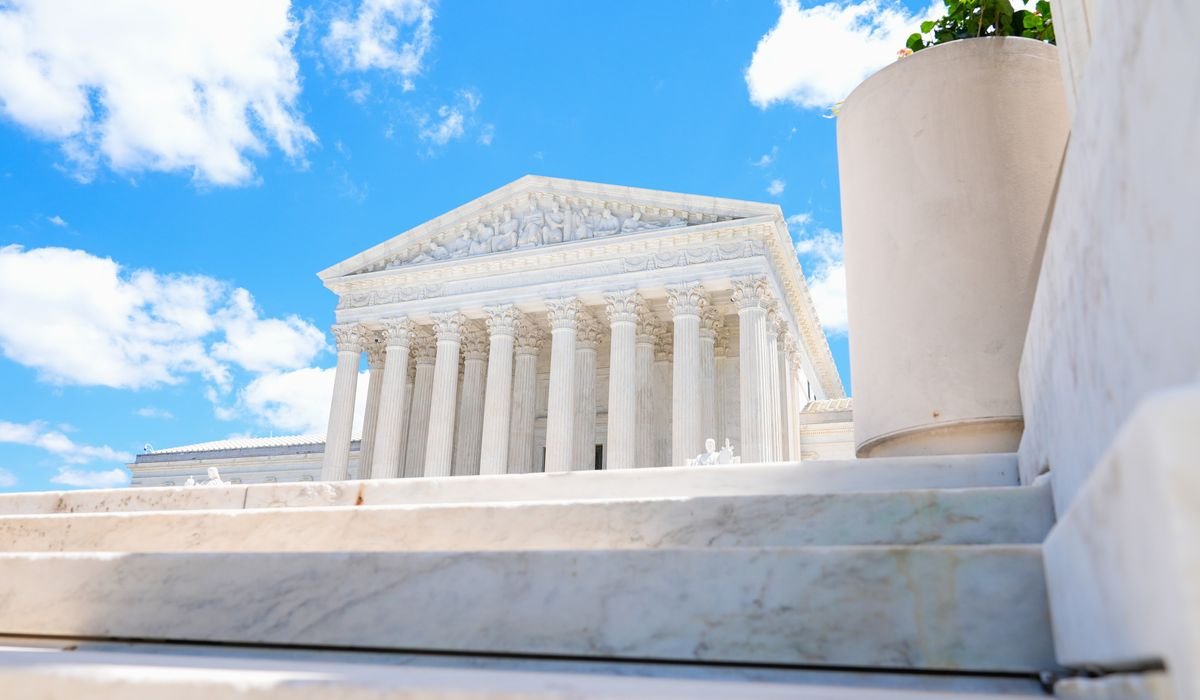
The U.S. Supreme Court is seen …
more >
–
Associated Press
–
Monday, May 18, 2026
WASHINGTON — The Supreme Court acted in a Voting Rights Act case brought by Native American tribes on Monday, saying a closely watched ruling needs to be reconsidered after the high court weakened the Civil Rights-era law.
The justices ordered lower courts to take another look at the decision that went against the tribes and undercut a key enforcement mechanism: lawsuits from voters and advocacy groups.
Advocacy groups are key players because they bring most of the lawsuits filed under the provision of the Voting Rights Act known as Section 2.
But in a North Dakota case brought by two Native American tribes, the 8th U.S. Circuit Court of Appeals ruled that only the federal government can sue to enforce the law.
The decision conflicted with decades of case law. The Supreme Court blocked it in July, allowing the tribes’ preferred maps to temporarily stay in place.
The appeals court’s finding has nevertheless been cited elsewhere, with Mississippi making a similar argument in another appeal over its state legislative map. The court also sent that case back for reconsideration on Monday.
Justice Ketanji Brown Jackson dissented from the decision, writing that both rulings should have been reversed.
The conservative majority, meanwhile, has already diluted enforcement power with their April decision that struck down a majority Black congressional district in Louisiana and made future cases much harder to win.
In that case, the high court’s conservative majority ruled that map relied too heavily on race with a district aimed at giving Black voters a chance to elect a candidate of their choice. The decision effectively limited Voting Rights claims to maps that are intentionally designed to discriminate, a very high standard.
Latest Video
