
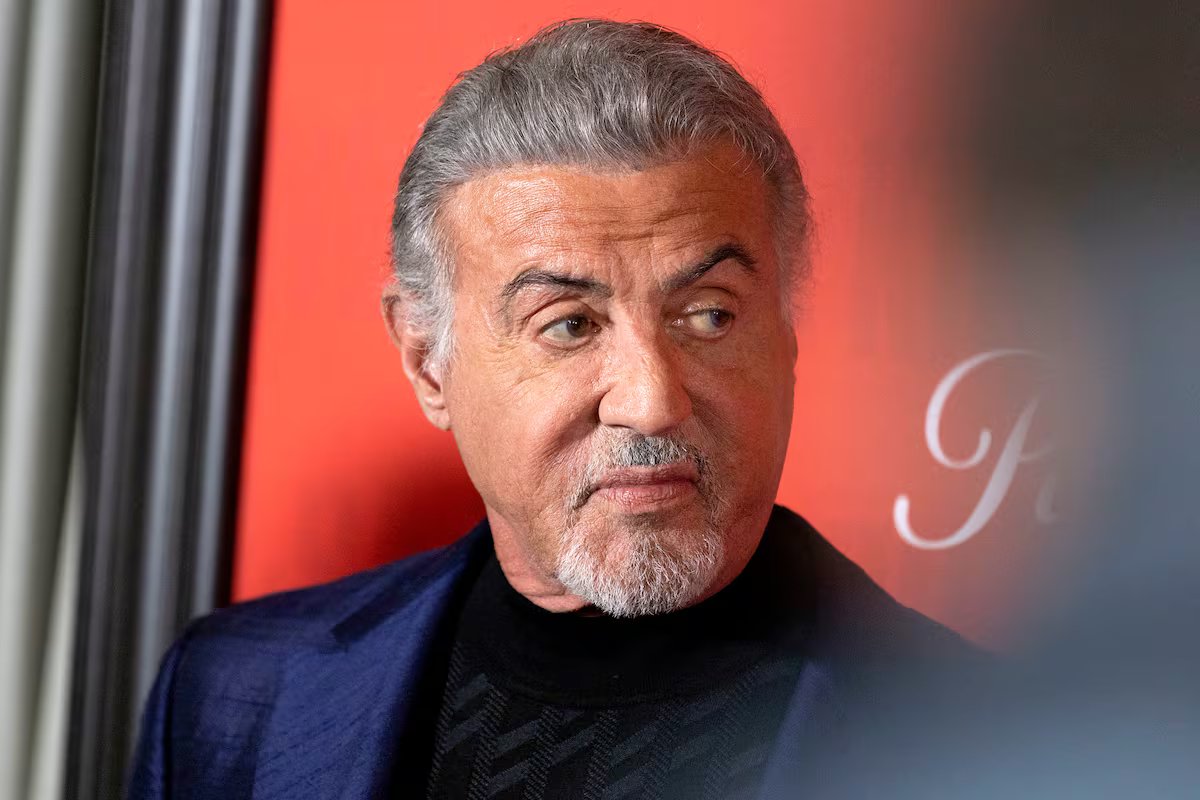
Celebrating his birthday on July 6, Sylvester Stallone was destined to reach the age of 80 on the front lines of combat. On screen, he is still throwing punches in Tulsa King, a Paramount+ series that is poised for a fourth season. Off-screen, he faces an even tougher battle. The New York actor and screenwriter, eternal rival of Arnold Schwarzenegger, Hollywood’s ultimate action hero and pioneer in million-dollar sequels, is now fighting to protect his legacy.
Next December marks the 50th anniversary of Rocky, a film that turned Stallone into an action icon. Celebrating the milestone is the documentary I Play Rocky. The film tells the inside story of how a young aspiring actor, who was forced on occasion to sleep rough, convinced the studios he could take the lead in a script he had written himself and which would quickly become a reference in the action genre. In other words, the documentary is a nice tribute to Stallone’s beginnings, if it weren’t for the fact that Sly – as he is sometimes called – claims he has had no say in its making.
Stallone told Los Angeles Magazine that while he has “nothing against the project” and that it “might be good,” he was surprised that no one from the production team had contacted him, despite being the protagonist of the tale. He also said he wanted his family’s legacy to be depicted authentically. “I don’t know why they’re making it,” he said. “Everyone knows the story.” Meanwhile, Peter Farrelly, director of I Play Rocky, told Playlist that Stallone had given the green light to the project which he may have forgotten due to the upcoming release of his memoirs.
This is just another in a long line of battles waged by Stallone. The actor has been trying for years to get the rights to the Rocky saga. Despite having conceived of Rocky himself, the rights still belong to producer Irwin Winkler. But the conflict goes much deeper. Stallone has spent his entire life fighting against his public image and his past – shining a light on the sensitive writer behind the muscle-bound boxer, inspired by Edgar Allan Poe. After all, his career has been a constant battle to rewrite his own history.
The Italian stallion
As a youngster, Stallone tried to convince himself that his life had meaning. And it was not easy. His mother, Jackie, a showgirl who would eventually become an astrologer and television personality, would constantly tell him about her attempts to abort him. “My mother would say, ‘The only reason you’re here is because the hanger didn’t work,’” the actor confessed years ago on Unwaxed, a podcast made by two of his three daughters, Sophia and Sistine. Refusing to accept her pregnancy, Jackie went into labor while riding a bus. The emergency and the misuse of forceps left Stallone with part of his lips, tongue and cheeks paralyzed for life.
Stallone’s consequent slur and unusual expression would turn him into a unique star. But as a child these features brought him nothing but problems. In the neighborhood of Hell’s Kitchen in New York, it made him a target for bullies. At home, he faced beatings from his father, Frank Stallone, an Italian immigrant and hairdresser who went on to own a chain of beauty salons. “Kids are the same as soft clay. They really are. You mold them, and you dent them, and you hurt them, or you drop them off the table, and they’re not the same shape anymore. I still walk around with it. And I wish I couldn’t. And I pray, and I do everything, but it’s always there,” Stallone is cited saying in People.
Stallone’s parents fought their way towards divorce, after which the actor went to live with his father. He rebelled, went through 13 schools in 12 years and ended up in a military academy. But he found a refuge in cinema when he was offered a role in Steve Reeves’ Hercules (1958). Here was a world where not everything had to end badly. He decided that he wanted to stay in it.
Stallone returned to New York to try his luck as an actor, but his face was an obstacle and he only found work as an extra, invariably a thug. He was also taken on by Off-Off-Broadway productions looking for someone to take their clothes off. He ended up sleeping in doorways and bus stations and it was then that an opportunity came along that would change his career, but not in a good way. He accepted a role in a porn film that was later re-released as Rocky: The Italian Stallion. “It was either do that movie or rob someone, because I was at the end , the very end, of my rope,” he told Playboy magazine.
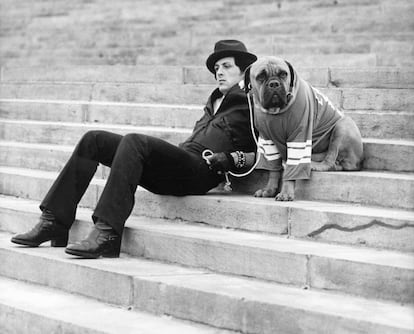
Having hit rock bottom, Stallone realized that if cinema didn’t have a niche for him, he would have to create one. He dyed the windows of his apartment black to concentrate on writing up to 16 scripts. Among them was Rocky, a story he penned in just three days that was inspired by the rivalry between Muhammad Ali and Chuck Wepner. The protagonist represented all the marginalized people and the losers in society, like Stallone himself. The script interested the studios, but they didn’t want Stallone as the lead. He was offered more than $300,000 and, although he needed money – he had even sold his dog Butkus – he refused to let someone else embody the character that was so close to his heart.
In the end, Stallone succeeded in convincing the studios he was right for the role. His face and that of his dog Butkus, who he bought back and included in the film, were soon on billboards around the world. Rocky won the Oscar for best picture in 1977, and Stallone had achieved his dream. Or so he thought. While shaking hands with a clutch of U.S. presidents – Gerald Ford, Ronald Reagan and Jimmy Carter – at a reception in the White House, he realized he was now typecast. None of these men called him by his name; for them he was simply Rocky. “I felt trapped by the Rocky image. I thought: ‘Don’t people realize that I am not a supposedly thick-tongued, punchy individual? That I wrote this and I was involved in the production?’ But people were writing constantly about what a Neanderthal I was in private life, that I really was Rock. That I was just snatched off the streets and that it was the only role I was capable of playing,” Stallone said in an interview with Rolling Stone. He tried to recast himself with other films such as Hell’s Kitchen (1978), but the ploy failed. “I received the worst reviews since Hitler,” he said.
While he covered the front pages of the tabloids with his romantic entanglements, the only way Stallone could reconnect with the public was through the Rocky sequels. Until John Rambo arrived on the scene, that is. In First Blood (1982) he used a war veteran to vent all his personal frustrations once again. “I know I got a certain kind of ferocity from my father,” says Stallone in Sly, the Netflix documentary. He goes on to describe the original Rambo character as a homicidal maniac and then says, “My father was Rambo in reality.” The film was a success, but, as they say, the remedy was almost worse than the disease. Stallone could not escape the action hero tag which dragged him into a competition that would end his career.
An endangered species
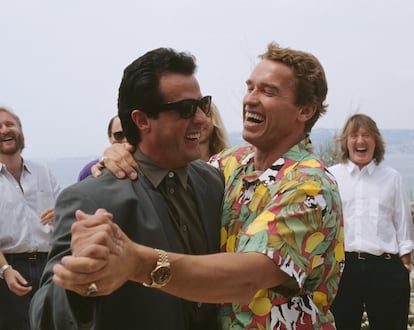
It was 1982, Conan the Barbarian had just been released and comparisons with Arnold Schwarzenegger were inevitable. The 1980s turned into a competition to see which of the two would pull the largest knife, rifle or machete, and Stallone went the distance until his two characters became caricatures. Born as an icon of the counterculture critical of the military, Rambo ended up becoming the greatest exponent of patriotism of the Reagan era.
However, it was the comedy, Stop! Or My Mom Will Shoot, that appeared to drive the last nail into the coffin of Stallone’s career. Schwarzenegger had triumphed in this genre but, in the 1990s, Stallone’s attempts fell flat. He lost his agents. “I was going the way of the dodo bird and the Tasmanian tiger,” he confessed to Variety magazine. And it was partly true. While rich, he found himself in the same situation as 20 years earlier: he had to make a niche for himself in an industry that refused to accept him. He took a few years off and it wasn’t until well into the 21st century that he returned with The Expendables. The idea came to him at a concert starring old rock legends. He wrote about the 80s and 90s’ action heroes who, like him, had been relegated to history. Among them had to be Schwarzenegger himself, with whom he had long before made his peace.
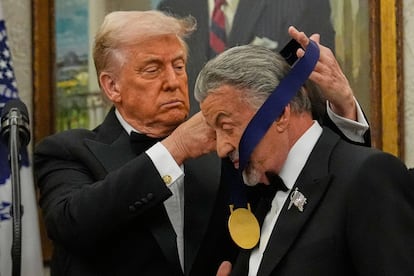
In July 2012, after turning 60, Stallone had to deal with the traumatic death of his son Sage, who had appeared in Rocky V. Since then, he has continued to fight against widespread preconceptions of his person. In recent years, he has become close to President Donald Trump, who named him ambassador to Hollywood; this, despite the fact that Stallone insisted on staying out of politics throughout his career.
With The Stallone Family, a reality show in the purest Kardashian tradition featuring surreal moments such as the actor inviting Pope Francis to spar during their meeting in May 2024, Stallone wanted to reflect the change in him that had come with his family and his third wife, Jennifer Flavin, despite the fact that they were about to divorce at the time (they subsequently reconciled and are still together). And, although he has bid a final farewell to his two alter egos, Rocky and Rambo, on multiple occasions, he is still reluctant to let them go. After all, his role in Creed continues the story of the legendary boxer and earned him his last Oscar nomination.
Will his memoirs be the definitive end of Stallone in the public sphere? Judging by what he confessed in his Netflix documentary, it seems unlikely. Talking about his harsh upbringing and the refusal of his parents to attend his Oscar win in 1977, he said “Maybe the nurturing comes from the respect and love of strangers – to feel embraced and loved by an audience. It’s insatiable. I wish I could get over it, but I can’t.”
Sign up for our weekly newsletter to get more English-language news coverage from EL PAÍS USA Edition
