

One of Mexico’s most-visited archeological sites has gotten its biggest makeover in 30 years in honor of the upcoming FIFA World Cup, as well as a boost in security following a deadly shooting in April.
The renovation works at the ancient city of Teotihuacán, a UNESCO World Heritage Site, began in March.
The improvements include updates to access points, ticket booths and pathways and renovated rest areas.
“Special signage was created, where visitors can also download the tours,” Culture Minister Claudia Curiel de Icaza said, adding that visitors will be able to access a website with helpful information in Spanish and English to plan their visit.
“The website displays the entire map [of the site] and tells visitors the history of everything [within the site] in both Spanish and English,” she said.
Beyond the archaeological areas, the renovation included the revamping of the museums within the archaeological site, which is expected to see a 30% increase in visitors during the month-long tournament.
According to Icaza, the renovation works at Teotihuacán required an investment of 37 million pesos (US $2.1 million), out of a total budget of 398 million pesos (US $23 million) allocated for the Social World Cup Action Program.
Icaza noted that this is the largest investment the site has received in the last 30 years, as it seeks to improve the image of the site and guarantee its long-term conservation.
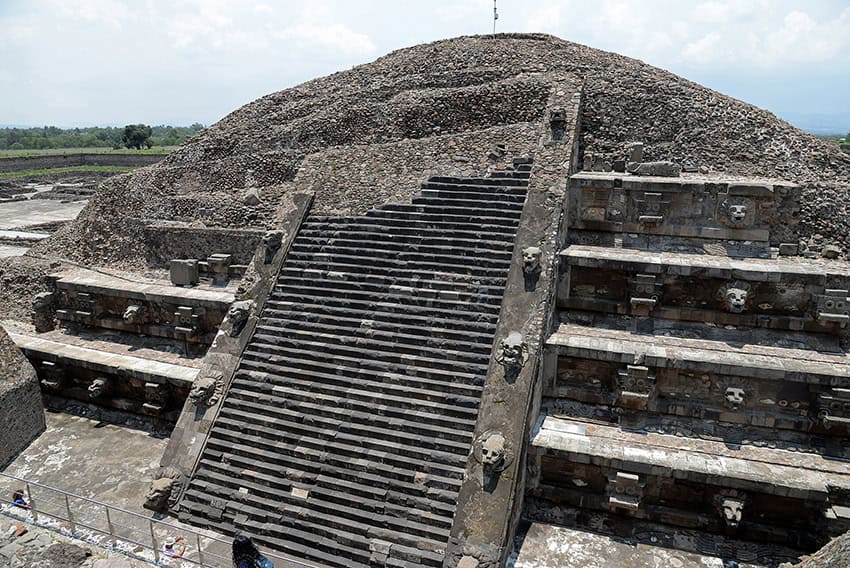
Work will continue after the World Cup, Icaza said, with the Temple of Quetzalcóatl, Teotihuacán’s third-largest pyramid, set to undergo restoration work. The $50 million-peso project has been delayed since 2022.
The maintenance and rehabilitation project is part of a wider national plan dubbed Social World Cup Action Program, which has seen renovation works in museums, archaeological sites and sports fields across the country, particularly in the host cities of Mexico City, Guadalajara and Monterrey.
Following the deadly shooting in Teotihuacán on April 20, security has also been tightened at the archaeological site. Antonio Huitrón, coordinator of Institutional Development at INAH, reported that the number of National Guard and Auxiliary Police officers has increased, and security checkpoints have been installed at access points.
The security increase will be permanent, Huitrón said.
“We are not seeing the World Cup as an opportunity to expand [security], but rather we have expanded precisely to create conditions where visitors perceive a safe place to visit,” he said.
With reports from El Informador, El Sol de México and W Radio
