
Mexico has a proud World Cup history. As of the 2026 FIFA World Cup, which begins next week, the country will have served as host a record three times, with its national men’s team competing in 18 different World Cup tournaments.
Along the way, there have been plenty of memorable moments, from victories to legendary goals. Here are 10 of our favorites, and the greatest moments in World Cup history for Mexico:
10 — Manuel Negrete’s wonder goal in 1986
The quarterfinal game of the 1986 World Cup, with 114,000 fans crowded into the Estadio Azteca to watch Mexico play Bulgaria. Mexico would eventually lose the match, but it is a game remembered for one of the best goals ever seen in the history of the tournament. After a period of intense Mexican pressure, Javier Aguirre and Manuel Negrete exchange five passes during which the ball doesn’t touch the ground, and there is Negrete, executing a scissor-kick volley to score.
9 — Beating the world champions in 2018 and giving the fans a heart attack
Germany went into the 2018 World Cup not only as the reigning champions but also as one of the most impressive winners of all time. They opened their defense against Mexico. In the 37th minute, a quick break ended with Hirving Lozano hitting the ball home for what would prove the winning Mexican goal. Now for the second part of the story.
Ten days later, Mexico lost its third game to Sweden, which left these two teams on six points, and both looking good for the next round. However, a thousand kilometers away in Kazan, the German game was still going on with the scores at 0-0. If the reigning champions could conjure up a late goal and beat South Korea, they might still eliminate Mexico. In the 92nd minute, there was indeed a goal, but it was Korea who scored. Two minutes later, the Koreans scored again, and Mexico’s qualification was secured!
8 — Chaos in the Azteca in 1970
Mexico had drawn with the USSR in the opening game in the 1970 World Cup and now needed something against El Salvador. With half-time approaching, and the game still goalless, Mexican frustrations were building up. The ball went out of play, and El Salvador’s captain, Salvador Mariona, stood there expecting Mexico’s Mario Pérez to kick it to him for the throw-in. Instead, Pérez glanced at the referee and seemed to decide that Mexico had been awarded a free kick! With the El Salvador team jogging in the opposite direction, Mexico’s Aaron Padilla received the ball and was left with a free run towards the goal. The ball was crossed, Boja missed it, but Javier Valdivia slid in to score.
The El Salvador players were furious and rightly so. It was uncertain if referee Ali Hussein Kandil had actually given a free kick at all, or if he had been “conned” by Perez. He certainly hadn’t given the Salvadorian side a clear signal, and they had been totally caught out. For several minutes, El Salvador refused to restart the game. Referee Kandil kept placing the ball on the center circle, and the El Salvador players kept kicking it away. The referee decided to blow for halftime and, with tempers cooled during the break, the El Salvador side came out for the second half. But their heart no longer seemed to be in the game, and Mexico won 4-0.
7 — Introducing the Mexican ‘wave’ in 1986
“The Mexican Wave” is not actually a Mexican invention. As far as can be traced, the idea was dreamt up by Krazy George Henderson, who taught it to the crowd at a baseball game in the U.S. Young Mexican sports fans saw it on television and introduced it in a soccer game between Monterrey and Tigres. All this happened under the radar, and it was the carnival atmosphere in the Azteca Stadium in 1986 that brought the wave to world attention.
6 — The last 16 curse
“The Curse of El Quinto Partido” … the 5th game. The expression refers to seven consecutive tournaments in which Mexico qualified for the knockout stages but couldn’t get beyond the Round of 16 for a place in the quarterfinals and a 5th game. The run started in 1994 with Mexico losing on penalties to Bulgaria. It continued in 1998 when they led Germany for much of the second half but still lost. The 2002 tournament brought a disappointing defeat to the U.S., followed by an extra-time defeat to Argentina in 2006.
A second defeat to Argentina four years later and a defeat to the Netherlands in 2014, once again having led for most of the second half, and finally a defeat to Brazil in 2018, continued the “curse.” In part, this pattern was due to Mexico regularly finishing runners-up in their group, giving them potentially a tougher game in the first round of the knockout stage.
5 — Did you see that in 1998!
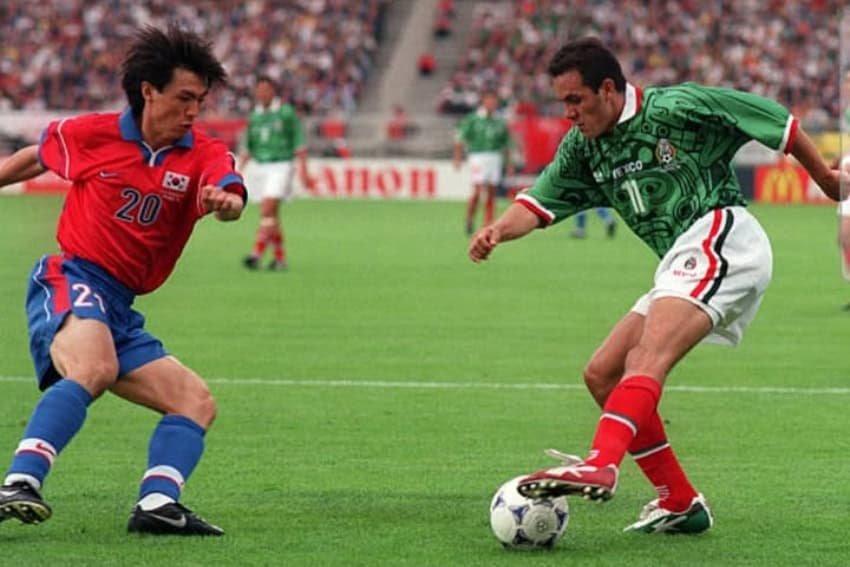
Cuauhtémoc Blanco was a very good player, enjoying a career that saw him represent Mexico 120 times and play nearly 600 club games. Yet, he is still best remembered for a little bit of trickery in a World Cup game against South Korea. Out on the left touchline, double-marked, he held the ball tightly between his ankles, jumped over two defenders, and was away. It wasn’t spontaneous — he had developed the trick with Club América — but it took the world by surprise. Viva Mexico!
4 — Guillermo Ochoa vs. Brazil in 2014
El DÍA que MEMO OCHOA FRENÓ a la PENTACAMPEONA 😱 Brasil 0-0 México – Fase de grupos 2014 🎤 TV AZTECA

In their second game of the 2014 tournament, Mexico faced mighty Brazil. This was perhaps not the best of Brazilian sides, but they were at home, and they had Neymar. It was Neymar in the 27th minute who rose to head the ball towards the Mexican goal. Powerful and well directed for the corner of the net, it seemed a goal for sure … but there was Guillermo Ochoa, stretching out and somehow getting his hand to the ball to guide it around the post. It was one of the greatest World Cup saves of all time, and the heroics didn’t stop there. Ochoa had the game of his life, on three further occasions blocking the ball with his knee and body to prevent Brazil from scoring from close range.
3 — ‘Cinco Copas’ in 1966
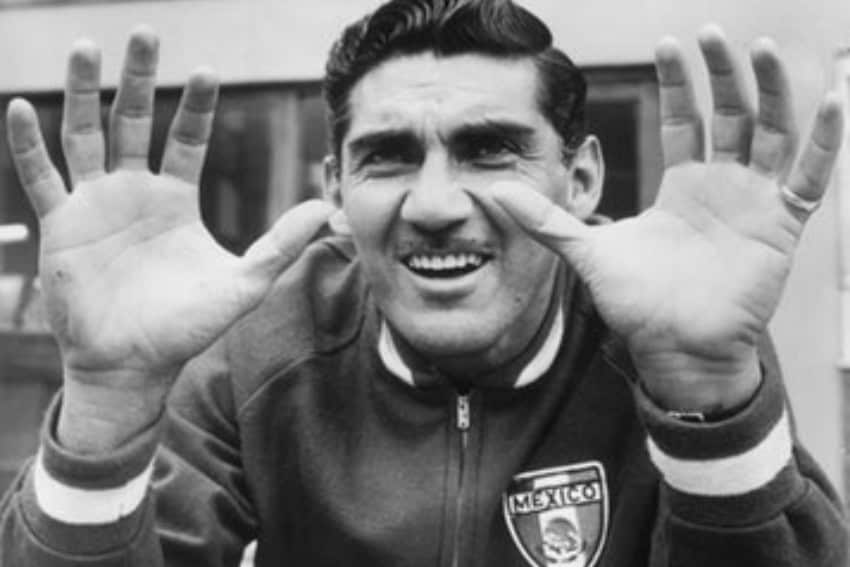
Mexico had done well in the 1966 World Cup, taking a point against France and giving England a tough time. With the final game to come, Mexico were still in with a chance of making the quarterfinals, but the odds were against them as they would have to beat Uruguay, and to do so by at least two goals. With young Ignacio Calderón having fumbled the ball to give England an easy goal in the previous game, Mexico recalled Antonio Carbajal. The 37-year-old veteran became the first player to appear in five World Cup tournaments, a record that would not be equalled for 32 years. He played well, and Mexico kept a clean sheet, a great way to end a unique World Cup career that stretched back to 1950.
2 — The Ignacio Trelles revolution
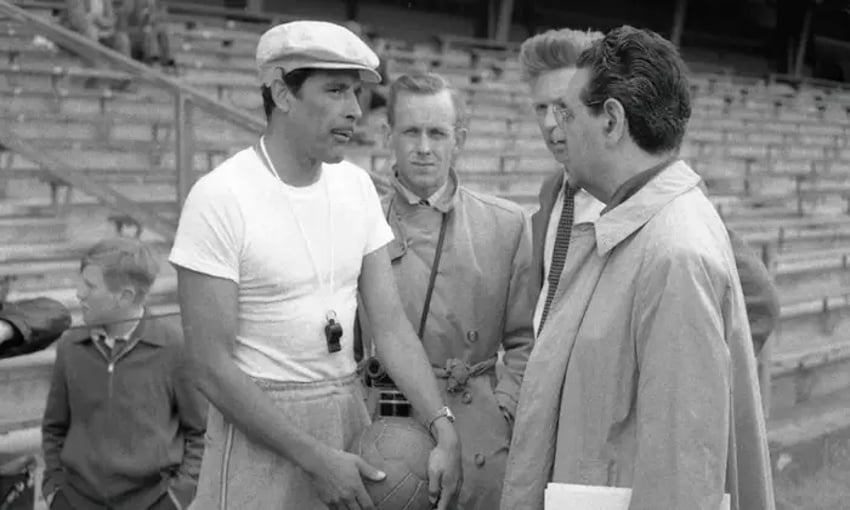
In three World Cups from 1950 to 1958, Mexico lost 5 out of 6 games and conceded 26 goals (an average of 3.25 a game). From 1962 to 1970, they conceded just 11 goals from 7 games (an average of only 1.1). The man who found a style that suited his players was Ignacio Trelles. In 1961, he brought Mexico to England for a game in the iconic Wembley Stadium. Mexico lost 0-8, showing they did not have the players for the new 4-2-4 style that was sweeping the world.
Trelles responded to the Wembley disaster by developing his own Mexican style. This involved three central defenders and two players covering the flanks, but willing to move forward with the ball — wing backs as we know them today. Mexico became a team that could soak up pressure and then quickly counterattack. The result was a gradual improvement that saw them score their first win in 1962, achieve two draws in England in 1966, and, under coach Raúl Cárdenas, who inherited the system, reach the knockout stages for the first time in 1970.
1 — Saving the World Cup in 1970
The 1966 World Cup had been cynical. South Americans protested at the injury-threatening tackles of the Europeans, Europeans players moaned about the South Americans’ time wasting and intimidating the referees. There was nothing beautiful about the game. Then came Mexico in 1970. Perhaps the altitude helped as it slowed the pace down and gave the edge to the skillful players, rather than those who relied on the physical side of the game. Perhaps it was the carnival atmosphere created by the Mexican fans, but starting with Peru and Brazil, the players started to have fun. By the semifinals, even the dull Italians were joining in, beating West Germany 4-3 in the “Game of the Century.” All this was watched live around the world in color. The World Cup has never looked back!
Bob Pateman lived in Mexico for six years. He is a librarian and teacher with a Master’s Degree in History.
