
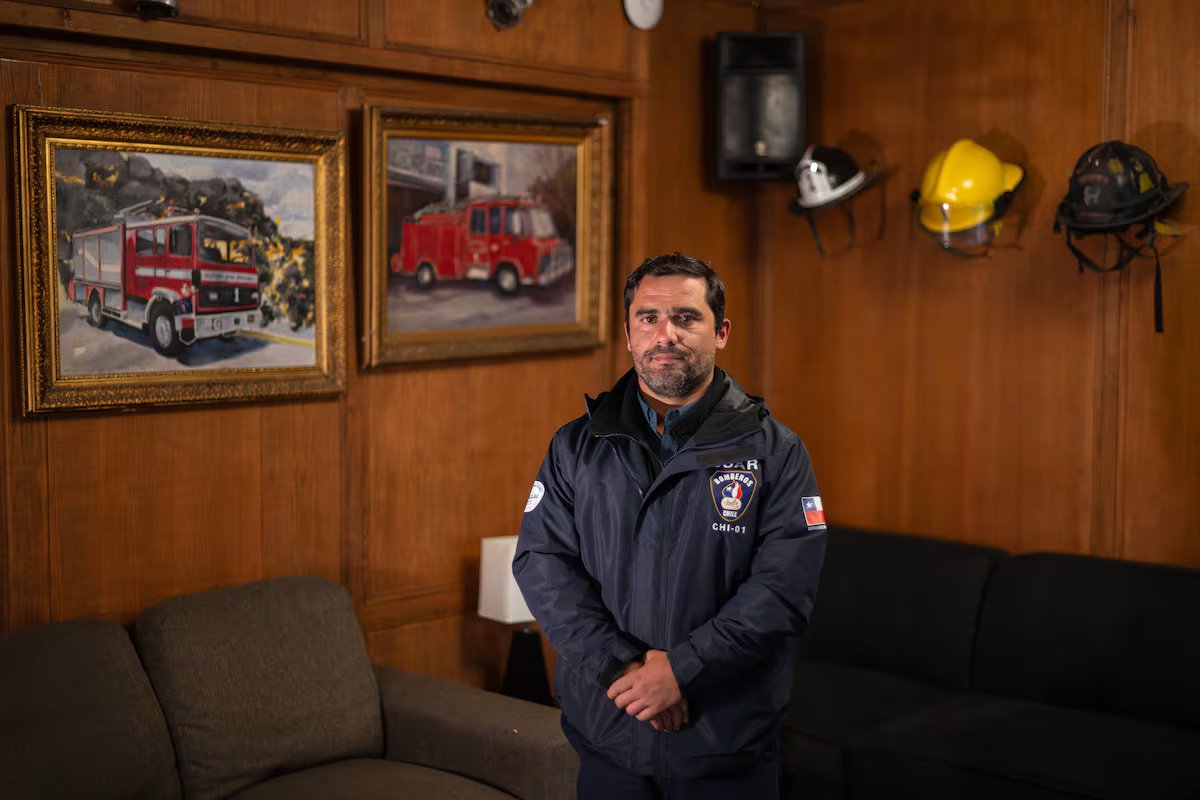
“Come on, damn it! It’s only your mind,” Víctor Torres Fuentes, a volunteer with the Chilean Firefighters’ Search and Rescue Group, kept telling Hernán Gil as he managed to poke his head out from the rubble of a building in Catia La Mar, La Guaira, Venezuela. The security guard had been trapped beneath the structure for eight days after two earthquakes struck the Caribbean country on June 24. It was Thursday, July 2 when the rescue team reached him. Recovering in a Caracas clinic, Gil recalled those words of encouragement that, he says, “gave him strength.”
Torres, a mining engineer who has spent 25 of his 40 years serving with the fire service, says the effort was collective, since rescuers from Chile, the United States, Spain, Venezuela, Portugal, Mexico, Costa Rica and El Salvador took part in the operation. “Hernán’s rescue was a moment of hope and of unity for the Americas,” he says in an interview with EL PAÍS.
He landed in Santiago, Chile, on Saturday along with 44 colleagues — including three women — who had taken part in rescue operations in Venezuela, where the 7.2 and 7.5-magnitude quakes have left more than 3,500 dead, 16,700 injured and tens of thousands displaced. “The real heroes were the Venezuelans, helping their own people in the first hours after the earthquakes,” the rescuer says.
Chilean aid arrived a day after the twin quakes. The group focused its efforts on La Guaira, the tragedy’s “ground zero,” where firefighters recovered bodies and led an operation that became a defining moment of the response because of its complexity: pulling a survivor, Herbán Gil, out alive from among the 140 tons of rubble that collapsed onto the guard post where he had been trapped.
‘There was a heartbeat’
Torres, who stands 1.62 meters tall, entered through a second tunnel built by teams of emergency experts to extract the survivor. Not only did his stature help execute the operation, but so did his background as an engineer specializing in mining emergencies. “Many of the maneuvers we used there have no precedent, although the strategy was very similar to the one used in the rescue of the 33 miners in Chile [August 2010]. We had to be extremely adaptable,” he says.
This Chilean rescuer has taken part in roughly a dozen search-and-rescue operations following devastating earthquakes, including those in Peru (2007), Haiti (2010), Ecuador (2016) and Chile’s own February 27, 2010 earthquake. Measuring 8.8 in magnitude, it was one of the strongest earthquakes in the country’s history and was followed by a tsunami that claimed hundreds of lives.
The rescuer, who has also led teams on several missions, explained that they found Hernán after residents of Catia La Mar told them there were signs that someone might still be alive inside the Galerías de Playa Grande shopping center. To confirm it, they used radar equipment. “We realized there was a heartbeat; a person was detected by the radar,” says Torres.
Chile led the rescue effort, which drew support from teams from several countries. “All the teams trusted Chilean leadership because we are one of the continent’s oldest forces in conducting large-earthquake rescues,” Torres says.
According to the engineer, one of the most difficult tasks was beginning construction of the first rescue tunnel, through which they inserted a tube to provide the Venezuelan survivor with water: “We built it by ear with Hernán, because he talked to us and kept giving us a bearing or direction to reach him. In the early stages, when you can’t see the victim and are only listening, there’s anguish because you know it’s a person who is suffering.”
As rescuers advanced toward Gil, they realized the space where he was trapped was unstable. Two minor collapses even left Torres partially buried. As a result, they decided to abandon that route and find another way to reach the trapped man. “We built that second tunnel with the United States; it wasn’t an individual effort but a collective one. That’s how I reached Hernán from above his head,” says Torres.
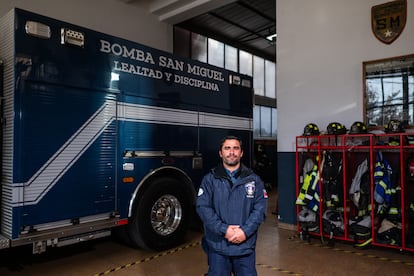
Torres says the most important thing at that stage was staying focused. “Pressure was intense when extracting Hernán, because the tunnel structure was losing strength. In fact, he felt the space shrinking. However, we had medical certainty that he was in better physical condition to withstand the rescue,” says Torres.
Before returning to Chile, the team was awarded Venezuela’s “Hero of Venezuela” medal by the government of Delcy Rodríguez. The decoration was formally presented on Monday to Chilean President José Antonio Kast during a ceremony at La Moneda Palace in Chile.
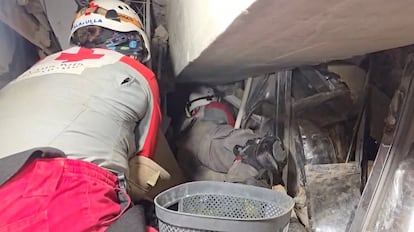
After shaking the president’s hand and receiving the honor — along with the rest of his team — the first thing Torres did was take a taxi to the fire station in the Santiago district of San Miguel, where he has worked for several years. He says experiences like the one in La Guaira are never cause for celebration.
“We know that behind a tragedy like the one that struck Venezuela there are many people who have died and that a humanitarian crisis is likely unfolding, a challenge we hope can be addressed in the best possible way,” he says.
At the same time, the rescuer says he and his colleagues are left with the feeling that they accomplished something meaningful and helped deliver “a message of hope to the Venezuelan people: just as Hernán found the strength to hold on, they too will overcome this crisis.”
Sign up for our weekly newsletter to get more English-language news coverage from EL PAÍS USA Edition
