
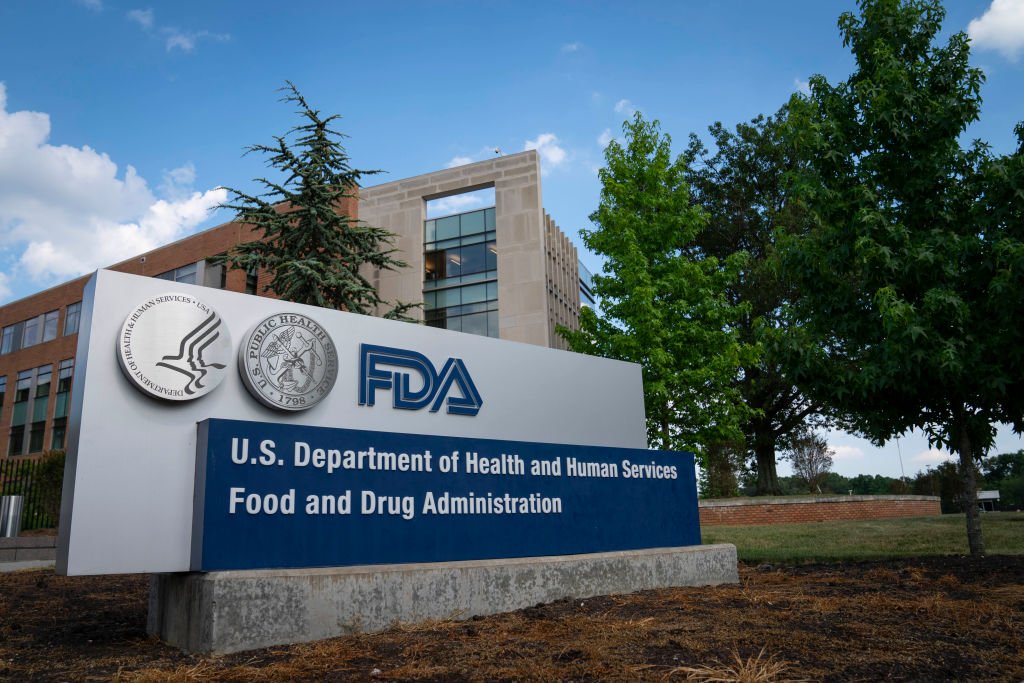
On February 23, the FDA did something the rare disease community has spent a decade fighting for: it issued the Plausible Mechanism Framework, a formal pathway for individualized therapies where traditional clinical trial evidence standards are not appropriate. Sponsors can now meet the evidence standard through biological proof of concept. Identify the genetic problem, show the therapy targets it, demonstrate it works at the molecular level, and you can dose an initial cohort of patients.
This is a real win. The scale of what it unlocks is hard to overstate.
Roughly 10,000 known rare diseases affect 30 million Americans, and about 95% of them have no approved treatment. The annual U.S. economic burden, according to the EveryLife Foundation, is approaching $1 trillion.
For potentially thousands of families, individualized genetic therapies just went from theoretical to real. The framework gives permission to act, and now the field needs to build the infrastructure to deliver on it. That infrastructure has five parts, and none of them are regulatory.
1. Every family deserves an assessment, and the data to deliver one already exists.
For most families, getting a diagnosis is just the beginning. The question that matters is whether their child’s specific variant can be targeted by a therapy that can realistically be built. That means looking at every available approach, from antisense oligonucleotides and gene replacement to gene editing and drug repurposing. The answer is yes more often than most families know. A study by Boston Children’s Hospital’s Tim Yu and colleagues suggests that 15% of rare disease patients are eligible for personalized ASOs alone, and that’s just one modality.
The data exists, scattered across variant databases, preclinical literature, manufacturing directories, and clinical precedent. Where gaps remain, groups like C-Path are filling them. What’s missing is someone organizing it so you can run it against one child’s genome. That’s an operational problem, and a solvable one.
2. Manufacturing that can produce one child’s dose.
The U.S. contract manufacturing supply chain was built for batch orders, not for one child’s dose. Quality and safety testing costs roughly the same whether you’re making one dose or a thousand, with release testing alone in the hundreds of thousands per batch. “Maybe the first patient’s treatment for a disease takes $2 million and a year of development; by the third patient, the cost should be down to, say, $100,000 and a month of development,” Fyodor Urnov of UC Berkeley’s Innovative Genomics Institute told The Atlantic.
The Baby KJ researchers told STAT in late March 2026 that the wall they’ve hit is manufacturing standards, not science. ARPA-H has launched two programs aimed at this problem: THRIVE (integrated platforms for precision genetic medicines) and GIVE (distributed manufacturing networks), together representing a nine-figure federal investment, with the Baby KJ team at CHOP working toward a platform IND for urea cycle disorders in 2026. “Our vision is to rapidly produce multiple kinds of genetic medicines so that breakthrough treatments are accessible, affordable, and ready to dose within a week of diagnosis,” John Schiel, ARPA-H’s GIVE Program Manager, said when launching the program.
The structural answer is shared manufacturing platforms where multiple single-patient programs run on common infrastructure, spreading fixed costs. It’s an engineering problem with clear inputs and, for the first time, serious federal backing and the will to solve it.
3. Outcomes data that unlocks insurance coverage.
Today, no insurance pathway exists for these therapies. Medicare has no coverage mechanism. Commercial insurers classify individualized treatments as experimental regardless of FDA status. Mila’s Miracle Foundation raised roughly $3 million to fund Milasen, the first individualized ASO, and treatments like it remain not reimbursable by insurance.
The path to coverage runs through operational certainty: consistent delivery, auditable costs, and outcomes data health economists can evaluate. Every program running today must capture structured outcomes from day one so insurers have something to underwrite. Julia Vitarello, co-founder of the N=1 Collaborative and Mila’s Miracle Foundation, has described a future in which children with rare diseases are diagnosed “at birth, or even in utero,” and “within just a few months” receive “a genetic treatment tailored to their underlying cause of disease,” with the cost “covered by insurance.”
If the field starts building that data layer now, the reimbursement timeline compresses dramatically. If it waits for a payor to ask, the conversation is years away. The families putting in the work today are building the case every family after them will benefit from.
4. AI that turns a one-off into a repeatable system.
Every gap above shares a common feature: the knowledge to close it already exists. It’s scattered across FDA filings, manufacturing directories, PubMed, clinical registries, and the institutional memory of a few specialists. The knowledge is there. The work now is building the infrastructure to put it to use at the speed a child’s condition demands.
AI is what makes that possible. Matching a patient’s variant to qualified development partners. Scheduling shared manufacturing runs. Generating regulatory documents. Capturing outcomes in a format legible to a health economist, not just a clinician.
Every program that runs makes the next one faster, cheaper, and more predictable. AI captures what each program learns and puts it to work for the next family. This is not frontier research. It’s applied AI against well-defined operational problems. “We’re living in an incredible time where science is no longer the limiting factor. We now have the technology to find the underlying genetic cause of disease and rapidly develop a medicine to target it, even if unique to just one person,” Vitarello said when the UK Rare Therapies Launch Pad was announced.
5. A way to reach every family who should know.
Roughly 15% of U.S. households are affected by a rare or undiagnosed illness. Around 60% of rare disease patients remain undiagnosed even after comprehensive genetic testing, and the average diagnostic odyssey runs five to seven years. The average family visits roughly eight doctors and gets two to three wrong diagnoses before learning what their child actually has. There are roughly 4,000 genetic counselors in the U.S., the most natural contact point for these families. Equipping them is how this framework gets to every family, not just the ones who already know where to look.
This is a solvable distribution problem. The door is open. Every family deserves to know it’s there.
The Plausible Mechanism Framework is a genuine breakthrough. Baby KJ, Mila, Ipek, and a growing list of patients have proven that individualized genetic therapies work. The science is ready. The only question left is whether the field can build the operational infrastructure to deliver these treatments to every family who needs them.
The regulatory permission now exists. The manufacturing investment is flowing. The data to unlock reimbursement can start being built today. The families are findable. For the first time, every piece is within reach. What remains is the execution.
Photo: Getty Images, Sarah Silbiger
Steven Ringel is the founder and CEO of Nome Therapeutics, the operating system for personalized therapeutics. Nome uses AI to help rare disease families determine whether a custom therapy is scientifically viable for their specific genetic mutation, then coordinates the development process end to end.
Before founding Nome, Stevie led precision medicine business units at Tempus, GeneDx, and Sema4, and worked in healthcare strategy at Bain & Company. He also founded a 501(c)(3) to advance gene therapy for his own progressive inherited retinal condition, which he and his sister share. That dual perspective, as both a patient and an operator who has built precision medicine businesses, anchors how Nome approaches every family it serves.
This post appears through the MedCity Influencers program. Anyone can publish their perspective on business and innovation in healthcare on MedCity News through MedCity Influencers. Click here to find out how.
