
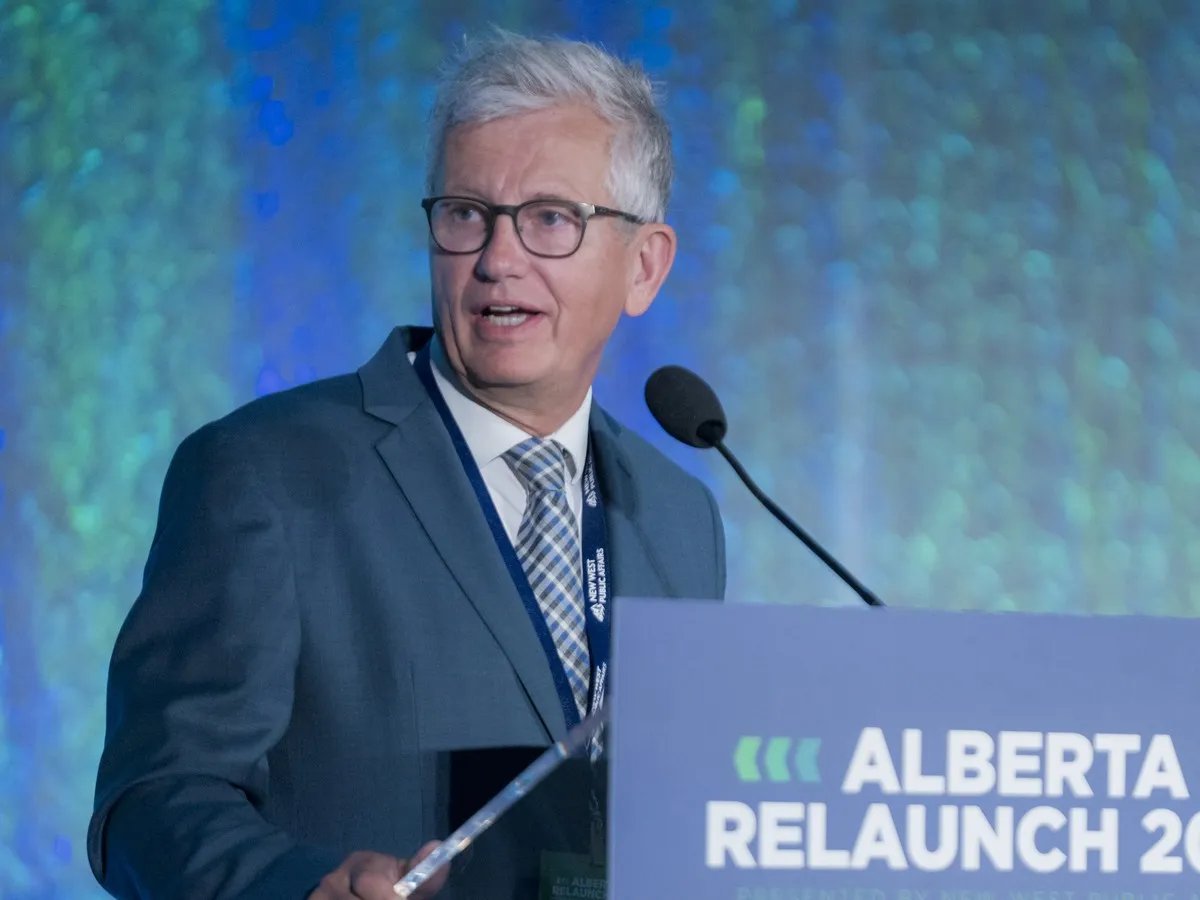
Monte Solberg is between a rock, a hard place and a divided conservative base.
The former Conservative MP and founder of Vote to Stay wants Albertans to believe their “future is stronger within a united Canada than outside of it.” Of all the players trying to sway the Oct. 19 vote — pro-separation and pro-Confederation — his path is the most treacherous.
Champions of Alberta separation lean into a grievance culture carefully fed for a decade, especially during the Trudeau years. They have a motivated, sometimes angry base. Progressive “remain” campaigns — Thomas Lukaszuk’s Forever Canadian, Stephen Carter’s Alberta’s Voice, Anne McLellan’s Before You Vote — draw natural support in Liberal and NDP constituencies.
Solberg and his team, which includes former premier Jason Kenney, are hunting in tougher country. “We’d like to sway 100,000 soft separatists to vote on the federalist side,” he tells me over coffee in Calgary. “As far as I know, we’re the only ones in the Conservative fold.”
Those soft separatists are his people. “These are the people who say, ‘I’m going to send Carney a message,’” and choose Option 2 — forcing the Alberta government to begin the legal process for a binding separation referendum. They think they are being tactical; Solberg thinks they are playing with fire.
“I urge people not to see it as a way to send a message to Ottawa about Alberta’s ill treatment, which I acknowledge has been the case in the past. But I urge them to think about the consequence of blowing oxygen on a separatist movement.”
Sending a message divides, he says. “We don’t need to turn people against each other.” That is the real contest. The separatist campaigns need the soft separatists — the conservatives who think Option 2 is a warning shot, not a first step out the door. Solberg is asking those voters to stand down; the independence camp is asking them to use the ballot as leverage.
Solberg knows polarized politics. He chuckles recalling his youth in Saskatchewan under then premier Allan Blakeney, when the NDP partially nationalized the potash industry. “My dad was a conservative, very involved in politics, and fought against the NDP. It was a crazy time. You think democratic socialists are a thing in the U.S. now; they were way more extreme in those days in Saskatchewan.”
In Alberta, he grants the anger is often righteous. “We were really attacked by Justin Trudeau. No question.” But Trudeau is gone. Mark Carney, he says, has moved in a different direction on electricity regulations, the EV mandate and export pipelines.
“We’ll never know if we moved five people or 50,000 or 100,000,” Solberg says. The campaign’s job is to give people reasons to reconsider. “This is not a joke. Even though it’s a referendum on a referendum at this point, we could quickly be cast into a binding vote on the future of Alberta and Canada.”
He is at his sharpest when he leaves the atmospherics and talks specifics. The Alberta Prosperity Project recently released a draft constitution for an independent Alberta that includes elements he says most Albertans would not recognize. “Making Alberta an open-carry state is ridiculous. I say this as somebody who is a firearms owner myself. This is not what Albertans are looking for. It’s not a priority.” Albertans care about affordability and about not being swallowed by larger powers — risks, he argues, that are more manageable inside a country than as a “statelet.”
In a world now defined by an intense trade war with the United States, he would rather stay united than split off and become easy pickings. He will not go further into fear; I am surprised by the calm. These decisions are emotional, yet he remains relentlessly logical. The question hanging over Vote to Stay is whether logic is enough against people who are not trying to be reasonable.
The campaign has raised roughly $100,000 and hopes for more. It profiles prominent Albertans — Stephen Mandel, Iris Evans, Ed Stelmach, Brett Wilson, Mike Shaikh — with a civic message: you have a stake in this; spend an hour and vote.
That is a decent appeal to people who already like Canada. The voters who may well decide this thing are the ones telling Solberg they want to send Ottawa a message.
“My sense is that overall enthusiasm among federalists is picking up,” he says. Flags, online engagement, polling. “I think we saw the peak of separatism in the spring, almost concurrent with when the separatist group brought in their petition.” Maybe; but peaks do not matter if the other side is better at turning residual anger into turnout.
Solberg is a natural for this role. He was a Reform MP for Medicine Hat from 1993 to 2008, a Harper cabinet minister and an early believer in “The West Wants In.” After politics he founded New West Public Affairs in Calgary; his sons Matt and Michael Solberg are partners.
A card-carrying United Conservative Party member, he has sympathy for Premier Danielle Smith. “Politics within the UCP is very difficult these days, very elbows up.”
He credits her working relationship with Carney. “They’ve actually made great progress on things that are important to Albertans. We should celebrate that, not cheer against it.” Political courage is in short supply, he says, “and both are showing a bit of it. That should be applauded.”
Then the trade war with America made the argument more complex. Kenney — Solberg’s most prominent ally — publicly suggested that Alberta oil stay on the table as potential leverage with Washington. Keith Wilson, the Let Alberta Decide campaigner, immediately turned the remark into a separatist talking point. Vote Option 2, Wilson said, and put that leverage in Alberta’s hands rather than Ottawa’s.
Solberg’s pitch is that “sending a message” only inflames division. Wilson’s use of Kenney’s suggestion shows how fast that message escapes the conservative fold Solberg is trying to hold together.
“Canada is something more than a bunch of trade deals and it’s not an ATM,” Solberg says. “It’s actually all these relationships between people and provinces and communities and families. It’s all of that that is at stake.”
True enough. It is also the language of people who already agree with him; I know, I’m one of them.
The only frustration he shows is when I ask who has not shown up. “It’s the business community,” he says — the real one, not former premiers fronting for the Canadian Chamber of Commerce.
“Who has more to lose than the business community?” he asks. He understands the reluctance: some worry they will anger customers or anger workers in Red Deer and Grande Prairie. “But you know what,” he reiterates, “it’s about political courage. You need it everywhere.”
He is right. The separatists have warriors; the conservative case for Canada still needs some.
Our website is the place for the latest breaking news, exclusive scoops, longreads and provocative commentary. Please bookmark nationalpost.com and sign up for our daily newsletter, Posted, here.
