
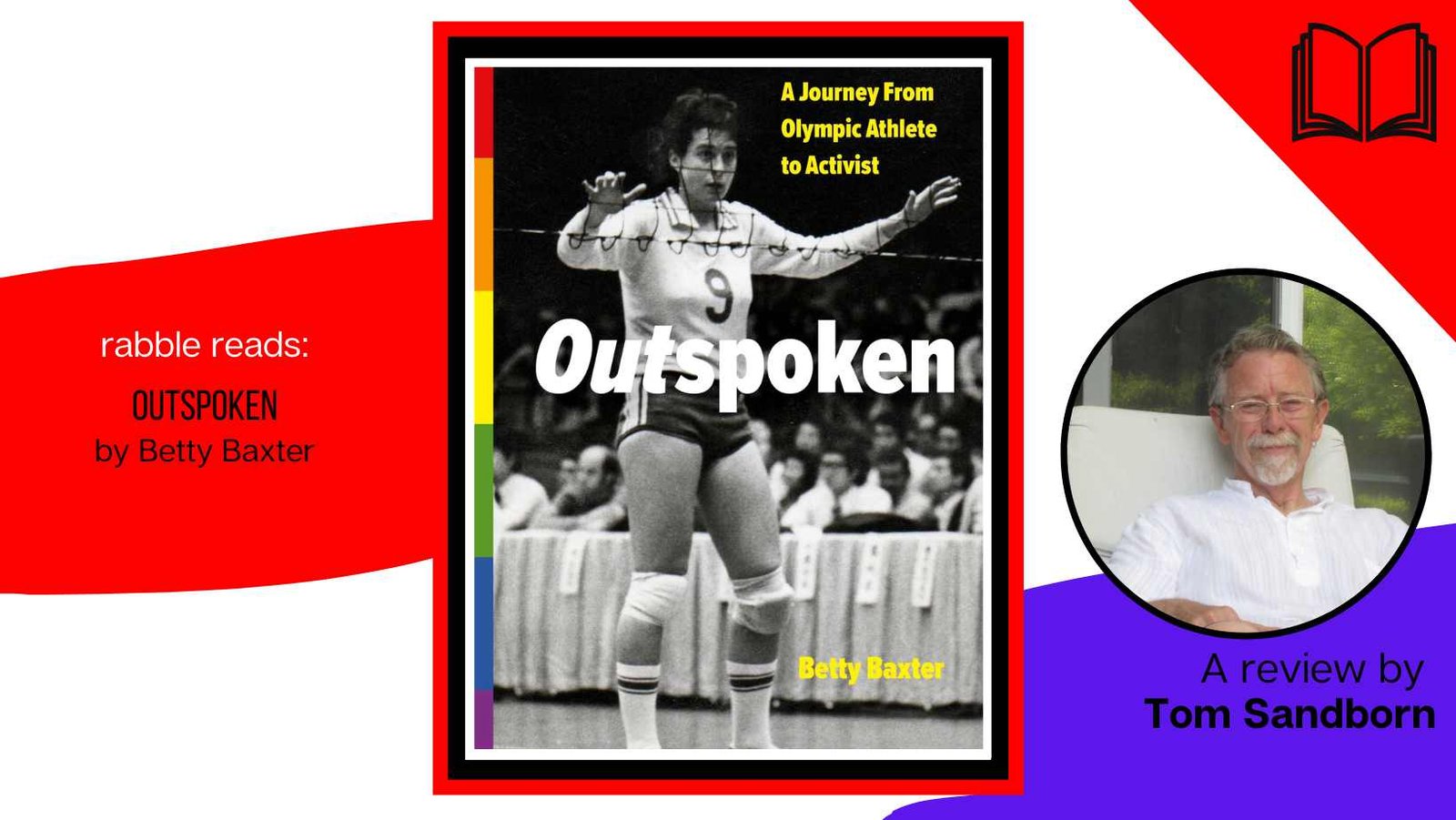
On a snowy Canadian night in 1981, the athlete and coach Betty Baxter attended a mysterious meeting at a motel outside Montreal with senior administrators of the Canadian Volleyball Association. The body had made her the first woman to coach the national women’s team only a year before.
“There are rumours that you are gay, “ said one of the three men in the room sternly. “Do you deny it?” When Baxter confirmed her sexual orientation and challenged the old men convened to decide her professional fate to justify why the question was relevant, pointing out her successes as national coach, one of them, his face contorted with rage, turned and struck the wall with his fist, shouting “You never would have been given this job if I’d known that.” Baxter became another victim of the anti-gay purges that had swept through so many dimensions of Canadian life.
Baxter left that darkly miasmic, morally squalid motel room with one chapter of her life over, and about to begin a new chapter, one that saw her become a public icon for queer communities in Canada and around the world, an eloquent spokeswoman for equality and inclusion both in sport and in civil society. She had already come a long way from her 1952 birth in small town Alberta, and was about to go even further.
Outspoken is the story of that transformation. It is also a love letter to the strenuous joys of competitive sport, and to the 2SLGBTQIA+ community that has emerged around the world in her lifetime, courageously confronting the kind of prejudice that drove her from her first love, coaching and playing competitively, and into the arena of public political advocacy.
Along the way, this remarkable book provides a brief and vivid account of what one of her book’s blurbs ( this one from former Olympian and U of T professor emeritus Bruce Kidd ) describes as “…the helter-skelter creation of the Canadian sports system in the frantic build up to the 1976 Olympics in Montreal…” . It also tells the story of her involvement in organizing the transformative civic events as Vancouver hosted the third ever Gay Games in 1990.
Although Brooks, Alberta was not a hot bed of progressive politics when Baxter grew up there, she shares one memory that prefigured the leadership role she later played in the struggle for equality. Her brother John returned from time working as a tutor in Mexico to tell stories about the 1968 Olympics held in the Mexican capitol, stories that included the striking visual of two black US competitors, Tommy Smith and John Carlos standing on the medals podium with downcast heads and fists thrust into the air in what Baxter describes as “the first televised athletes’ protest against racial inequality.”
As she listened to her brother’s stories about a city lit up by Olympic enthusiasm, Baxter knew she wanted to become an Olympian. It was only later that she realized she would need to stand up for her rights and the rights of other gay athletes in exactly the way the two black athletes had stood up for theirs.
This book is an important historic document, a first person account from one of the key players in the drama of how Canada began its long and still incomplete progress toward equality and inclusion for queer people in sports and in the public square. It is also, and this will make it more impactful, beautifully written. Baxter generously names many of her first readers, friends and editors who helped her polish her text, and the collective work on the manuscript, like the collective work organizing the Gay Games and the many other equality projects that have filled her life, has been impressively successful.
Baxter writes beautifully and movingly about the joys of athletic training and achievement, in passages that reflect her life long commitment to fitness and excellence. Anyone who has ever experienced the sublime pleasure of being “in the zone” on a long run or in the midst of a hard fought game will recognize how powerfully Baxter has captured that pleasure, and the painful price the athlete pays to achieve it. She also conveys the pleasures or solidarity and shared effort on the socio-political front. All in all, this book is both beautiful to read and powerfully instructive.
In a time when authoritarian political opportunists here and abroad have mounted the ghastly apocalyptic horses of homophobia, misogyny and transphobia and are galloping the world toward a dark cliff that may take us all into the abyss, this is an important and timely book. Highly recommended.
