
The World Cup final is drawing to a close, and Lusail Stadium holds its breath. With the score tied at 3-3 and the clock ticking down in extra time, Emiliano Martínez, Argentina’s goalkeeper, makes a last-ditch save from Kolo Muani’s shot, sending the match to penalties. In the shootout, the Albiceleste hold their nerve, defeating France and securing a third gold star on their crest. Adorned before the flashes of cameras wearing an immense black bisht, a traditional Arab garment, Leo Messi raises the World Cup trophy to the sky alongside the Emir of Qatar and FIFA President Gianni Infantino.
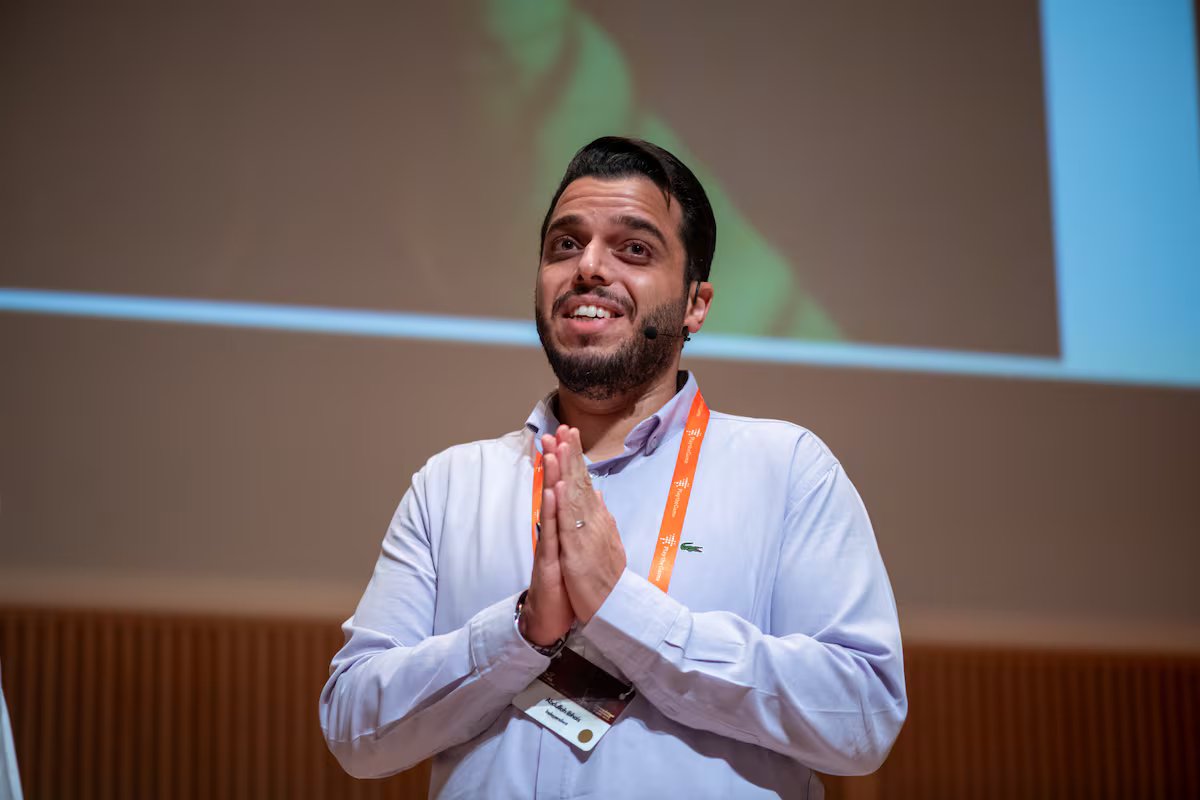
“It was, without a doubt, my toughest moment in prison,” recalls Abdullah Ibhais, 40, who was the communications director for the tournament’s organizing committee, in an interview with EL PAÍS four years later. “When Messi lifted that trophy, I understood that Qatar had won. They wanted a perfect tournament and they had it, they had achieved it. My story, on the other hand, was buried. And what’s worse, nobody cared.”
In the summer of 2019, three years before the world’s attention turned to Qatar, hundreds of workers who toiled from dawn till dusk to build the majestic stadiums for the World Cup staged a protest in Al Shahaniya, on the outskirts of Doha. They were protesting unpaid wages and inhumane working conditions. The strike quickly made international headlines and rattled the organizing committee, which ordered Ibhais to deny the workers’ claims.
“They wanted to make it seem like it was all fake, that they weren’t even employees of the organizing committee, and that it was all an attempt by other countries to tarnish Qatar’s image,” he explains. “I didn’t want to do anything without verifying the facts with my own eyes. I had the day off, so I got in my car and went to the site of the strike.”
What he found was essentially what was already circulating on social media around the world. “It wasn’t just about unpaid wages; I saw hundreds of empty plastic bottles waiting to be refilled with drinking water. They had nothing,” he recalls. “I recorded my conversations with several of them, and they confirmed that they were indeed workers on the organizing committee. And they weren’t just being silenced. They had also received threats for calling the strike, something that isn’t recognized as a right in Qatar.”
“There was no way, at that point, that I was going to issue that statement. They wanted me to erase something real. Something I had seen with my own eyes. In short, they wanted to lie. And I found that intolerable,” he says. “When I refused, I told my superiors that we would first have to resolve the workers’ situation. And of course, they didn’t like that at all. They pressured me in a thousand different ways. Over and over again. Until I decided to resign. I didn’t want to be part of something like that. And I left. My boss told me there would be consequences and that I should be prepared. That’s when I understood that the moment you stop following orders, you become a threat.”
Two months later, and still according to Ibhais’s account, the warning from his boss materialized. “I had agreed to stay a few more weeks to, at his request, judge a competition for content creators. That process dragged on for a few weeks, but ended without a winner due to the candidates’ lack of merit.”
He continues: “Only then did I go to human resources to process my resignation. There, I encountered several state security agents. They arrested me and took me to a detention center. I asked why I was there and requested a lawyer. I still remember the response of one of the officers: ‘Do you think you’re in an American movie? If a lawyer sets foot in this room, we’ll break his legs.’ They told me they knew everything about me and that I would have to confess. When I told them I had nothing to confess to, they brought out a pre-printed confession. They warned me that I had to sign it, and that if I refused, they had other ways of convincing me. That’s when an officer told me: ‘If you don’t give in, you’ll face life imprisonment or execution.’”
Ibhais ended up giving in.
With his signature, Ibhais admitted to participating in bribery to undermine Qatar’s national security, as well as committing fraud in the content creator bidding process — something FIFA, in response to this newspaper, still fully confirms. Days later, he was released thanks to a Sudanese judge — not Qatari, as he himself emphasizes — who ruled that the case had been fabricated. Without a trial, he was released on bail and barred from leaving the country until January 2021, when he received his sentence by email: “I had been sentenced to five years in prison.”
“Of course, we appealed immediately,” he says, still incredulous as he recounts the events. “I called FIFA to ask for their support, but they only issued a brief statement saying that ‘everyone deserves a fair trial.’ That was it. From that moment on, they completely ignored me. They wanted to bury my case. I then contacted various NGOs and media outlets. I was lucky enough to give two interviews, but when I was about to record the third with Norwegian public television [NRK], the journalists were arrested, and I was arrested as well. It was my second arrest. And this time, it lasted more than three years.”
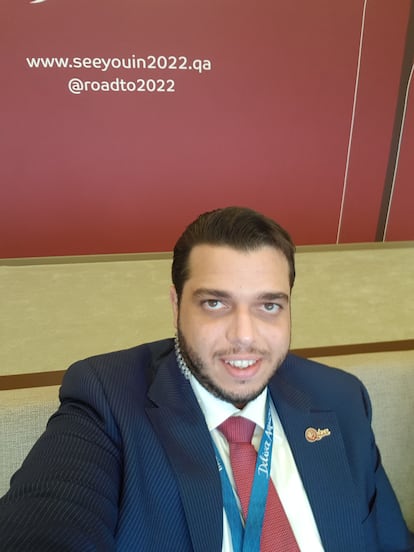
With his case still under appeal, Ibhais entered Al Rayyan National Prison in Qatar on the morning of November 15, 2021. “I remember everything in detail, as if it happened today,” he says. “I was taken to a small room. There were more than 30 people waiting to be sorted, sleeping on top of each other. I started a hunger strike, and a senior official at the facility told me he didn’t care if I died in there, that he had no orders to keep me alive. His only goal was to silence me. I was talking too much, and he wanted to put a stop to it.”
A year later, the Jordanian experienced the World Cup final he had worked so hard for within those four walls. He wasn’t released until March 2025, three years and four months after his second arrest. “For me, FIFA has been complicit in everything,” he asserts. “Through omission, through silence, and above all, by protecting Qatar’s narrative. In the end, all they cared about was the financial gain. Nothing else. I myself believed they were bringing the World Cup there to open the doors of soccer to the Arab and Muslim world. But it was a lie. When they saw that the Middle East had the money, they wanted their share of the pie. And they’ll be back in 2034 [when the World Cup is held in Saudi Arabia].”
Now, a year after his release from prison and back in Jordan with his family, Ibhais is fighting to hold Qatar and FIFA accountable. “I don’t think I should say anything to Infantino. It’s the governance itself that’s rotten. No one is going to get into that position, see the millions the product generates, and say, ‘No, wait, let’s do the same thing but ethically; let’s stop this entire production chain to respect human rights,’” he says. “If they’ve legitimized a sham conviction like mine, based on coerced confessions, I’m afraid they’ll always support the human rights violations they claim to abhor.”
“What happened in Qatar will happen again, whether we like it or not,” he laments. “In fact, it’s already happening. At the final of the Club World Cup held in the U.S., Trump’s ICE removed a man from MetLife Stadium in New Jersey [the venue for the 2026 World Cup final] and deported him. Who allows this? Let’s think about it. Who allows stadiums to become traps for immigrants?”
“I’m working day and night to make FIFA answer for what happened. I owe it to my family and the Qatari workers,” says Ibhais, who, along with his American lawyers, sent a formal letter to the world football governing body in early March demanding answers by March 27. “They chose silence, once again,” says Ibhais, adding that he is now considering filing an appeal in Switzerland. “I know I’m just a drop in the ocean, but I won’t stop until I’ve done everything in my power to hold those responsible accountable. I would never forgive myself.”
Sign up for our weekly newsletter to get more English-language news coverage from EL PAÍS USA Edition
