
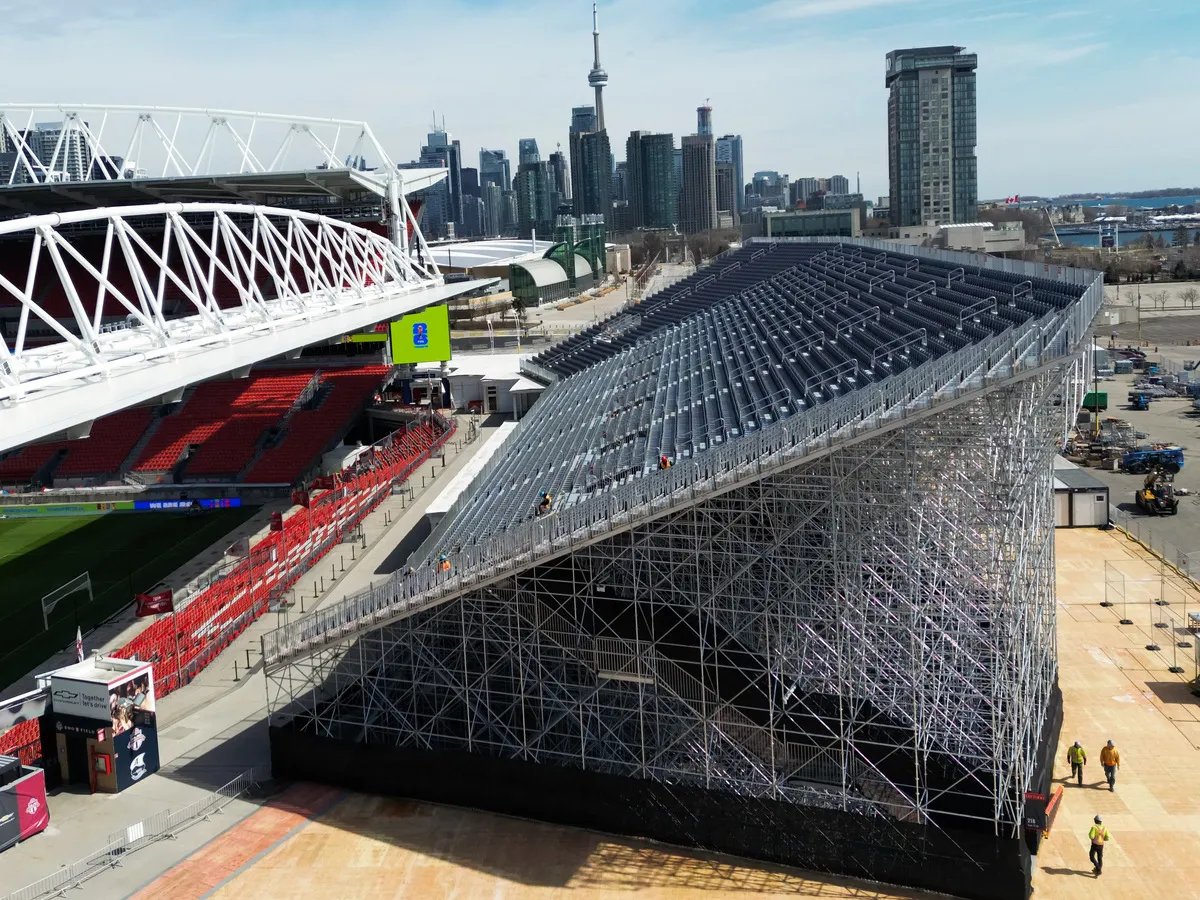
The New York Times was not kind to BMO Field’s temporary stands, a metal scaffold topped by 17,000 new seats erected for the upcoming FIFA World Cup games in Toronto. When its local staffer attended the May 9 game there between Toronto FC and Inter Miami, he reported back under the headline: “You feel it shaking.”
By the end of the article, however, the stands were decreed to have great sight lines.
Thousands leapt to their feet as Lionel Messi scored his ninth goal of the season, “and if Saturday was any indication, those crowds will gladly hang out high above the Earth in a strange new setting.”
That’s as it should be, said Jeremy Troughton, managing director of the major events division of Arena Group. Arena built the temporary stands at BMO Field, which will be briefly renamed Toronto Stadium for the duration of this summer’s World Cup, which began on June 11.

“We put up grandstands and temporary structures for major events around the world,” he told National Post. “My team looks after those major events and the one-offs where the level of scrutiny can be a bit higher than you might get for a normal event, and obviously, on the level of major events in terms of global TV audience, I think that the FIFA World Cup is probably number one.”
He understands that the stands may look a little hodgepodge, before they were covered with World Cup branded wrapping, but said safety is paramount. “We are all about the engineering and the strength. That is what we’re there to do.”
That means building the stadium to fit the event and its attendees, plus what Troughton calls “the dynamic.”
“If you’ve got people attending a dressage event in equestrian, where the crowd generally are not even allowed to move, versus an ACDC rock concert, you’ve got extremes,” he said. “And so part of that engineering is we look at the harmonic motion, the motion of the crowd in the grandstands, and we always engineer for what the crowd is likely to be doing.”
It’s like a spectrum of energy. “Synchronized crowd movement is something that will occur, so these are engineered more to the ACDC rock concert end than the dressage end.”
He added that the stands become more stable once there are people in them.
“There’s various ballast blocks and tie-down points under the stands, and that might, to the untrained eye, make you wonder how safe they are, but that’s there purely to ballast when it’s not loaded,” he said. “When they’re loaded with people, that is when they are in their most robust configuration. We become the ballast.”
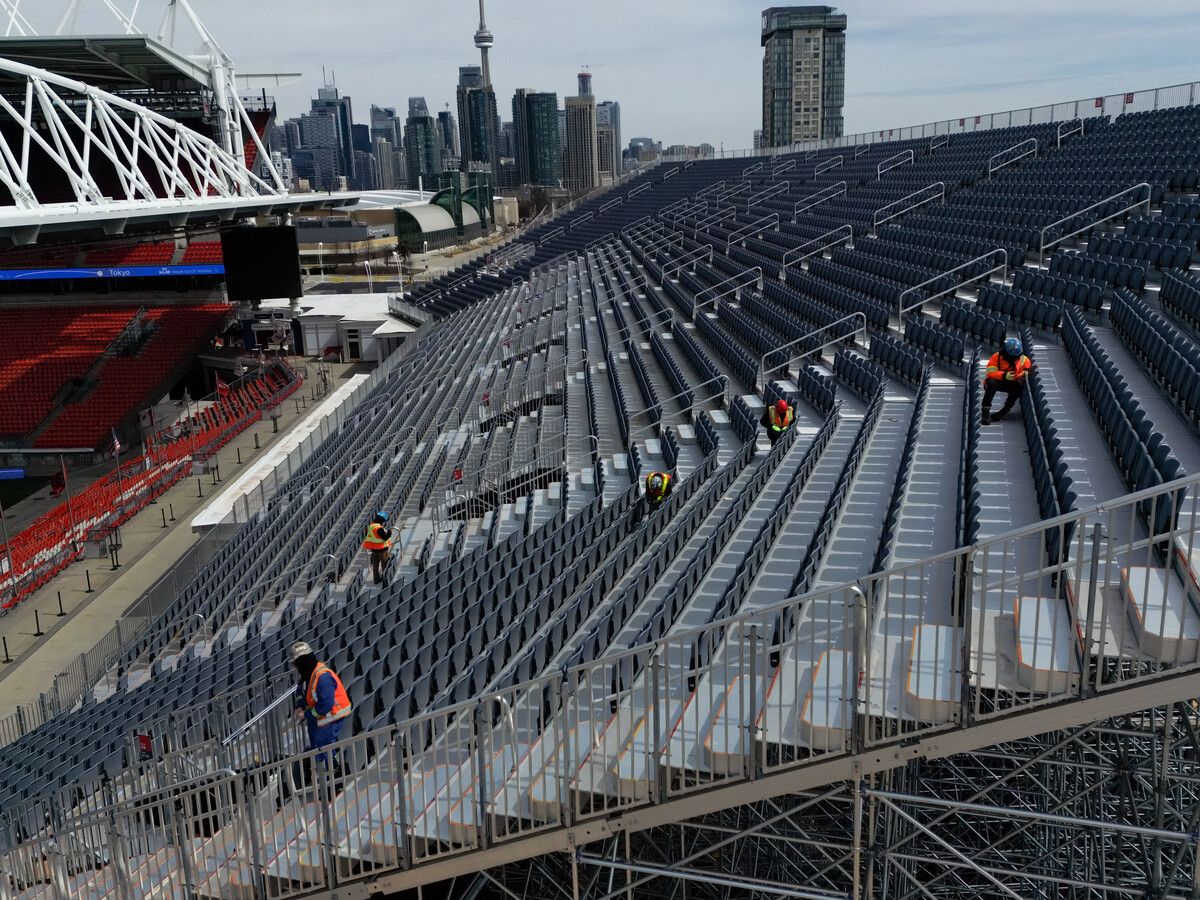
Materials for the scaffolding were sourced locally, but the seats atop have travelled around the world. “The particular stand that’s in Toronto, in its lifetime, was used in the Paris Olympics, then it was moved across and did the Ryder Cup in New York, in Bethpage, and now it’s up in Toronto,” said Troughton.
He said temporary is the fiscally prudent way to go.
“You don’t need to turn the clock back very far to look at Olympic Games where there were many new stadiums built for a major sporting event to come to town, and that then sits there unused or partially used for decades afterwards,” he said. “People are challenging that rationale of building so-called white elephants that don’t have the use afterwards.”
Brazil learned that lesson the hard way, investing heavily in permanent structures for the 2014 World Cup and the 2016 Summer Olympics, only to see one stadium converted into a parking lot and another rented out for birthdays and weddings .
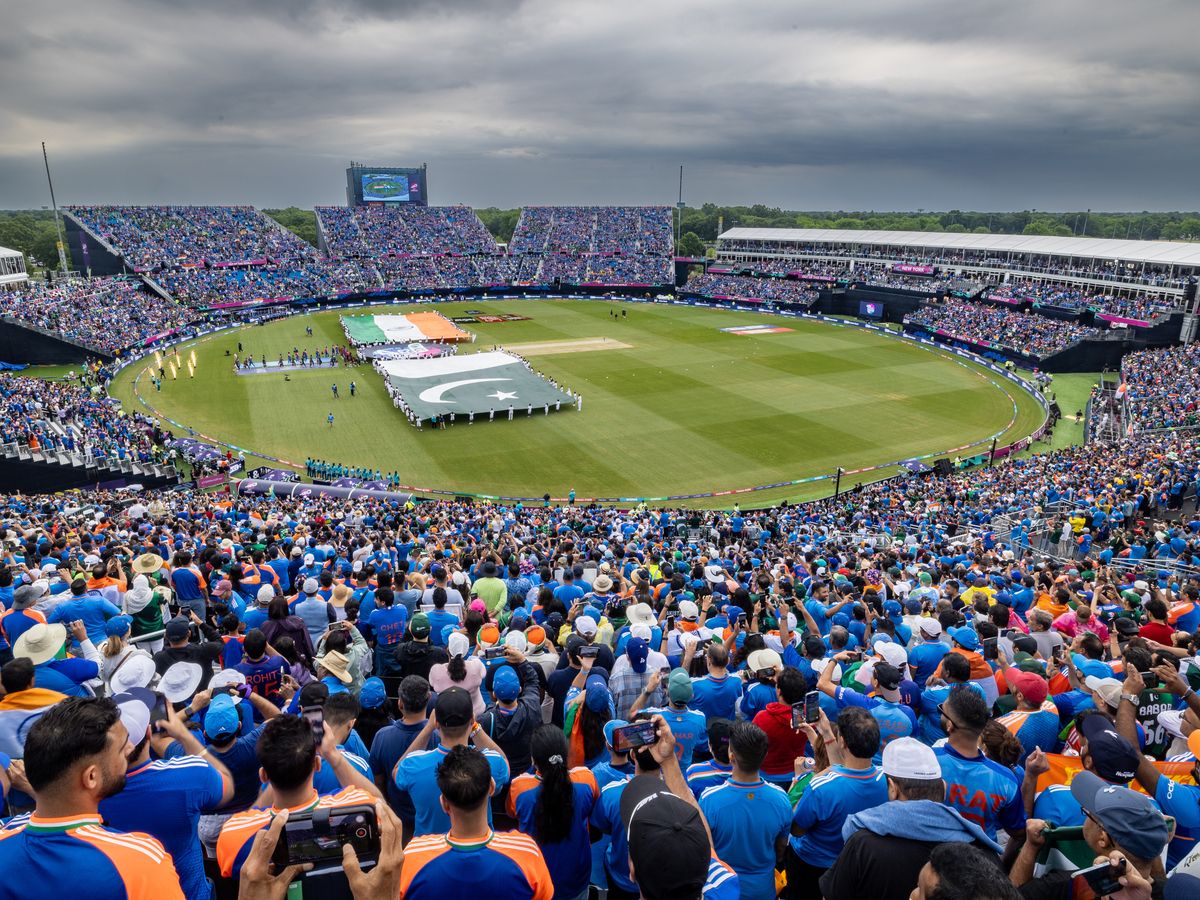
Arena Group, in contrast, once built a complete 34,000-seat stadium in Long Island, New York, for the 2024 Cricket World Cup. It came together in a little over three months, hosted eight matches over 10 days, and then was taken down.
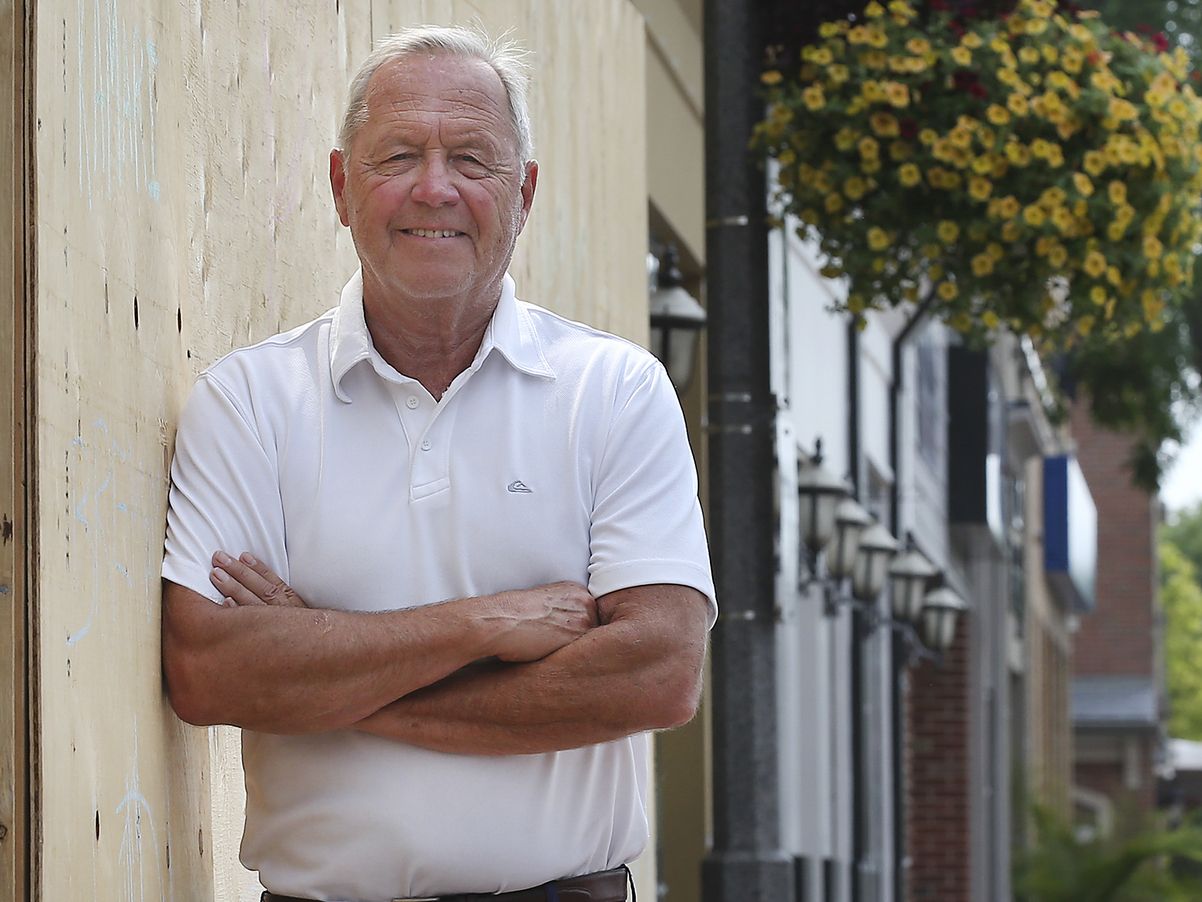
That makes sense to Richard Peddie. The president and CEO of Maple Leaf Sports and Entertainment from 1998 to 2011, he oversaw the acquisition and operations of Toronto FC, as well as the construction and operation of BMO Field in its early years.
“I really wanted to bring a soccer team to Toronto,” he recalled. “And so I talked the board into saying, ‘Let’s buy a team.’ And it was $10 million; that’s all. Today it’s worth $750 million, all U.S. dollars. And you need a stadium to play in.”
BMO Field might have been a bit on the small side, he said, but it fit the team and the times.
“Twenty years ago, it fit the times, and it fit the financials,” he said. “You don’t build a billion-dollar stadium for a $10-million team. So it was the right stadium and the right size in the right place.”
Peddie said he’s no fan of events like the World Cup or the Olympics — too many ways for costs to spiral out of control. “If I’d been mayor, I would have tried to talk us out of it.”
That said, “I think it’s good that it’s temporary, because scarcity is a great sales tool. If all of a sudden you had a permanent 50,000-seat stadium, it would look really empty a lot. When you’ve got something that’s more like 22, 23,000 and you’ve got a team that still attracts fans, you know … get it done (and then) take it back to the original intention.”
Doug Perovic, a professional engineer and a professor at the University of Toronto, said early images of the network of trusses used at BMO Field “may look a bit unnerving to people that don’t understand structural integrity,” but they actually are safe, designed and built according to the Ontario Building Code and other relevant standards.
As to whether they feel safe, “there’s a different conversation.”
“Engineered structures do sway,” he said. “We don’t like to make things completely rigid, because that can actually lead to problems. If you look at an aircraft … the wings are actually designed to flop up and down quite a bit. And the CN Tower … the top of it moves several feet from side to side in heavy winds.”
He added: “That means it’s fine in terms of safety, but does it feel good? I can understand for many people it’s like: ‘Oh, wow, this is making me feel queasy.’”
It’s a notion as old as Aesop’s fable about the flexible reed, and as new as singer Ani DiFranco, whose 1994 song Buildings and Bridges begins: “Buildings and bridges / Are made to bend in the wind / To withstand the world /That’s what it takes … What doesn’t bend breaks.”
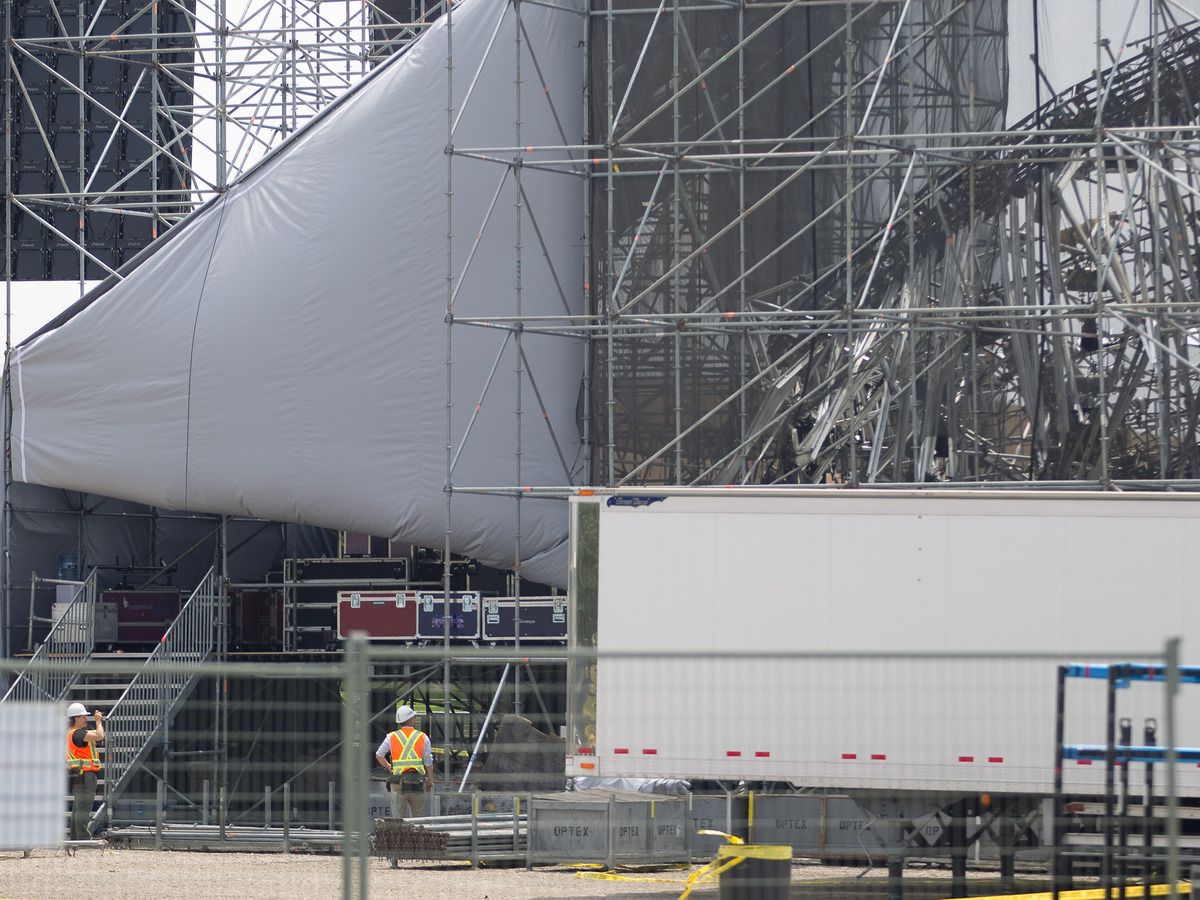
Of course, sometimes both things can happen. On June 16, 2012, the roof of a temporary stage collapsed during the setup for a concert by the band Radiohead in Toronto’s Downsview Park. A drum technician, Scott Johnson, was killed, and three other personnel were injured.
“Imagine if that happened just a couple of hours later during the show,” said Perovic. “Don’t even want to think about that.”
Perovic was one of many experts involved in investigating the collapse. What emerged was a series of problems.
“First of all, there was sloppy engineering design, it lacked rigour, there were weight miscalculations … and that would usually be caught in a proper sort of full design and inspection, but it wasn’t.”
Next, the metal tubes in the design were not available, so the builders used a smaller, weaker substitute. It was also revealed that the design did not include a margin for additional safety — stands are built to withstand up to twice the stress expected, just in case.
“And then the third thing, which would have precluded all this, was there was zero regulatory oversight,” he said. “There were no building permits issued by the City of Toronto. There was no independent third-party safety inspection that would have easily and quickly noticed, hey, this is not constructed as designed.”
He refers to it as “the Swiss cheese model.” Flaws in design, construction, modification and maintenance can be seen as holes in a block of Swiss cheese. If they line up, it spells trouble.
He added: “Unfortunately, we learn from failures and mistakes from the past. The sort of collection of errors that combined in that Radiohead stage collapse case that ended up in that perfect storm are not going to happen here.”
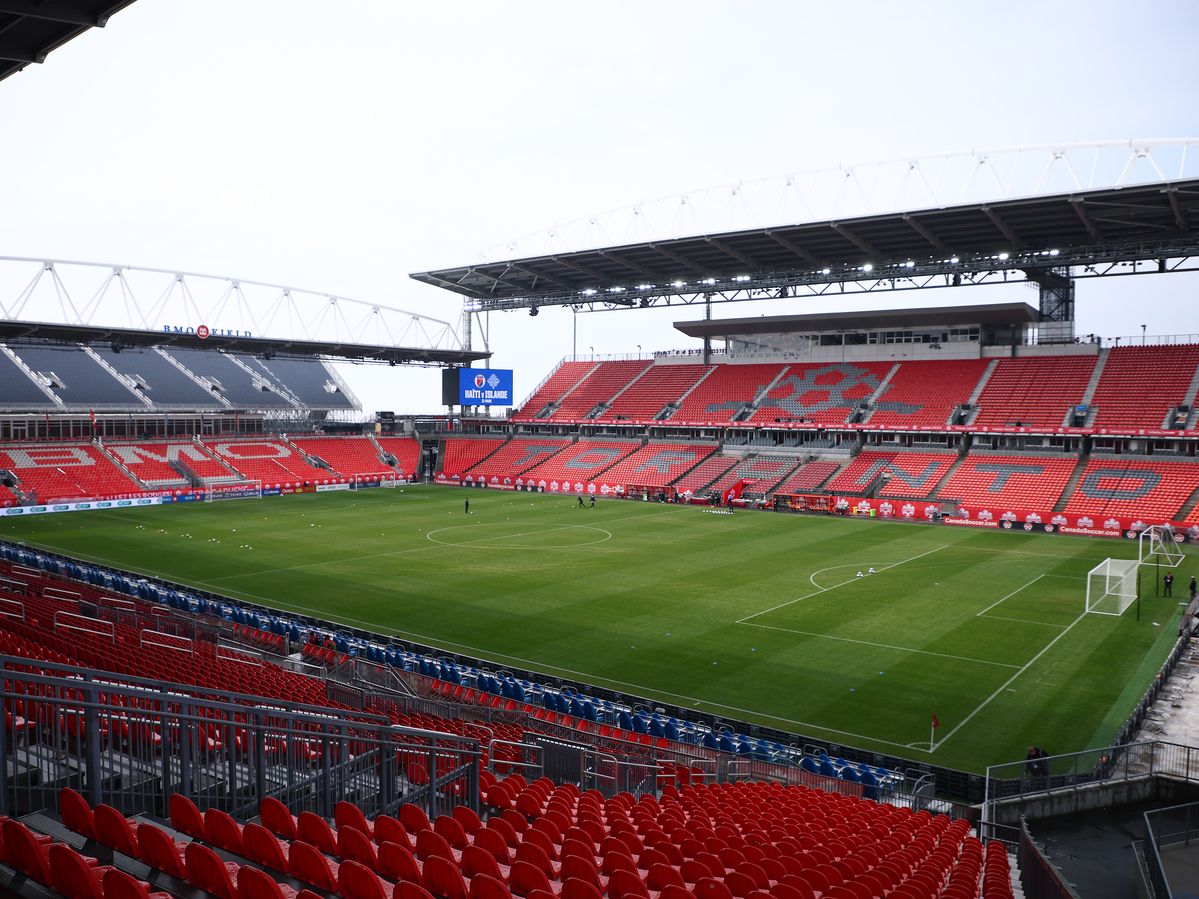
Troughton noted there’s been “quite a lot of unfounded criticism through the Toronto public when they see the scaffolding stands, but it is a very versatile solution. It’s very well engineered.”
He added that when the World Cup begins, FIFA will add its own branding to the structure, which will cover the tubular design. “The stands will be completely wrapped with FIFA branding.”
The temporary stands will play host to a half-dozen FIFA matches , beginning June 12 with a game between Canada and Bosnia and Herzegovina. The last match there, with teams to be determined, will be on July 2.
“It all has to be gone by the end of July to make way for the CNE,” Troughton said. “The kit will go from here back to our U.S. headquarters just outside Milwaukee, and it gets fully inspected there before it gets then batched up, ready to go out into the next job.”
Our website is the place for the latest breaking news, exclusive scoops, longreads and provocative commentary. Please bookmark nationalpost.com and sign up for our daily newsletter, Posted, here.
