
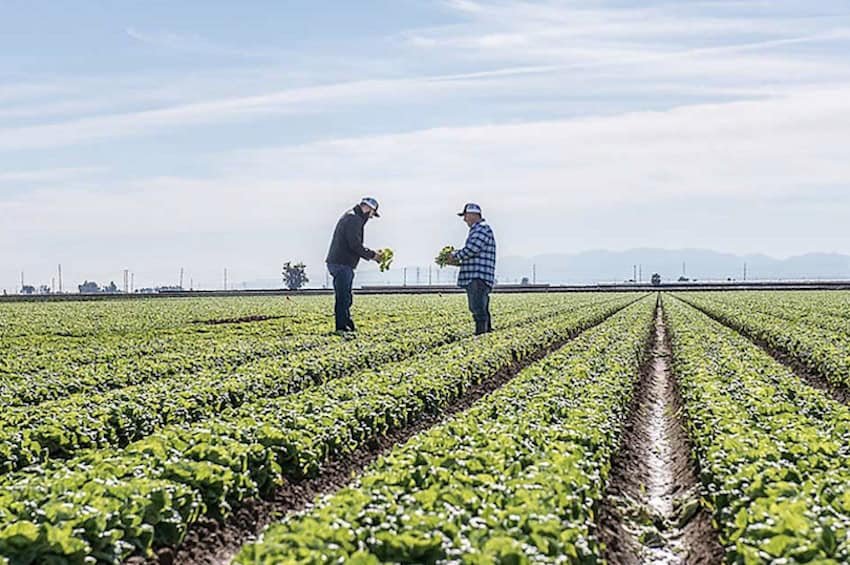
Mexico has issued an advisory for travelers to the United States due to an outbreak of cyclosporiasis, an intestinal infection that causes severe diarrhea and has been linked to unwashed lettuce or salad greens.
Although the outbreak is concentrated in the states of Kentucky, Michigan, Ohio and West Virginia, the advisory indicates that cases have been reported in 34 states and have affected 1,645 people in the U.S.
The travel alert, issued by the National Epidemiological Surveillance System (Sinave), classified the risk as medium level, indicating travelers must “practice special and specific precautions.”
Recommended measures include regularly washing hands with soap and water; drinking only bottled, boiled, or disinfected water; avoiding ice of uncertain origin; and limiting the intake of salads, raw vegetables, and fruits that cannot be properly peeled or washed.
In an ironic twist, at least some of the contaminated lettuce responsible for the infectious outbreak that Mexican health authorities are warning U.S.-bound Mexicans about has been traced to a farm in central Mexico.
The Washington Post reports that Taylor Farms, a U.S.-based grower that operates in Mexico and supplies Taco Bell, has voluntarily removed its Mexican-grown shredded lettuce from the U.S. market. Another food supplier, Sysco, has taken a similar step.
The Sinave also recommends that travelers identify in advance the medical services at their destination and avoid self-medication.
According to the advisory, cyclosporiasis is caused by Cyclospora cayetanensis, a parasite that affected individuals eliminate through feces, which can lead to contamination of food and water.
Unlike other gastrointestinal infections, the parasite is not usually transmitted directly from person to person.
Symptoms can appear between two days and more than two weeks after exposure and include watery or “explosive” diarrhea, abdominal cramps, loss of appetite, nausea, gas, fatigue, fever, and vomiting.
Although the infection is not fatal, health authorities have said that without treatment, which typically includes antibiotics for seven to 10 days, the illness can last for several weeks.
The Sinave has advised travelers that upon their return to Mexico, they should monitor their health for up to two weeks after the trip.
Mexico News Daily
