
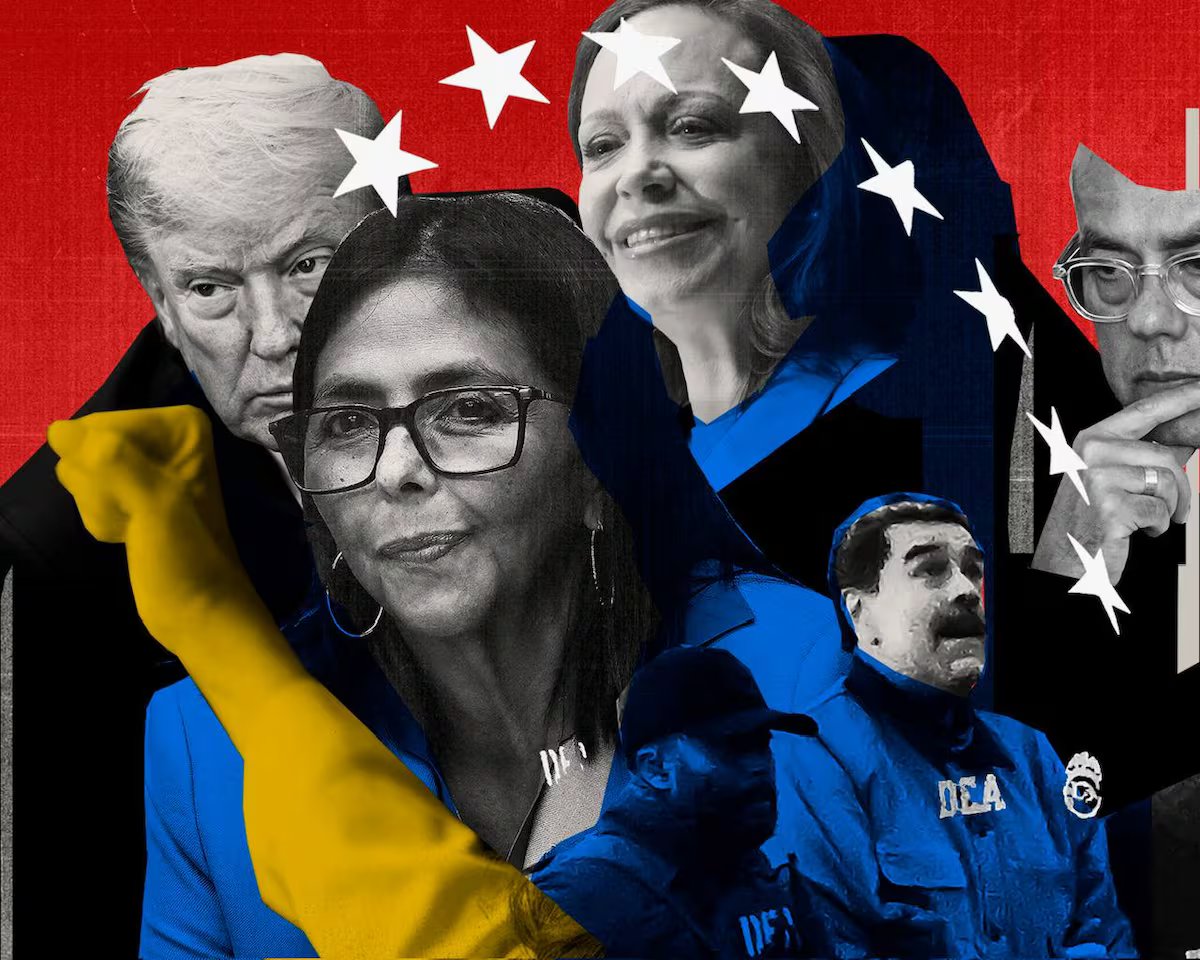
There are two pairs of eyes that have shaped the lives of Venezuelans for more than two decades. Symbolic eyes, once adorning building facades, t-shirts, and the city’s staircases. They were the eyes of Hugo Chávez: a gaze designed to suggest authority, surveillance, omnipresence. A gaze that, even after his death in 2013, remained, as if power no longer needed a body, only presence.
Today, those eyes are barely perceptible on the streets of Caracas, the capital of Venezuela. Their trace has faded from the facades, just as the aura that enveloped Chavismo has dissolved. Now, it seems, there are other eyes. Another gaze, not painted on walls, but one that permeates decisions, expectations, and fears. A non-physical presence, but just as relentless: that of Donald Trump.
The country that was once watched from within now feels watched from outside. And in that crossing of gazes, Venezuela continues living as it always has: in the meantime.
Venezuela is a provisional country, as José Ignacio Cabrujas described it, a place where everything happens in the gerund. A country where nothing ever fully comes to pass, and life remains suspended, as the playwright said, in a meantime and a just‑in‑case. For years, in the meantime, someone would line up before dawn to try to get something they weren’t sure would ever arrive. In the meantime, hospitals ran on fumes, though in reality, the entire country was gasping for air. In the meantime, planes took off filled with forced farewells. In the meantime, blackouts normalized the darkness of night. In the meantime, politics promised, threatened, repressed, reinvented itself, but never came to an end. Venezuela is that place where the present never settles: it is bargained, improvised, survived. A country where people are always waiting for something to happen — or to stop happening.
In the meantime, they took its president away, and the future is beginning to show its face.
It is in that mid‑April meantime that this chronicle takes shape, capturing the mood of the first 100 days of 2026 that shook Venezuela and Latin America. Conversations with some 20 voices —from the Chavista elite and the opposition; from the business, financial, and oil sectors, and from academia — along with visits to different neighborhoods and areas of the capital help reconstruct a landscape that, for the first time in years, seems to glimpse something positive, even if it rests on a balance so delicate that even optimists hold their breath. The vast majority request anonymity, their condition for speaking frankly.
During the final months of 2025, the Chavista hierarchy, which has ruled Venezuela with an iron fist for nearly three decades, was more focused on what was happening in the air than on the person standing right in front of them. Nicolás Maduro was so preoccupied with the planes and warships stalking him from the Caribbean Sea that he failed to grasp the true magnitude of the threat. He was warned repeatedly, but Chávez’s successor underestimated Trump, and by the time he tried to react, he was already on a plane headed to a jail cell in Brooklyn, New York.
That early morning of January 3 remains vivid in Caracas’s power circles, steeped in legends and Hollywood-esque details. There’s no nostalgia in the narrative. Very few seem to miss Maduro’s Venezuela, let alone him, and almost no one is heard criticizing or celebrating the U.S. intervention, as if it were a necessary evil, something that simply happened, so we must look to the future. Only the most loyal Chavista base and the billboards along the highways, bearing Maduro’s image and that of his wife, Cilia Flores, bring him back to mind. For the Chavista leader, his struggle with the empire was a matter of winning or dying. And he neither won nor died.
Almost four months later, the unthinkable has become normalized: that anti-imperialist Chavismo is governing under Washington’s dictates. Now it is Delcy Rodríguez and her brother Jorge who are calculating how to win. She, as vice president, and he, as president of the National Assembly, accompanied Maduro through Venezuela’s drift of the last decade. Now she seeks to modernize a government and institutions she helped build. She seeks excellence, she claims. But distrust remains, even though the government no longer shouts “Hands off, Venezuela, immediately!” and now speaks cordial and perfect English.
The expectation of a positive change in Venezuela is as great as it is fragile. The new normal still lacks guarantees. The new government is trying to stabilize prices and open up to markets, but the institutions remain in the hands of virtually the same people. An amnesty law, now finalized, was passed, benefiting more than 8,000 victims of repression, but hundreds more are still imprisoned or under house arrest. The conflict has subsided, but many rights still need to be guaranteed. All of this, of course, with the approval, if not the imposition, of Washington.
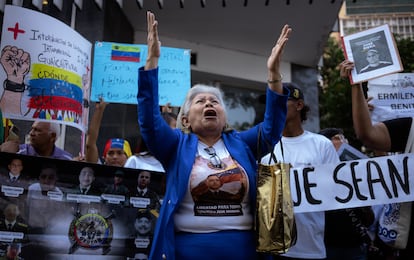
Caracas — a bubble compared with the rest of the country, which faces far greater shortages and is far less functional — offers, above all, a way to understand the impact of the decisions being made from Miraflores Palace, the seat of government, to the tourist and financial district of Los Palos Grandes. These days, the capital is a meeting point for diplomats, businesspeople, and billionaires, especially from the United States and Latin America. They all want to know firsthand when, how, and where to invest in the new Venezuela. Most, as Trump made clear from the outset, are interested in oil, but also in the wave of privatizations that is coming. And in the real estate business.
The exclusive Country Club, surrounded by golf courses, is one of those settings where the Venezuelan elite displays its charms to foreign visitors. “On January 3, at 4 a.m., there were still planes flying over Caracas, and I already had people from London and Connecticut calling me. Everyone wants to get into Venezuela,” says one of the people in contact with these investors. “Show me what you have,” they ask.
Venezuela’s economy rebounded slightly after the pandemic, but this is something else entirely. “Expectations are outpacing the changes,” warns a local investor. “People think Trump’s magic wand was going to bring about radical change because we’re very messianic, but the money still isn’t reaching Venezuelans’ pockets,” reflects a businessman. “We’re moving at breakneck speed, but it’s very fragile.” Every wave of optimism comes with its own shade of caution.
The first impression of someone arriving in Caracas today is not very different from that of any other Latin American capital. For those who lived through the period of greatest scarcity and insecurity and return after years away, however, the contrast is striking. Today in Caracas, you can find everything at exorbitant prices, paid in dollars or euros; new restaurants are opening, and people stroll around at night — “even the thugs are gone,” one hears. It’s more frightening to be stopped by the police and asked for a bribe than to be mugged.
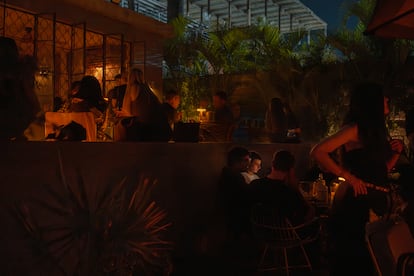
Saturday night falls in Caracas, and one of the city’s best restaurants — a gourmet Japanese establishment — is nearly full. A DJ spins vinyl as the pool lights come on at a hotel that has seen better days. Couples and groups of friends, mostly in their fifties, toast with wines costing up to $240 in an atmosphere that most Venezuelans can only dream of.
The average Caracas resident survives on less than $300 a month. The minimum wage and pensions amount to about 30 cents. A motorcycle taxi driver returns home soaked, without finishing his shift. “I don’t have the $80 I need for a rain suit,” complains Carlos González, sick with a cold and in bed. In the barrios — the term here for working‑class areas, not a strict geographic division — people can go two weeks without running water, and they can’t afford meat. Toilet paper costs a dollar a roll. “We need elections now so the money can come in. As long as these people are in power, there won’t be any investment,” complains Damalí Matos, a 55-year-old domestic worker. “Go a little further and you’ll see people looking for food in the garbage.” Venezuela, even here, is still in the gerund.
“The exchange rate and inflation are eating away at Venezuelans’ wallets,” explains one executive. And it’s not just one rate: there are several. In Venezuela, the official Central Bank dollar coexists with the parallel rate that governs the street, the one that truly matters — and even the dollar itself has two prices: cash in hand is worth more than money moved by bank transfer.
The hyperinflation that hollowed out the bolívar came from a state that financed its deficit by printing money, from the collapse in oil revenues, from sanctions, and from price controls that strangled production. Prices shift depending on the neighborhood, the payment method, and even the buyer’s appearance. The big question is how Venezuelans manage to make ends meet. And there is no single answer. They do it thanks to remittances, state assistance, micro‑loans, a cousin who is traveling to visit, going without basic goods… Living in Caracas is a daily exercise in household financial engineering.
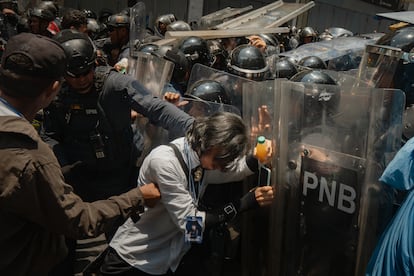
It is those with the least to lose, because they have almost nothing, who speak most openly. This was demonstrated on April 9, when an army of police officers pushed back a crowd determined to demonstrate after years of brutal repression. Women crossing the street at that moment took refuge in doorways, their faces etched with terror, because, until not so long ago, a confrontation like this could end in tragedy. Plastic bottles, insults, and shouts flew against the officers, who slammed their shields into the bodies of union members and pensioners. Their cry for better wages was ultimately stifled on a dirty avenue in the city center, but the march made two things clear: that the people want to reclaim the streets and that those in power will try to stop them.
“There are objective problems that will fuel social protest,” warns a veteran opposition figure on the fringes of the political front. Social unrest is one of the biggest threats. Not only to Chavismo, but also to a large group of actors — including Trump — who want the future transition to proceed smoothly. They want to avoid surprises and reduce tensions. “This process has many enemies, both within the opposition and in the more radical sectors of the government,” laments the former politician. “We need stability because if this window closes, we don’t know how deep the darkness will be,” explains a Venezuelan executive. “This is a historic opportunity, perhaps the last. We not only have to revive the economy, but also institutionalize the country and build a new balance of power that protects democracy,” says a businessman.
The economy can change everything, but creating the right conditions has been the most difficult part of these past 100 days. And those yet to come. In this new scenario, there is no doubt that oil will be the engine that pulls everything else along: new jobs, accommodations, tourism, logistics, energy, food. “Unfortunately, everything hinges on a return to oil-based Venezuela. The question is whether the rentier model will be repeated or if this opportunity will be used to diversify,” says one of the interviewees. The country has advantages such as extensive infrastructure built during the boom years, but everything is in the red. And the sanctions are a thousand-layered onion that darkens the entire economy, forces oil to be sold at a discount, affects companies’ ability to pay, and impacts the finances of ordinary Venezuelans. The United States has been easing restrictions for weeks, but is carefully weighing each step. Once again, the gaze from outside sets the rhythm inside.
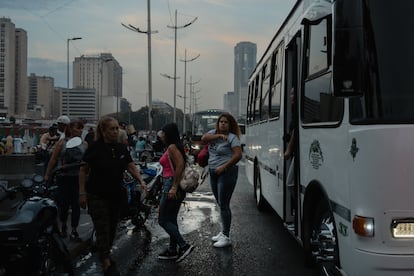
One of the latest surveys — still not made public — shows that 85% agree that economic recovery and better wages should come before thinking about elections. “Venezuelans aren’t desperate to go to the polls. They want a decent wage, electricity, water, and economic stability,” argues an influential analyst. And that’s the big political conversation these days. What should come first, recovery or elections? Chavismo is betting on the former, because it’s the only way to hope to remain in Miraflores Palace. “The Rodríguezes’ Plan A is to stay in power. Plan B is to stay in power. And Plan C is to leave power, but hand it over to someone who won’t bring them down,” explains an opposition member.
Facing Chavismo, the opposition is struggling to regain direction, trapped in the eternal fight between the internal opposition — also criticized by many who believe it has played into Chavismo’s hands for years — and the external opposition. All of them, once again, are watching Washington: what it will decide, what path it will open, what doors it will close.
The image from last weekend of María Corina Machado — 2025 Nobel Peace Prize laureate and currently the most popular figure in Venezuela — cheered by thousands in Madrid’s Puerta del Sol square after meeting with leaders of the Spanish right and far right, filled many opposition members in the country with hope. Including those she disparages for negotiating with Chavismo. “We can’t leave her out of anything, and she can’t exclude herself either,” says an opposition member of parliament.
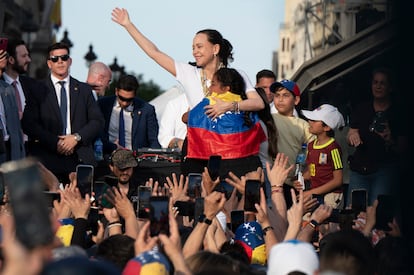
Machado is an omnipresent figure in the talks, and her return to Venezuela — which Washington has delayed and conditioned — is a matter of national interest. Her supporters have no doubt that she will return soon — “in a matter of weeks, not months,” say people in her party. And they believe that a transition, or even an economic recovery, cannot be considered without her, as she maintains the confidence and voting intentions of the majority. The key is how Chavismo will react if she reappears, since it’s been made clear that Machado — who is accused of promoting the U.S. intervention in Venezuela — will not benefit from the amnesty law.
Despite her popularity, Machado has spent years cultivating formidable adversaries in Venezuela, people who, like her, also convey their vision of the country to Washington. They criticize her for her lack of political flexibility and distrust the advisers she has surrounded herself with, “who don’t really know the country,” who know nothing about oil or the military. “María Corina is the person with the most popular leadership in Venezuela, but it’s a messianic leadership, one that places her above good and evil,” says an opposition politician who was imprisoned by the Chavista regime. “She doesn’t talk to the various sectors, she doesn’t talk to the institutions, she doesn’t talk to anyone. And when I say anyone, I mean no one.” For some, she is the messiah the country needs. For others, she is a destabilizing factor. There is also no shortage of adversaries who believe her leadership will fizzle out if other alternatives emerge by the time elections are held. “María Corina is like Bruce Willis in The Sixth Sense,” quips another opposition member. “She’s dead and doesn’t know it.”
Things move so quickly in Venezuela that before anyone can process what has happened in the past 90 days, they are already thinking about what comes next. The mining and hydrocarbon sectors have been reformed, but the tax system remains voracious. Amnesty has been granted, but there are still no judicial guarantees, and hundreds of prisoners continue to denounce arbitrary treatment. And although somewhat freer, Venezuelan journalists still can’t question the government. Political freedoms have yet to be fully restored. Exiles are still unsure whether to return. Caracas has opened up to the world after years of international isolation, but most of the work still lies ahead.
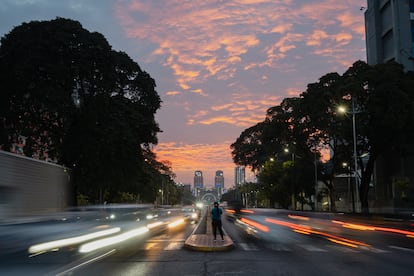
The priority for the next three months, for the government and for some economic and political sectors, will undoubtedly be economic recovery: lifting sanctions and streamlining the state apparatus. The oil sector will be seen to gain momentum. The aim is for the situation of most Venezuelans to improve, for the long‑promised money to finally reach their pockets. But the guarantee of free elections with full democratic safeguards will continue to shape expectations and condition any kind of transition, whether it is called that or not.
The Venezuela that comes into view today seems to be moving without really getting anywhere. There are scenes that inspire optimism, but the challenges ahead demand, rather, an act of faith. The revolution that seemed eternal has become personal, with a president imprisoned, an acting or temporary president, and an opposition leader who is always on the verge of returning. Chávez’s eyes, which for years defined the face and the will of power, are no longer so present, but now there is another gaze that dictates what is to come. Something external, still messianic, continues to shape the present. And the future. And while decisions about Venezuela are being made far from Venezuela, the country remains suspended in the meantime and the just-in-case.
Sign up for our weekly newsletter to get more English-language news coverage from EL PAÍS USA Edition
