
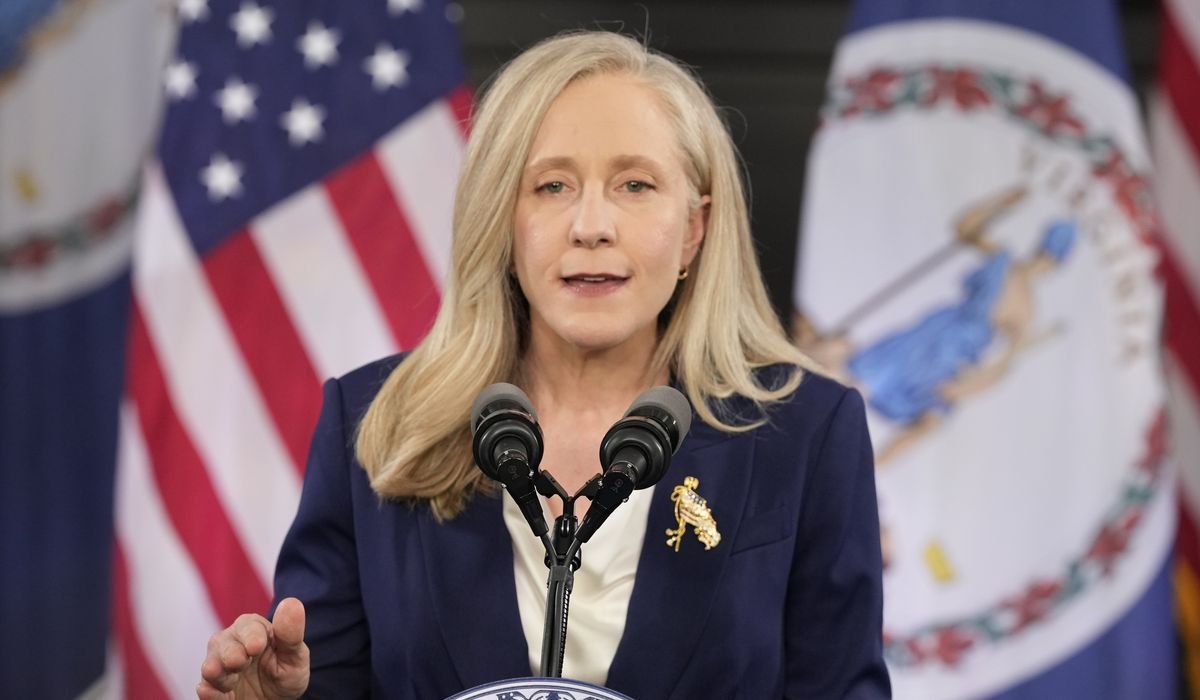
Virginia Gov. Abigail Spanberger on Tuesday vetoed legislation that would have launched the commonwealth’s long-delayed adult-use cannabis retail market, dealing a blow to fellow Democrats who had spent months crafting a framework for legal sales five years after possession was legalized.
The veto of HB 642 and SB 542 leaves Virginia in the same unresolved policy gap it has occupied since 2021: Adults may legally possess, share and grow cannabis, but there is no regulated system to purchase it. Any renewed effort to establish a retail market will likely wait until the 2027 legislative session.
“I share the General Assembly’s goal of establishing a safe, legal, and well-regulated cannabis retail marketplace in the commonwealth,” Ms. Spanberger said in a statement. “Virginians deserve a system that replaces the illicit cannabis market with one that prioritizes our children’s health and safety, public safety, product integrity, and accountability.”
The governor argued the bill as written lacked the structure, timeline and resources for successful implementation. She called for clearer enforcement authority, product testing protocols, inspection capacity and tools to combat illegal operators — saying regulators must be fully prepared “from day one” before retail sales begin.
The veto came after a monthslong standoff between the governor and the Democrat-controlled General Assembly. Ms. Spanberger had proposed sweeping amendments during April’s reconvened session that would have, among other things, pushed the retail start date from January 2027 to July 2027, reduced the initial number of licensed retail stores from 350 to 200, and increased penalties for illegal sales — including making it a Class 2 felony, punishable by 20 years to life in prison, to transport 50 or more pounds of marijuana into Virginia with intent to sell. Critics argued those changes weakened social equity provisions and introduced criminal enforcement measures lawmakers had deliberately avoided.
The Senate voted 21-18 against adopting the substitute, and the House declined to take it up, returning the original bill to the governor unchanged.
The legislation, carried by Democrats Del. Paul Krizek and Sen. Lashrecse Aird would have established licensing categories for growers, processors, wholesalers and retailers under the oversight of the Virginia Cannabis Control Authority. It included tax and advertising rules, product testing requirements, social equity provisions prioritizing businesses and applicants disproportionately affected by past marijuana enforcement, and penalties for illegal sales outside the regulated system.
Mr. Krizek and Ms. Aird issued a sharp joint statement Tuesday, saying the veto ignores the reality that cannabis is already being sold throughout Virginia and extends an unregulated illegal market rather than replacing it.
“Once again, Virginia’s efforts to establish a safe, regulated and equitable adult-use cannabis marketplace has been halted despite years of work, public input and broad recognition that the status quo is failing Virginians,” Ms. Aird said.
Mr. Krizek invoked the origins of the commonwealth’s legalization effort. “Five years ago, Virginia legalized cannabis in recognition that the War on Drugs has caused disproportionate harm to Black families and communities,” he said. “The question now is whether Virginia will continue allowing an unregulated illegal market to thrive, or finally establish a safe, transparent system that protects consumers, keeps products away from children, and keeps our commitment to ending racially discriminatory marijuana policing in Virginia.”
Virginia legalized possession of small amounts of marijuana in 2021 under former Gov. Ralph Northam, becoming the first Southern state to do so. But a reenactment clause required future legislative approval before retail sales could begin. After Republicans regained the House of Delegates later that year, then-Gov. Glenn Youngkin repeatedly blocked efforts to establish a retail market, vetoing similar bills during his last two years in office. Ms. Spanberger’s election was viewed by legalization advocates as a possible turning point — she had signaled in an August interview that she would sign a retail framework into law.
Chelsea Higgs Wise, executive director of Marijuana Justice, said the veto prolongs a system that allows legal possession without providing any legal means to purchase.
“By rejecting the retail bill, the governor has chosen to extend that chaos rather than move us toward a transparent, accountable retail system that centers public health, public safety and justice,” Ms. Wise said.
Ms. Spanberger separately signed a bill earlier this month granting automatic hearings to incarcerated people convicted of marijuana offenses prior to 2021, allowing them to seek sentence reductions. Tuesday’s veto, however, was the third consecutive year a Virginia governor rejected legislation to create a legal cannabis marketplace — and the first time a Democrat in the executive mansion did so while her party held a legislative trifecta.
This article was constructed with the assistance of artificial intelligence and published by a member of The Washington Times’ AI News Desk team. The contents of this report are based solely on The Washington Times’ original reporting, wire services, and/or other sources cited within the report. For more information, please read our AI policy or contact Steve Fink, Director of Artificial Intelligence, at sfink@washingtontimes.com
The Washington Times AI Ethics Newsroom Committee can be reached at aispotlight@washingtontimes.com.
