
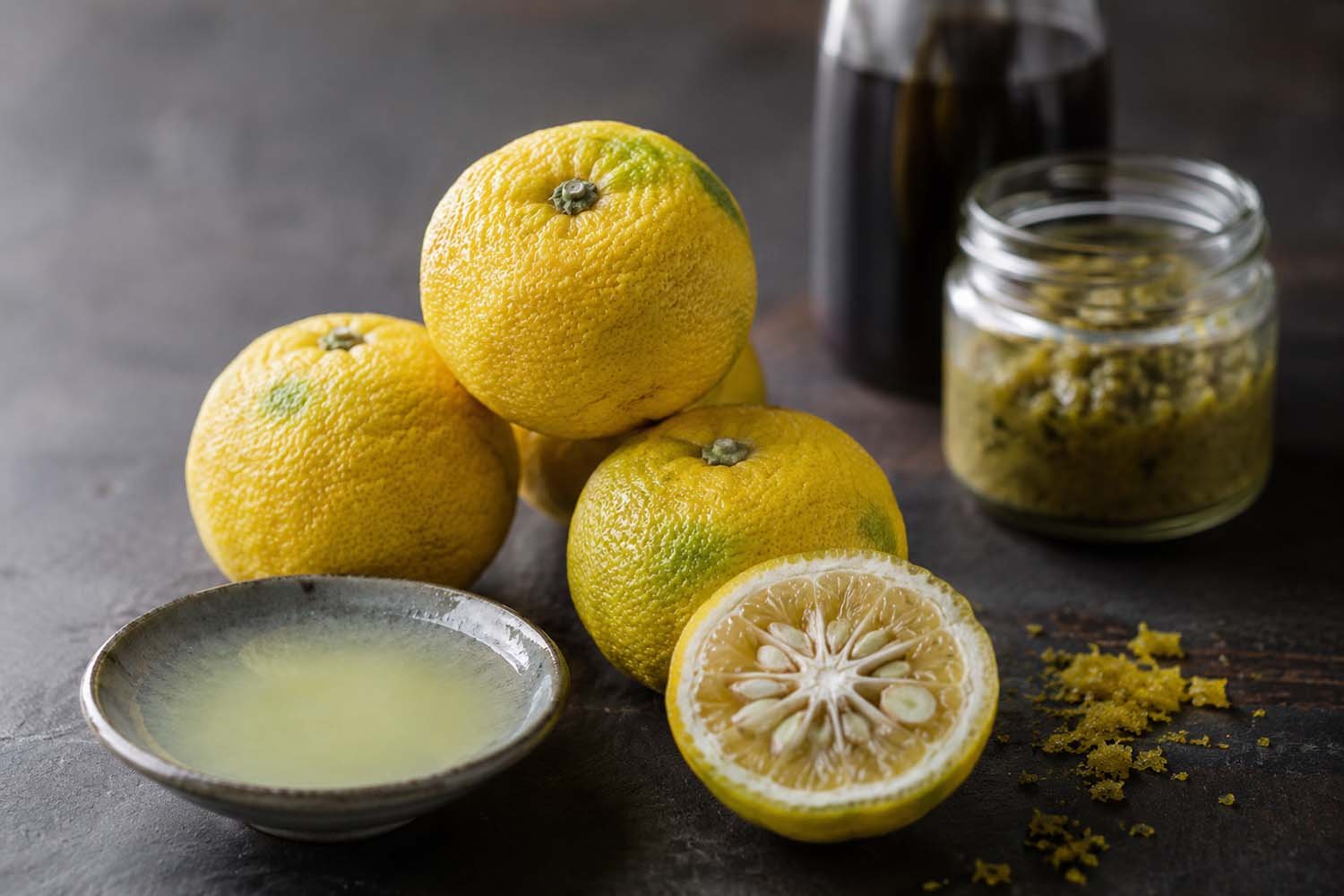
You have seen it on cocktail menus, in salad dressings at Japanese restaurants, and recently on grocery shelves next to the soy sauce and ponzu. Yuzu is a small, aromatic Japanese citrus fruit with a flavor like lemon, grapefruit, and mandarin combined. It is showing up everywhere right now. Monin named yuzu its Flavor of the Year for 2025, and citrus has seen a 60 percent increase on US beverage menus over the past four years. However, most people have never actually tasted the raw fruit and are not quite sure how to use it.
What is yuzu?
Yuzu (pronounced “YOO-zoo”) is a small, aromatic citrus fruit native to East Asia, primarily used in Japanese and Korean cooking for its zest and juice rather than eaten whole. Its flavor is often described as a combination of lemon, grapefruit, and mandarin with a distinct floral note. It is one of the most cold-hardy citrus varieties in existence, surviving temperatures as low as 10 degrees Fahrenheit. Fresh yuzu is rare and expensive outside Japan. Most Western cooks work with bottled yuzu juice, yuzu kosho paste, or yuzu-infused products.
Key Facts About Yuzu
- Scientific name: Citrus junos (a hybrid of Ichang papeda and a wild sour mandarin)
- Origin: China, now primarily cultivated in Japan and Korea
- Size: About the size of a tangerine, with bumpy, thick, oil-rich skin
- Flavor: Lemon, grapefruit, and mandarin with floral and slightly herbal notes
- Used for: Zest and juice only. The flesh is too seedy and sour to eat on its own.
- Season: October through December in Japan; bottled juice is available year-round
- Cold hardiness: Survives down to approximately 10°F, making it suitable for temperate gardens
- US imports: Fresh Japanese yuzu is restricted. Most US fresh yuzu comes from California or Korea.
Where Does Yuzu Come From?
Yuzu originated in China and spread to Japan and Korea over a thousand years ago. Botanists classify it as a natural hybrid of the Ichang papeda, a wild citrus native to central China, and a wild sour mandarin. The Ichang papeda parent gives yuzu its extraordinary cold hardiness. The sour mandarin parent contributes aromatic complexity and citrus sweetness.
Today, Japan leads global production. Farmers concentrate yuzu cultivation in Kochi Prefecture on the island of Shikoku, which supplies a significant share of Japan’s total output. Korea also grows yuzu extensively, where people know it as yuja. In both countries, yuzu carries deep cultural significance beyond cooking. In Japan, people traditionally bathe in water infused with whole yuzu fruit on the winter solstice, a centuries-old practice thought to ward off colds and bring good fortune.
Producers rarely export fresh yuzu. The United States restricts imports of fresh Japanese citrus to prevent the spread of citrus greening disease, as confirmed by USDA APHIS. As a result, California growers or Korean importers supply most of the fresh yuzu sold in the US. During peak season in November and December, shoppers can find it at Japanese grocery stores like Mitsuwa, Nijiya, and H Mart, usually at $3 to $5 per fruit. Outside that window, bottled juice and frozen zest are the practical alternatives.
What Does Yuzu Taste Like?
Yuzu ranks among the most complex-tasting citrus fruits in existence. Its flavor hits tart and bright like lemon, but without lemon’s one-dimensional sharpness. In addition, a bitterness reminiscent of grapefruit runs underneath, along with a sweetness and softness closer to mandarin. Underlying all of this is a floral, almost jasmine-like note and a faint herbaceous quality that most citrus fruits completely lack.
That complexity has a chemical explanation. Food scientists have identified over 60 volatile aromatic compounds in yuzu, significantly more than in lemon or lime. Limonene forms the main component, the same compound that gives most citrus its characteristic smell. Furthermore, yuzu contains elevated levels of gamma-terpinene and unique terpenes from its Ichang papeda parent that create its signature green, herbal character. As a result, synthetic yuzu flavoring has historically struggled to replicate the full aromatic profile, which is why chefs and bartenders who have worked with real yuzu always return to it.
The juice is sour enough that nobody drinks it straight. However, adding a small amount to a dressing, sauce, or cocktail builds layers of citrus flavor that lemon alone cannot replicate. The zest is intensely aromatic and holds most of the essential oil concentration. In Japanese cooking, grating a small amount of yuzu zest over a finished dish is a classic finishing technique, similar to how Italian cooking uses lemon zest over pasta or fish.
How Is Yuzu Used in Cooking?
Yuzu almost never gets eaten as a whole fruit. The flesh is extremely seedy, each fruit yields very little juice, and the flavor is too intense and sour to eat plain. Instead, cooks use it as an aromatic seasoning ingredient. Specifically, they reach for the juice as a finishing acid or the zest as a fragrant garnish.
Ponzu sauce is the most widely known yuzu application. Ponzu is a Japanese condiment made from yuzu juice, soy sauce, mirin, and kombu. Cooks use it as a dipping sauce for hot pot, a dressing for salads and sashimi, and a marinade for grilled fish and meat. Store-bought ponzu uses yuzu juice as its primary citrus component and is widely available. For a ponzu-style dressing at home, try it alongside carrot ginger dressing or drizzled over rainbow spring rolls.
Yuzu kosho is another essential yuzu product. Producers make this fermented paste from yuzu zest, fresh chili peppers, and salt. The fermentation process develops deep umami notes alongside the yuzu aroma. Green yuzu kosho uses unripe yuzu and green chilies, making it intensely aromatic and spicy. Yellow yuzu kosho uses ripe yuzu and red chilies, giving it a mellower and slightly sweeter character. A small amount added to a dish has enormous impact. It works well alongside grilled chicken, stirred into butter sauces, or as a finishing element in dishes like Chinese chicken lettuce wraps.
Cocktails and beverages represent yuzu’s biggest recent crossover into Western culture. Its flavor profile bridges citrus and floral in a way that works exceptionally well with gin, vodka, and sake. Yuzu margaritas, yuzu gimlets, yuzu highballs, and yuzu-soda spritzes have all appeared on craft cocktail menus in recent years. Bartenders often use bottled yuzu juice directly in shaken cocktails the same way they use fresh citrus.
Yuzu in Baking, Desserts, and Dressings
Desserts and baked goods incorporate yuzu zest and juice in much the same way European baking uses lemon. Yuzu curd, yuzu cheesecake, yuzu mousse, and yuzu-glazed pastries have become increasingly common at high-end bakeries and in home baking. In particular, the floral note in yuzu pairs well with white chocolate, cream, and coconut.
Dressings and marinades benefit from yuzu juice as a finishing acid in place of lemon or rice vinegar. For example, a few tablespoons of yuzu juice in a sesame-based dressing adds citrus brightness without the sharpness of straight lemon. It also works well as a marinade component for fish and light proteins like tofu. For inspiration, try incorporating it into a version of these teriyaki pork bowls.
Yuzu in Skincare and Fragrance
Yuzu’s influence extends well beyond the kitchen. Manufacturers cold-press its essential oil from the thick peel and use it as a significant ingredient in the fragrance and cosmetics industry. Yuzu oil is high in limonene and vitamin C, giving it both a vivid citrus scent and antioxidant properties that skincare formulators value.
Major fragrance houses and luxury skincare brands have incorporated yuzu as a top note in perfumes and as an active ingredient in serums, masks, and body products. If you have encountered yuzu in a skincare context, the appeal is both the fragrance and the high vitamin C content. According to Healthline, 100 grams of yuzu provides 59 percent of the daily recommended vitamin C intake. Additionally, according to Firmenich, a major fragrance company, yuzu is one of the scents most strongly associated with happiness, alongside ginger.
What Can You Substitute for Yuzu?
No single substitute perfectly replicates yuzu’s flavor. However, for most cooking applications, combining a few ingredients approximates it well enough to be useful.
For yuzu juice: combine two parts fresh lemon juice with one part grapefruit juice and a few drops of mandarin or clementine juice. This combination gets close to yuzu’s tartness and layered citrus quality, though it lacks the floral note. For applications where the floral element matters, briefly steeping a small amount of lemon zest in the mixture adds some complexity.
For yuzu zest: lemon zest is the closest single-ingredient substitute, though it lacks the floral and herbal dimension. A mixture of lemon zest and a small amount of lime zest gets closer to the full profile.
For yuzu kosho: no direct substitute exists. If a recipe calls for it, the closest approximation is a paste of fresh green chili, lemon zest, and sea salt. That mixture replicates the basic function as a spicy citrus condiment, though it will lack the fermented umami depth.
Why Yuzu Is Expensive
Fresh yuzu commands prices that can seem absurd for a fruit the size of a tangerine. Three factors drive the cost. First, yuzu trees grown from seed take 10 to 15 years to produce fruit. Grafted trees produce in 3 to 5 years, but the grafting process adds labor and cost at the nursery stage. Second, yuzu trees are very thorny, which makes harvesting labor-intensive and slow. Third, yields per tree are relatively modest compared to commercial citrus varieties. Add in the US import restrictions on fresh Japanese fruit, and the supply constraints are significant. The California-grown yuzu market is still developing, and domestic production is not yet large enough to bring prices down. For most home cooks, bottled 100 percent yuzu juice is both more practical and more economical than fresh.
Where to Buy Yuzu
Fresh yuzu reaches stores during its November and December season at Japanese and Korean grocery stores including Mitsuwa, Nijiya, H Mart, and some Whole Foods locations in major cities. Outside of season, it is essentially unavailable fresh in the United States. JETRO, Japan’s trade organization, provides background on yuzu as a traditional Japanese ingredient for those wanting to go deeper.
Year-round options are more practical for most cooks. Brands like Yakami Orchard sell bottled 100 percent yuzu juice on Amazon and at most Asian grocery stores. It performs as well as fresh in cooked applications and sauces. Most Japanese grocery stores stock yuzu kosho paste, and online retailers carry it too. Bakers can find dried yuzu zest and yuzu powder online. For cocktail use, several specialty syrups and concentrates capture yuzu’s flavor in a format that dissolves easily.
Further Reading
What Is Yuzu FAQ
What does yuzu taste like?
Yuzu tastes like a combination of lemon, grapefruit, and mandarin with a floral and slightly herbal quality that no other citrus fruit shares. It is tart and aromatic, less sharp than straight lemon, and more complex than either grapefruit or mandarin on its own. The zest is intensely fragrant. The juice is sour enough that it is always used in small quantities as a flavoring agent rather than drunk straight. Food scientists have identified over 60 aromatic volatile compounds in yuzu, which explains why the flavor feels so layered and distinctive.
Is yuzu the same as lemon?
No. Yuzu and lemon are distinct citrus fruits with different flavor profiles, origins, and culinary applications. Lemon is sharp, clean, and one-dimensionally tart. Yuzu is layered: tart like lemon, bitter like grapefruit, sweet like mandarin, and floral in a way that lemon is not. They can substitute for each other in a pinch, but the results are noticeably different, particularly in applications where yuzu’s floral and herbal notes are central to the dish.
What is yuzu kosho?
Yuzu kosho is a Japanese fermented condiment made from yuzu zest, fresh chili peppers, and salt. It comes in two versions: green, made with unripe yuzu and green chilies, which is intensely spicy and aromatic; and yellow, made with ripe yuzu and red chilies, which is mellower and slightly sweeter. A small amount adds a hit of citrus heat and umami to grilled meat, fish, noodles, soups, and sauces. It is sold in small jars at Japanese grocery stores and online and keeps for several months refrigerated after opening.
Can you eat yuzu like an orange?
Not really. Yuzu has very little edible flesh relative to its size, the flesh is full of large seeds, and the juice is far too sour and intense to be pleasant eaten directly. The value of the fruit is almost entirely in its aromatic zest and the small quantity of juice it yields. Japanese cooks use the hollowed-out yuzu shell as a decorative serving vessel for small portions of food, particularly in formal kaiseki cuisine, but the fruit itself is not eaten in the way you would eat an orange or mandarin.
Is yuzu good for you?
Yes, within the context of how it is used. Yuzu juice and zest contain high concentrations of vitamin C, antioxidants, and beneficial flavonoids. Per Healthline, 100 grams of yuzu provides 59 percent of the daily recommended vitamin C intake. The essential oil in the peel contains limonene and other compounds with antioxidant properties. Since yuzu is used in small quantities as a flavoring rather than consumed in large amounts, these nutritional benefits are modest in a typical serving. However, yuzu’s contribution to a well-seasoned dish that replaces salt or sugar as the primary flavor driver is a genuine wellness benefit of a different kind.
What is the difference between yuzu and sudachi?
Both are small Japanese finishing citrus fruits used for their juice and zest rather than eaten whole, but they are distinct. Sudachi is smaller, rounder, and always used green and unripe. Its flavor is sharper and more intensely tart than yuzu, with less floral complexity. Kabosu is a third Japanese citrus in the same category, larger and more bitter than either. Among the three, yuzu has the most complex aroma and the widest culinary application. All three appear in ponzu sauce, but yuzu-based ponzu is considered the most prized. If a recipe calls for sudachi and you cannot find it, yuzu juice is the most reasonable substitute among Japanese citrus options.
How do you pronounce yuzu?
Yuzu is pronounced “YOO-zoo” with equal stress on both syllables. In Japanese, the word is two short syllables of roughly equal length. The English pronunciation follows the same pattern. It is not “YOO-zuh” or “yoo-ZOO.” If you have been saying it either way at Japanese restaurants, do not worry — the context makes it clear what you mean.
Better Living may earn commissions through affiliate links and may occasionally feature sponsored or partner content. If you make a purchase through our links, we may receive a small commission at no cost to you.
