
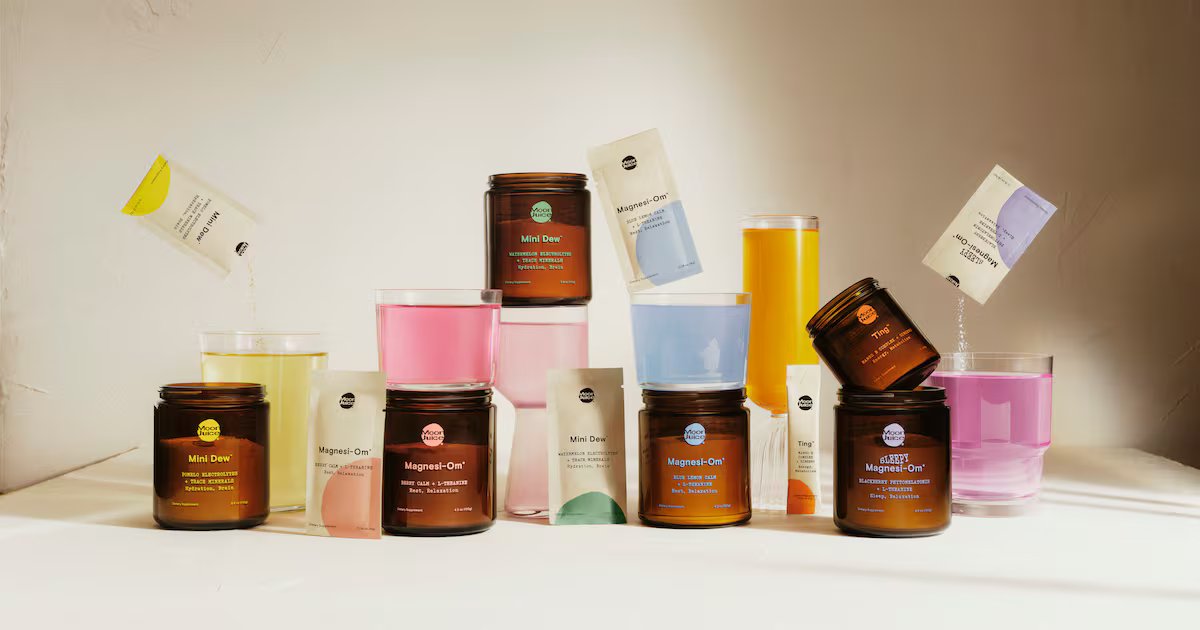
Before the Erewhon smoothie phenomenon, there was Moon Juice.
The Los Angeles-based wellness label, which opened its first namesake juice shop in 2011, sold drinks like its Strawberry Milk, made with colloidal silver, organic strawberries and raw organic almond milk and snacks like activated cashews for $30 a bag. It went on to become a cult-favourite wellness brand — with venture backing — that sold its array of supplement “dusts” for libido and sleep to the masses.
Wellness is arguably more a part of the zeitgeist than ever — but Moon Juice itself is at a point of transition. This month, it shuttered that first store in Venice Beach, just seven months after closing its second location in Los Angeles’ Silver Lake neighbourhood in May and two years after closing its Melrose Place shop. To boot, the brand also lost a major retail partner, Sephora, which confirmed earlier this month that it plans to pull out of the supplements category.
“It was a hard call to make, because it is such a beloved space,” said the brand’s founder, founder Amanda Chantal Bacon, of the decision to close the store. “But the daily food production, the daily juice production, all of that requires so much and was not laddering up to where our bigger goals lie.”
Those goals include US and global retail expansion as well as growth through DTC and Amazon, said Bacon. In August, the brand announced the addition of new CEO Federico Troiani, a former executive at supplements brands Ritual and Bulletproof 360, to guide its DTC and wholesale-specific focus. As it heads into 2026 with this additional leadership, it’s navigating a wellness industry where trends change just as fast as they do in beauty or fashion due to equal parts hype cycle and consumer skepticism.
The Millennial Gwyneth
A former fine dining chef with more passion for mushrooms than steak, Bacon was one the top figures of the 2010s wellness wave, helping to popularise trends like adaptogens and functional beverages. She was a public-facing founder, publishing stylish cookbooks, blog posts and social media content about her aesthetically pleasing and aspirationally healthy lifestyle.
She also emerged as a magnet for controversy. A “what I eat in a day” style article published by Elle in 2015 went viral, where she detailed a laundry list of new age-y items like cordyceps, reishi, ho shou wu and quinton shots as the ingredients in her breakfast. A 2016 article in The Cut said that her esoteric wellness regimen “made Gwyneth Paltrow look like Guy Fieri.” She attracted both die-hard devotees and skeptical detractors, who questioned the validity of the brand’s claims.
“It’s always been polarising,” said Bacon. “There was a cute five minutes when people were just charmed by it. Very quickly with the internet, it turned into, ‘I hate what you’re saying about wellness.’”
But the controversy generally led to more attention, sales and investors. The brand has raised a total of $10 million, including a $7 million Series C round led by True Beauty Ventures in 2022. Its products are stocked in retailers including Ulta Beauty, Revolve, Free People, Nordstrom and Erewhon. Bacon said she counts herself among those skeptical of certain wellness claims.
“There’s that broader conversation around people that are going to say, ‘Wellness is terrible. All supplements are ineffective. Everyone is a snake oil salesman.’ And then you’re going to have the other end where there’s zero discernment, and you’re going to have somebody that’s just buying formulas that are not clean and not going to be effective and hoping for the best,” said Bacon.
The Next Chapter
Cut to today, and the stakes are different for wellness brands. The rise of the MAHA movement and vaccine skeptics has divided the wellness community and turned off left-leaning crunchy types. Besides Sephora, even Goop hardly sells supplements anymore, choosing instead to pivot to beauty and fashion.
“I don’t know that the French understand wellness the way that Americans do,” said Bacon when asked why Sephora might be pulling the plug on supplements. Its other major beauty retail partner, Ulta Beauty, has been expanding its wellness offerings in recent years. “When you’re taking on a new category, it takes some years of work and investment to really land that for your customers, and have your customers really trust you and think of you as a space to make those purchases.”
Today, Moon Juice’s top two sales channels are DTC and Amazon. Sales on Amazon in particular ballooned after “sleepy girl mocktails” went viral on TikTok — an ingredient is magnesium; Moon Juice’s Magnesi-Om powder is its top-performing product on Amazon and overall. Bacon claims to be the creator of the trend.
“The sleepy girl mocktail was a recipe and a name that my team incubated and we seeded out to some influencers,” she said. The term “sleepy girl” was trademarked by Moon Juice in 2023 but listed as abandoned as of May 2025, according to the US Patent and Trademark Office.
While Bacon has clearly shown aptitude at starting trends in wellness, she said she’s not interested in following them. She’s eschewed multiple fads over the years such as the CBD boom and bust, and is not joining the surge toward animal-based wellness powders. Instead, she’s planning to double down on the brand’s signature brain-boosting line of products after suffering a traumatic brain injury herself earlier this year.
And despite previous reports that Moon Juice was exploring a potential exit, Bacon said it’s not currently in any M&A talks. Her goal is rather to stay for the long haul and make Moon Juice a “100-year-old brand.”
“There’s always requests that I get from team members and investors that are seeing the trends and getting really excited,” she said. “Typically how people do business is, ‘There’s a trend. We’ve got to move fast. We’ve got to make it cheaper. We’ve got to spend more money on marketing and blow out the competitors.’ At Moon Juice, we’ve never done that.”
Sign up to The Business of Beauty newsletter, your complimentary, must-read source for the day’s most important beauty and wellness news and analysis.
