

It’s no surprise Mexico is hot in the summer. Anyone who’s spent even a few hours outdoors knows the intensity of the sun, the way the heat settles into the concrete and radiates back upward, and how quickly a casual afternoon can become physically draining. What may catch foreign visitors off guard during the 2026 World Cup, however, isn’t just the heat itself, but how seriously it’s being taken behind the scenes.
Concerns about high temperatures aren’t theoretical. A 2025 climate risk report by Football for the Future, Common Goal and Jupiter Intelligence found that 10 of the 16 host cities across North America face a “very high risk” of extreme heat stress during the tournament. Separate academic research has gone even further, suggesting that as many as 14 venues could experience conditions considered dangerous for prolonged physical activity.
That reality has pushed organizers, including FIFA and local authorities in Mexico, toward a more pragmatic approach. It’s one of adaptation rather than avoidance.
Scheduling to avoid extreme heat
One of the most significant, and least visible, changes lies in match scheduling. While final kickoff times remain subject to global broadcast demands, there’s increasing pressure to avoid the most punishing hours of the day. Midday matches, once a staple of World Cups, are now under growing scrutiny in hotter climates.
The issue has already surfaced in recent tournaments, where matches played in temperatures above 30 degrees Celsius prompted concern from players and coaching staff. FIFPRO, the global players’ union, has been particularly vocal.
“We need a better balance between commercial interests and the health and safety of players,” said Alexander Bielefeld, the organization’s director of policy and strategic relations, as discussions around extreme heat intensified ahead of 2026.
That message appears to be shaping planning decisions. Evening and late-afternoon matches are expected to play a larger role, particularly in Monterrey and Guadalajara, where summer heat can be especially unforgiving.

Even in central Mexico, where temperatures may look milder on paper, the intensity of the sun at altitude creates a different kind of strain. And it’s one that visitors often underestimate until they experience it firsthand.
How stadiums are being transformed to mitigate heat
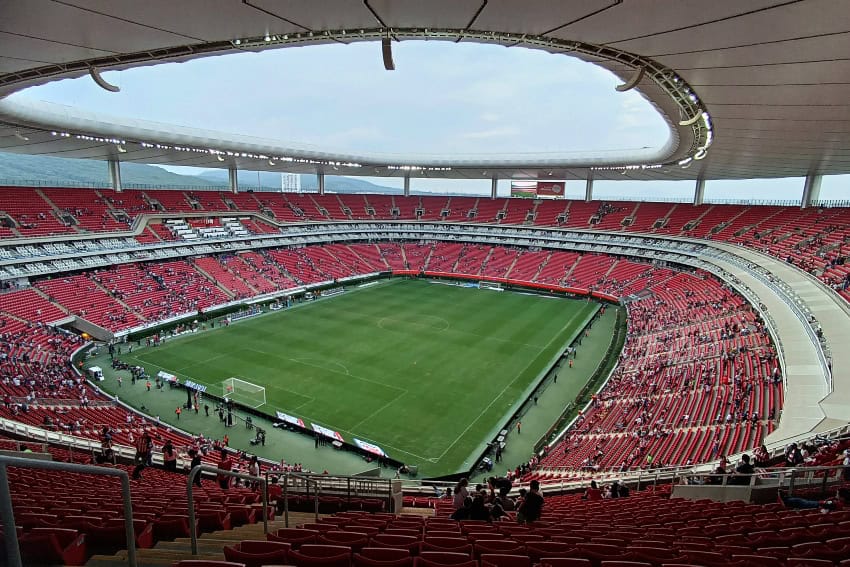
Inside stadiums, the response is more subtle but no less important. Mexico’s World Cup venues aren’t being transformed into fully enclosed, climate-controlled arenas. Instead, renovations have focused on improving airflow, expanding shaded areas where structurally possible, and modernizing interior spaces to provide relief from the sun.
In older stadiums, these changes are part of broader upgrades that were already overdue. Wider concourses, improved circulation, and updated facilities all help reduce heat buildup, particularly in crowded conditions.
The aim isn’t to eliminate discomfort entirely, as that would be unrealistic in an open-air venue. But it is to reduce the cumulative effects of hours spent exposed to heat, whether seated in the stands or moving through the stadium. Equally important is what’s happening behind the scenes, as heat isn’t just a question of comfort; it’s a matter of health.
The importance of hydration and water access
For spectators, that preparation is expected to extend to something that may seem basic on the surface, but whose importance shouldn’t be underestimated: access to water. While specific policies vary by venue, organizers are under growing pressure to ensure that hydration is readily available inside stadiums, whether through expanded concessions, refill points or designated hydration stations.
It’s a simple measure, but in high temperatures, access can make the difference between a manageable day and a dangerous one. FIFA has confirmed that all matches at the 2026 tournament will include mandatory three-minute hydration breaks in each half, a measure introduced specifically in response to rising temperatures and growing concern over player welfare.
The decision reflects lessons learned from recent competitions, where extreme weather forced organizers to adapt in real time. It also signals a broader shift toward treating heat as a constant factor rather than an occasional disruption.
Some proposals go further still. FIFPRO has suggested extending halftime and increasing the number of cooling breaks in particularly high-risk conditions, arguing that traditional measures may no longer be sufficient.
The underlying concern is straightforward. As global temperatures rise, so too does the risk of heat-related illness in elite sport.
The cumulative effects of heat, alcohol and elevation
For fans, the risks are different but no less real. A World Cup day rarely begins and ends with the match itself. It includes hours spent traveling, waiting, exploring and celebrating. Often in direct sunlight. Add alcohol, long periods on foot and densely packed crowds, and dehydration can set in faster than many expect.
In Mexico City, altitude adds another layer of complexity altogether. At more than 2,200 meters above sea level, the thinner air accelerates fluid loss and fatigue. Visitors may feel fine upon arrival, only to find themselves suddenly exhausted, lightheaded or short of breath later in the day. It’s a combination of heat, sun and altitude that can catch even the most seasoned of travelers off guard.
This is where public guidance becomes essential. Authorities are expected to lean heavily on awareness campaigns, encouraging visitors to drink more water than usual, wear sun protection and take breaks in shaded or indoor spaces. These are simple measures, but in the context of a large-scale event, they can make a meaningful difference.
Managing environments outside stadiums
Beyond the stadiums, cities are also adapting to the broader reality of hosting millions of fans. Mexico City plans to host 18 free fan festivals across different boroughs, spreading crowds across multiple locations and reducing pressure on any single site.

These spaces are designed not just as viewing areas, but as managed environments where shade, water access and room to move are built into the experience. The approach reflects a wider understanding that the World Cup isn’t confined to the pitch.
For many visitors, the hours before and after a match, spent navigating the city or gathering in public spaces, are where heat-related risks are most likely to emerge.
The broader challenge is one of scale. The 2026 tournament will be the largest in World Cup history, with 48 teams and more than 100 matches spread across three countries. That expansion increases the likelihood that some games, and many fan experiences, will take place in difficult conditions.
And yet, despite the warnings, there’s little appetite for dramatic solutions such as moving the tournament to a different season. Instead, the focus remains on incremental changes like smarter scheduling, targeted infrastructure improvements and clearer communication with fans.
Staying smart while enjoying the experience
In many ways, it’s a distinctly Mexican approach. Practical, adaptive and grounded in the understanding that the environment isn’t something to be controlled, but managed.
For visitors, that means meeting organizers halfway. Hydration, sun protection and pacing will matter just as much as any official measure. So will an awareness that the climate, beautiful and energizing as it is, demands a certain level of respect.
Because while it may be no surprise that Mexico is hot, experiencing that heat in the middle of a World Cup, while surrounded by tens of thousands of fans under an unforgiving sun, is something else entirely.
Charlotte Smith is a writer and journalist based in Mexico. Her work focuses on travel, politics, and community. You can follow along with her travel stories at www.salsaandserendipity.com.
