
The NHTSA recently called for autonomous vehicle companies to improve how cars respond in emergency situations.
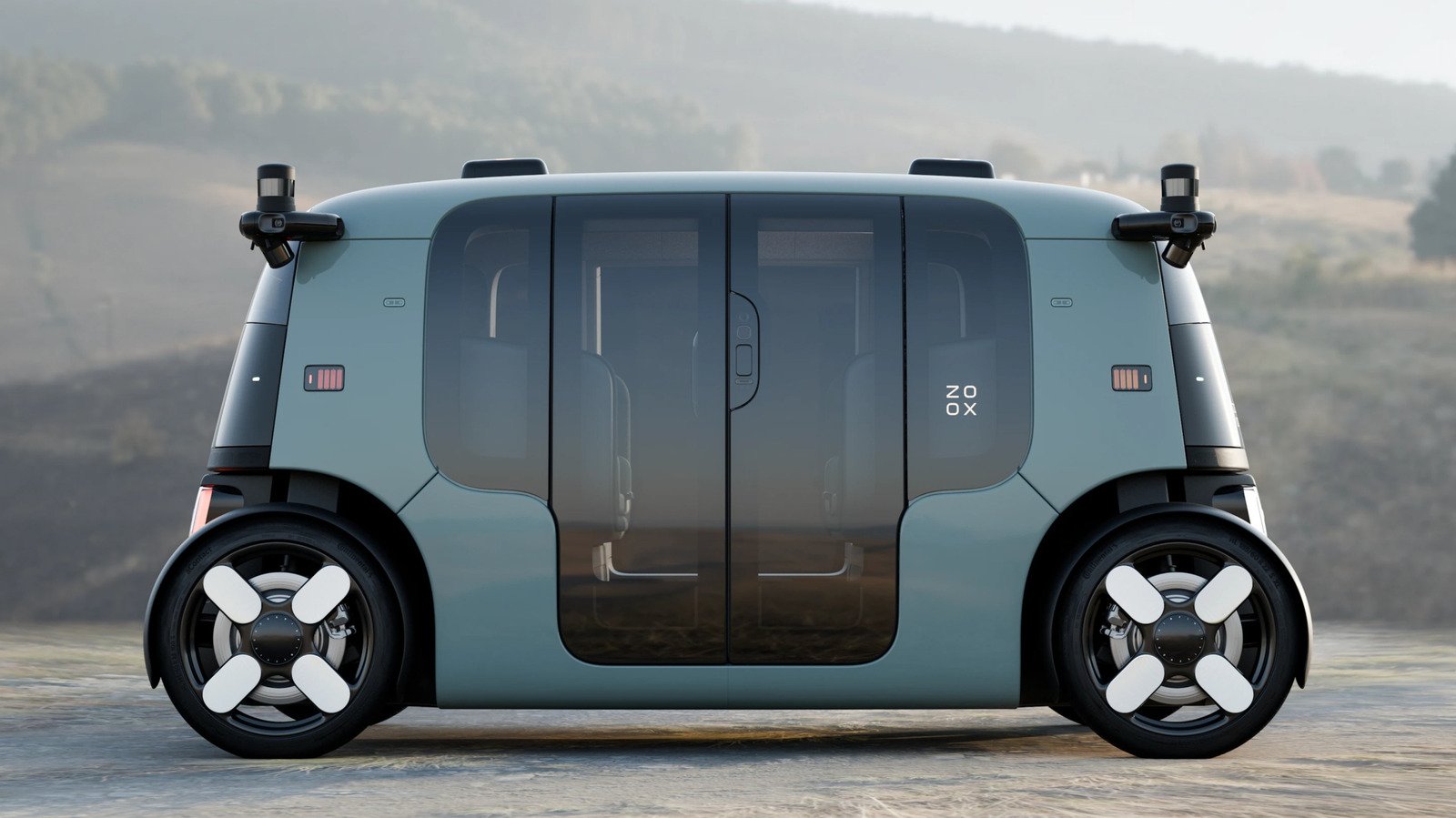
Zoox has issued a software recall for 105 of its robotaxis because of their inability to safely drive through heavy smoke. According to the company’s recall report, a Zoox robotaxi interfered with an active fire emergency, prompting the company to develop a software update and issue the recall.
On June 20, a Zoox robotaxi encountered heavy smoke from a fire in a traffic lane that hadn’t been cordoned off with cones. “The Zoox vehicle entered the scene, then braked hard while attempting to steer away before coming to a stop,” Zoox’s report says. “The Zoox vehicle, under a teleguidance tactician’s guidance, reversed, after which the first responders placed traffic cones at the scene blocking two of the three through-lanes.”
According to the company, this is the only time a Zoox has encountered an issue with smoke like this, and the software update the company is rolling out now “enhances existing capability of detecting and responding to heavy smoke.” Zoox previously issued a software recall in May 2025, after a car in its fleet collided with a passenger car in Las Vegas.
Robotaxis’ ability (or inability) to handle emergency situations has become a growing concern as companies like Zoox and Waymo have begun testing their software and offering rides in more cities. Earlier in July, the National Highway Traffic Safety Administration published a letter demanding autonomous vehicle companies address the problem of robotaxis interfering in emergency situations. The NHTSA also announced plans to meet with companies before the end of July to discuss the issue.
“Let me be clear: the inability to detect and appropriately respond to such situations represents a functional insufficiency. Emergency scenes are not rare or extreme ‘edge cases,'” NHTSA Administrator Jonathan Morrison wrote in the letter.
A recall is a notable setback in what otherwise seems like a growth year for Zoox. Besides introducing an updated version of its robotaxi, the company also announced plans in March to expand its service area in Las Vegas and San Francisco, and begin testing its software in entirely new cities.
