
There are hoaxes or half-truths that can change the course of a country’s history, and others that are simply met with indifference, because it’s not a time for revolutions. When Boris Johnson was a correspondent in Brussels for The Daily Telegraph, his story about the supposed — and false — effort of EU bureaucrats to ban prawn cocktail-flavored crisps, so popular among the British, became another wave in the Brexit storm. Another affront that had to be avoided.
More than a decade later, with the country now convinced that its departure from the EU was an economic and political disaster, the Labour government of Keir Starmer has been determined to repair as much of that damage as possible, and has been working for the past two years to foster closer ties with the bloc. Its latest announced objective is to seek greater regulatory alignment — “dynamic alignment,” as they call it — with Brussels. This means changing British regulations on agri-food and plant health when they change in the European Union, thereby facilitating trade with less friction.
Just a few years ago, such an idea was the devil incarnate for the legion of Eurosceptics who saw every concession to Europe as a surrender of their sovereignty. Today, with a world in perpetual turmoil and the British economy struggling, there is no longer any desire to reignite the Brexit battle.
That’s why it’s surprising that when the BBC — none other than the BBC, and not some strident, anti-European tabloid — reported a few days ago that one of the prices for regulatory alignment with Brussels would be the name of marmalade, the news barely provoked a raised eyebrow, irritation and outrage from a few clueless Conservative politicians, and general skepticism at what seemed like yet another half-truth riddled with nuances. The agreement stipulates that the widely popular marmalade, the one Paddington Bear eats, must be called Citrus Marmalade. It seems like a trivial change, but it has a whole backstory.
In the United Kingdom, only compote made with citrus fruits is called marmalade, although for most Britons, it’s the kind made with Seville oranges, sugar, and water. Anything else is called jam or jelly, depending on the texture. It can be strawberry, peach, or any other fruit. But marmalade can only be orange marmalade.
If you step inside the exquisite Fortnum & Mason department store on London’s Piccadilly, a long-standing supplier to the royal family, you’ll find an entire wall of shelves overflowing with different varieties of marmalade. With or without pieces of orange peel; sweeter or more bitter; smoother or with more chunks; even with added flavorings, like champagne, but not overpowering.
In the 1970s, when the United Kingdom had just joined the European Economic Community with the zeal of a convert, it used its legendary negotiating and lobbying skills to ensure that only orange marmalade was called “marmalade,” to the disadvantage of many countries where the term had always been used to refer to any type of compote. In 2004, Brussels relaxed the rule, and in several regions, the term “marmalade” was used again.
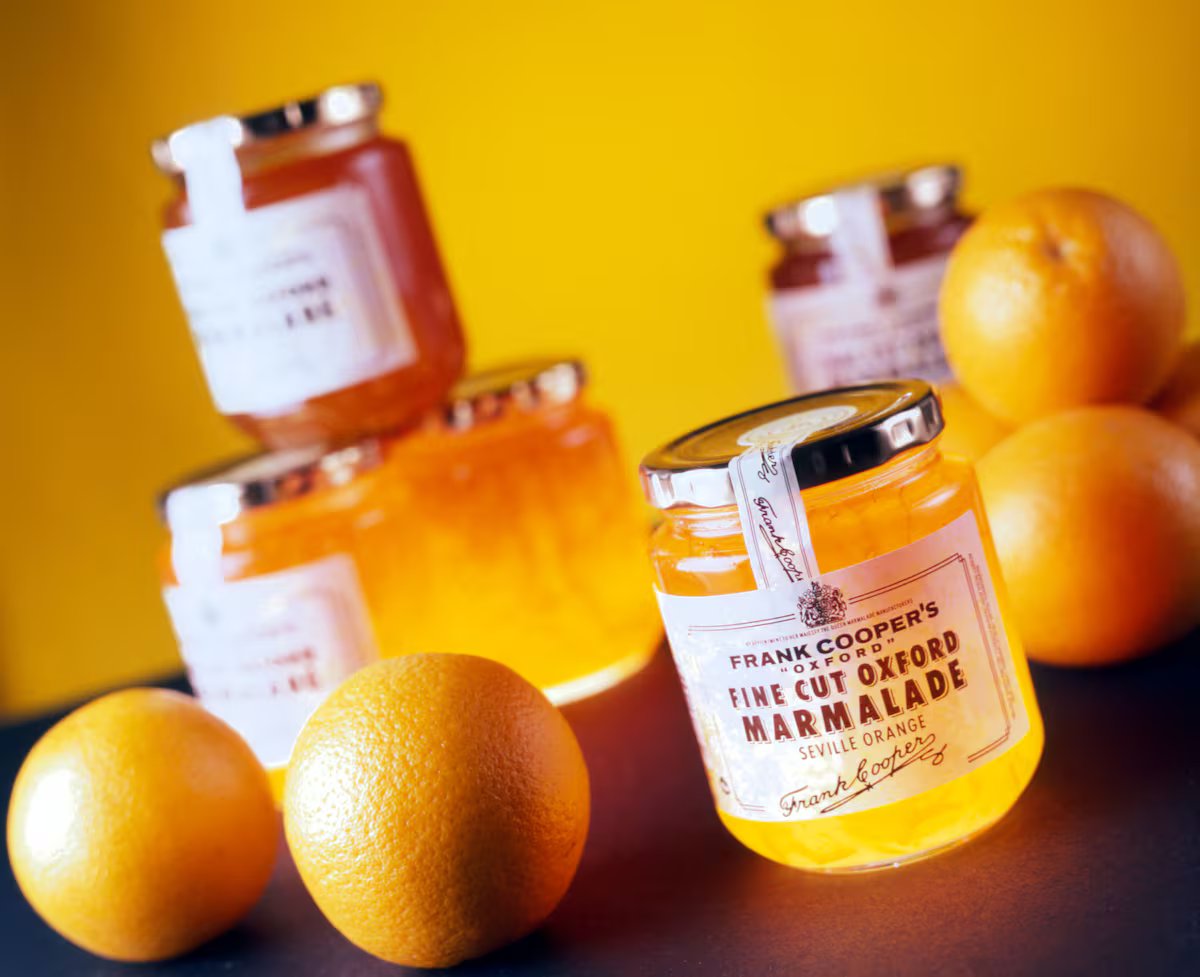
With Brexit, any British exceptions ended. Everything went back to normal. Now, however, it’s very likely that Starmer’s government will be forced to require its companies to call the product “citrus marmalade” if they want to sell it on the continent. Some already do. Others are resisting, for the time being. Frank Cooper’s continues to call theirs “Oxford Marmalade,” James Bond’s favorite. It’s the most common name in British homes. This correspondent also has some in his fridge, although it would be difficult to say how long it’s been there.
In 2022, during the celebrations for Queen Elizabeth II’s Platinum Jubilee, the monarch participated in one of those delightfully saccharine videos, so quintessentially British, in which she shared tea with Paddington Bear. When the famous children’s character pulled his iconic marmalade sandwich from his hat, the Queen took one from her ever-present black leather handbag. “For later,” she said, without needing any further explanation.
Sign up for our weekly newsletter to get more English-language news coverage from EL PAÍS USA Edition
