
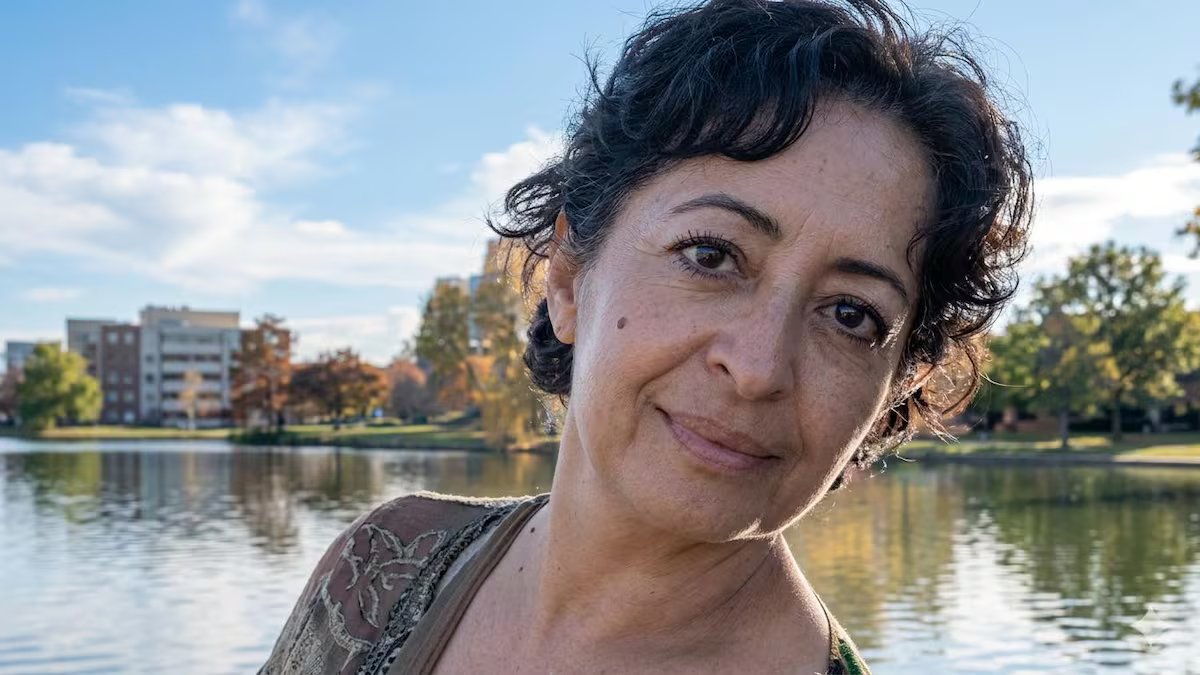
Meenu Batra, an interpreter with more than 20 years of experience in immigration courts and a life built over three decades in the United States, was detained by immigration agents at an airport in South Texas while on her way to work. Her case adds to a series of arrests involving people who have lived and worked in the country for years with official authorization.
The arrest occurred on March 17 at Harlingen Airport, after Batra passed through security to board a flight to Milwaukee, where she was scheduled to participate in a case. As she told CBS News, the agents told her she was in the country illegally, to which she replied that she had her documents with her.
For more than 20 years, Batra worked as a certified interpreter in immigration courts, translating proceedings into Hindi, Punjabi, and Urdu. According to The Texas Observer, she was the only licensed interpreter in Texas for those languages, which led her to travel across the country to assist people in immigration proceedings.
Born in India, Batra fled to the United States about 35 years ago after her parents were murdered for religious reasons linked to their Sikh identity. She subsequently applied for asylum, and in 2000, a judge granted her a status known as “withholding of removal,” which allowed her to live and work in the country, though without access to permanent residency. “I am here, and I am legal and will not be removed, so I have nothing to worry about,” she told CBS. “And I can live and I can work. And that is all I wanted to do.”
However, the Department of Homeland Security maintains the opposite. A spokesperson told The Texas Observer that Batra has a final order of removal from an immigration judge in 2000, and stated that “employment authorization does NOT confer any type of legal status in the United States.”
Meanwhile, her youngest son, Jasper, recently enlisted in the Army, adding another dimension to the case. “I thought, you know, I would serve my country and serve my people. But I didn’t know the people was everyone except my mom. I thought she was included, but I guess not”, he told the U.S. network.
From the El Valle detention center in Raymondville, where she remains in custody, Batra describes an environment of constant uncertainty. “Every single day, you can’t sleep because you’re afraid when you go to bed, where you’re going to wake up,” she told the same publication.
Her account of the arrest also raises questions about the procedure. In a statement to The Texas Observer, Batra said the officers were not wearing uniforms and did not display visible identification. “Having watched and read enough news, I know that the moment you say something, they accuse you of evading arrest or whatever other things,” she explained. “So, being mindful of all that, mindful of the whole line and being embarrassed in front of everybody, I just complied.”
Her attorney, Deepak Ahluwalia, has questioned the treatment she received. “This is someone who maybe had one speeding ticket in the last 30 years and is being treated like a notorious criminal,” he told the publication.
Edna Yang, director of American Gateways, an organization that advocates for migrants’ rights, told the same media outlet that the Administration’s immigration policy is “not targeting criminals, it’s not targeting dangerous people, it’s targeting individuals who are members of our community, who have a lot to offer.”
As his legal defense proceeds — including a habeas corpus petition to challenge his detention — Batra’s future remains uncertain.
Sign up for our weekly newsletter to get more English-language news coverage from EL PAÍS USA Edition
