
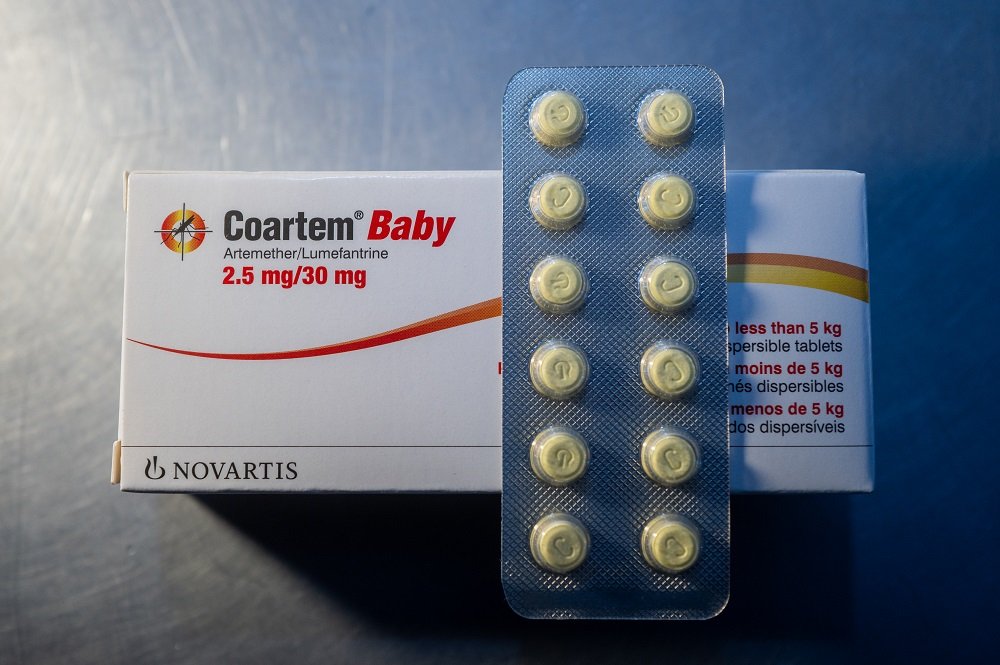
The first antimalarial developed specifically for babies is a step closer to reaching parts of the world where malaria is endemic. The World Health Organization has completed its review of Coartem Baby, clearing the way for entities that provide medicines to procure this new Novartis drug.
Coartem Baby was developed from the Novartis malaria drug Coartem. The active ingredients in Coartem are two antimalarials, artemether and lumefantrine. Bringing two different mechanisms of action to the parasitic infection reduces the risk of drug resistance. But the formulation of this drug — multiple tablets taken in multiple doses over the course of three days — is not suitable for babies and can also introduce side effect risks in these tiny bodies.
Novartis partnered with the nonprofit group Medicines for Malaria Venture to develop a new Coartem formulation for babies. In addition to taking into account the lower weight and metabolic differences of babies, Coartem Baby is formulated to dissolve in liquid, including breast milk. This drug has a sweet cherry flavor that makes it easier for babies to take.
Last summer, Switzerland drug regulator Swissmedic approved Coartem Baby. That regulatory review included participation from eight African countries, which cleared the way for approvals in those countries. But there are many other countries that do not have the regulatory infrastructure to review new medicines and vaccines. That’s where the WHO steps in.
The WHO review is called prequalification. While the organization is not a regulatory body, it can review products to provide assurance to countries that do not have adequate regulatory systems. This prequalification program assesses whether medical products meet quality, safety, and efficacy standards.
“This new formulation of artemether-lumefantrine represents an innovation as there are no antimalarial medicines specifically developed for the treatment of uncomplicated malaria in children from 2 to 5 kilograms body weight,” Dr. Daniel Ngamije Madandi, director, malaria and neglected tropical diseases at the WHO, said in Novartis’s Friday announcement of the prequalification.
Novartis said it is providing Coartem Baby largely on a not-for-profit basis in regions where malaria is endemic. Novartis isn’t donating Coartem Baby, but by making the drug available for public sector agencies and donor-funded agencies to procure the drug, it won’t lose money on it either.
There’s plenty of other news about drug reviews. Here’s a recap of some recent biopharmaceutical regulatory developments:
Rare Disease Developments
—The FDA approved Regeneron Pharmaceuticals gene therapy Otarmeni, making it the first gene therapy for an inherited form of hearing loss. Regeneron will provide this new product for free, but will still likely make money from it. The approval came with a rare pediatric disease voucher that Regeneron may sell. Recent voucher sales have fetched $200 million.
—Travere Therapeutics drug Filspari became the first FDA approved treatment for focal segmental glomerulosclerosis, a rare kidney disease. The drug was initially approved in 2023 for a different rare kidney disease called immunoglobulin A nephropathy.
—FDA approval of Rocket Pharmaceuticals’ Kresladi makes it the first gene therapy for leukocyte-adhesion deficiency type 1, an ultra-rare inherited immunodeficiency. It’s the first commercial product for Rocket.
—Denali Therapeutics received FDA approval for Avlayah as a treatment for Hunter syndrome, a rare neurologic disorder stemming from an enzyme deficiency. Avlayah uses Denali’s proprietary a brain-penetrating technology to deliver into the brain an engineered version of the deficient enzyme.
—The FDA approved linerixibat, brand name Lynavoy, a drug that GSK developed to treat cholestatic pruritus in patients with primary biliary cholangitis. In March, Alfasigma paid $300 million up front for global rights to this drug. FDA approval triggers a $100 million milestone payment to GSK, which is also eligible to receive royalties from Alfasigma’s sales of the product.
—The European Commission approved UCB drug Kygevvi as a treatment for thymidine kinase 2 deficiency, an ultra- rare mitochondrial disorder. The drug, which came from UCB’s 2023 acquisition of rare disease drug developer Zogenix, won FDA approval last November.
Infectious Disease Decisions
—The FDA approved Merck’s Idvynso for HIV patients who have reduced levels of the virus using an antiretroviral regiment blood but need to switch to a different therapy. The two main pharmaceutical ingredients in this combination drug could be safer and better tolerated compared to Biktarvy, a Gilead Sciences product that combines three drugs in a single tablet.
—Merck also received European Commission approval for Enflonsia, a respiratory syncytial virus vaccine developed for infants. The FDA approved Enflonsia last June.
Approvals in Immunology
—Sanofi and Regeneron Pharmaceuticals drug Dupixent added to its list of approvals with an FDA nod in chronic spontaneous urticaria, a chronic inflammatory skin disease. This approval makes Dupixent the first biologic drug for children age 2 to 11 who have uncontrolled chronic spontaneous urticaria.
—Johnson & Johnson won FDA approval for Icotyde for treating moderate-to-severe plaque psoriasis. This once-daily oral peptide, which provides an easier dosing option compared to injectable biologic medicines, was developed under a collaboration with Protagonist Therapeutics.
Cancer Drug Approvals
—Ipsen announced that the European Commission granted conditional marketing authorization to Ojemda as a treatment for pediatric low-grade glioma, the most common type of childhood brain cancer. Day One Biopharmaceuticals, which was recently acquired by Servier, developed Ojemda and received FDA approval for the pill in 2024. Months after the approval, Paris-based Ipsen licensed rights to the drug outside of the U.S.
—The FDA approved Corcept Therapeutics’ relacorilant, brand name Lifyorli, for treatment of platinum-resistant ovarian cancer. Lifyorli is a selective glucocorticoid receptor antagonist. The approval covers use of this therapy alongside chemotherapy in patients who have received one to three prior systemic treatments.
Approvals in Metabolic Disease
—Novo Nordisk received FDA approval for a new high dose of obesity drug Wegovy. The 7.2 mg dose of Wegovy HD may now be used by patients who have tolerated the previous high dose of 2.4 mg for at least four weeks and still need to lose more weight. The new approval came under an FDA pilot program that speeds up the regulatory review of products in the national interest.
—In other obesity drug news, Eli Lilly received FDA approval for Foundayo, an oral small molecule GLP-1 drug for weight loss. Like Wegovy HD, the approval for Lilly’s once-daily pill came under the new FDA pilot program.
—Sanofi’s Tzield, a drug for delaying progression of type 1 diabetes, expanded its label to include children age 1 or older. When the intravenously infused drug was initially approved in 2022, the regulatory decision covered adults as well as children age 8 and older.
—Novo Nordisk received FDA approval for Awiqli, a once-weekly basal insulin developed for type 2 diabetes. This long-acting insulin provides an alternative to daily injections. The company said Awiqli will launch in the U.S. in coming months.
—Rhythm Pharmaceuticals Imcivree expanded its FDA approval to include acquired hypothalamic obesity, an acquired form of obesity that stems from dysregulation of the MC4 receptor pathway in the brain. This pathway regulates hunger and energy expenditure. The once-daily injectable drug was previously approved for treating genetically driven forms of obesity associated with impaired MC4 pathway signaling.
3 Regulatory Setbacks and 1 Reprieve
—Replimune received a complete response letter for RP1, an oncolytic virus for advanced melanoma. Among the issues cited by the FDA was the inability to isolate the contribution of RP1 from the immunotherapy that was dosed alongside the treatment. Replimune said a different review team was appointed for RP1’s resubmission and that team did not meet with the company and contradicted what the prior review team had said.
—The FDA sent Grace Therapeutics a complete response letter for GTx-104, a drug for aneurysmal subarachnoid hemorrhage (aSAH), which is bleeding on the surface of the brain that leads to a rare type of stroke. GTx-104 is intravenously infused formulation of aSAH drug nimopidine; IV delivery eliminates the need for a nasogastric tube to administer the drug to patients who are unconscious or have difficulty swallowing the oral formulation. Grace said the FDA’s letter cited data for product packaging, non-clinical product toxicology risk assessments, and manufacturing issues at a contract manufacturer. The company said it believes the issues are addressable and it will request an FDA meeting to discuss them.
—The FDA rejected Aldeyra’s dry eye disease drug, citing a “lack of substantial evidence” from the clinical trials. The negative regulatory decision has implications for AbbVie, which holds an exclusive option to collaborate on the commercialization of this drug.
—MacroGenics is cleared to resume clinical testing of lorigerlimab in gynecologic cancer. In February, the FDA placed a partial clinical hold on a Phase 2 test of the bispecific antibody after the company paused enrollment following reports of safety events in four patients. MacroGenics said the trial will proceed with additional risk mitigation measure for blood and heart toxicities.
Photo by Novartis
