
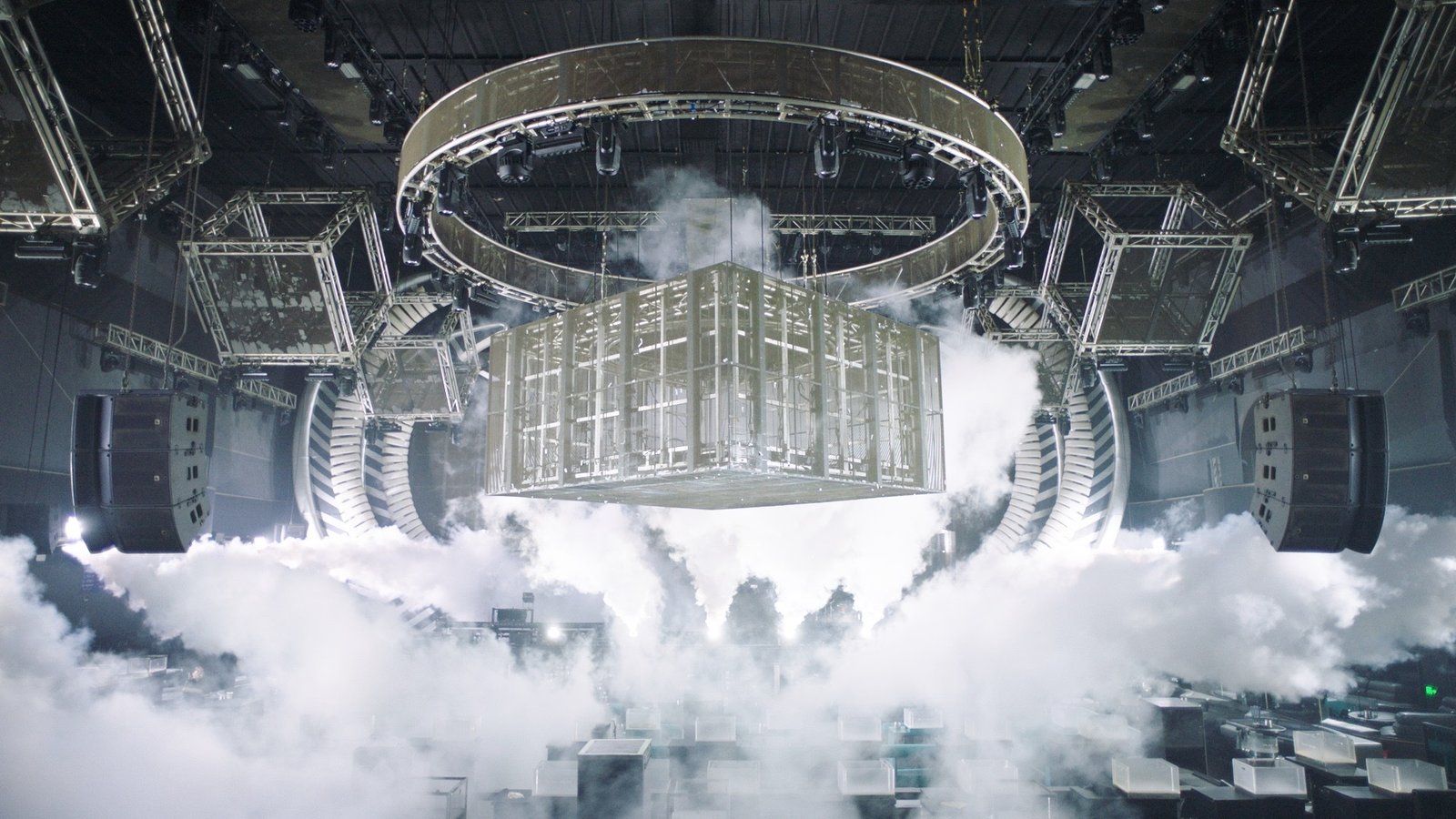
– Dutch director Jona Honer’s debut feature catapults audiences into one of the world’s most renowned electronic music clubs
Eleven years after participating in the Visions du Réel Festival with his medium-length film Up or Out, telling the story of two brothers who are convinced they can beat the stock market thanks to a magic formula which eliminates humans from the decision-making process, Dutch director Jona Honer is returning to Nyon with an astonishing first feature film entitled Club Heaven, which has been selected in the Burning Lights Competition. Intrigued by a reality which he discovered almost by accident but which immediately captured his attention, Honer decided, with this first feature film of his, to enter deep inside of one of the most renowned electronic music clubs in the world: Play House in Chengdu, China. At once imposing, tremendous and frightening, this temple to electronic music shows its darker sides to the camera, with behind-the-scenes footage revealing nights akin to collective rituals with outcomes which aren’t always pretty.
Club Heaven adopts a meticulous, minimalist yet never sterile approach to examine the ecstasy of the young (rich) people looking to transcend reality through music and alcohol, and the exhaustion of those who work precarious jobs to facilitate this collective ritual.
Blinded by an obsession to reach an inebriated state which might, even if only for a moment, fill them with infinite happiness, the clientele of Play House in Chengdu don’t seem to belong to our universe, and the use of a thermal imaging camera showing the heat emanating from their bodies in this venue only enhances this alienation. Like abstract, imaginary figures who dance (though we ourselves never hear the music), drink and stumble around, fuelled by alcohol, the Play House audience seems to come from a world beyond. Shot meticulously yet lyrically, to the tune of surreal silence (with no dialogue or music accompanying the film’s images), we see the club’s interior through the eye of the camera.
Whether the choreographic ritual of bottles of champagne being carried to customers’ tables with obsequious solemnity, as if it were holy water, or the helpless bodies of drunk young women reduced to rag dolls, or the words which are whispered into people’s ears, everything is choreographed in Play House. With meticulous attention to finer details – steeped in secret, hidden meanings – which the director observes with a scathing yet curious eye, the club is transformed into a temple where people can lose themselves in the obsessive rhythm of electronic music.
Play House’s minimalist yet monumental architecture overpowers and almost overwhelms its clientele, turning the venue into the lead character in a collective ritual which sees humanity dilating and disappearing and giving way to mysterious ectoplasms. The rituals which the customers fulfil are linked to a kind of capitalism which is greedily devouring human relationships. In this sense, money becomes a consecrated bread which grants access to a form of redemption reserved for a privileged elite.
Contrasting with this world of excesses, opulence and oblivion are the people who work in the shadows, facilitating these parties for the “happy few”. Filmed while they rest or eat between shifts, tired, sleepy but determined to get through the night, we get to know the staff in the club through the little conversations they enjoy during breaks. Pressure is high and the fear of being replaced constant, but this doesn’t stop them from feeding, like automatons, into the fun-machine. In short, Club Heaven is an intriguingly brilliant and powerful film, confronting us with the madness of a world which lives through oblivion.
Club Heaven is a Dutch-Belgian production staged by Submarine in co-production with Clin d’Oeil and Human Film.
(Translated from Italian)
