
– CANNES 2026: The feature by Lauriane Escaffre and Yvo Muller recounts the Bobigny trial, an historic moment in the advancement of women’s reproductive rights
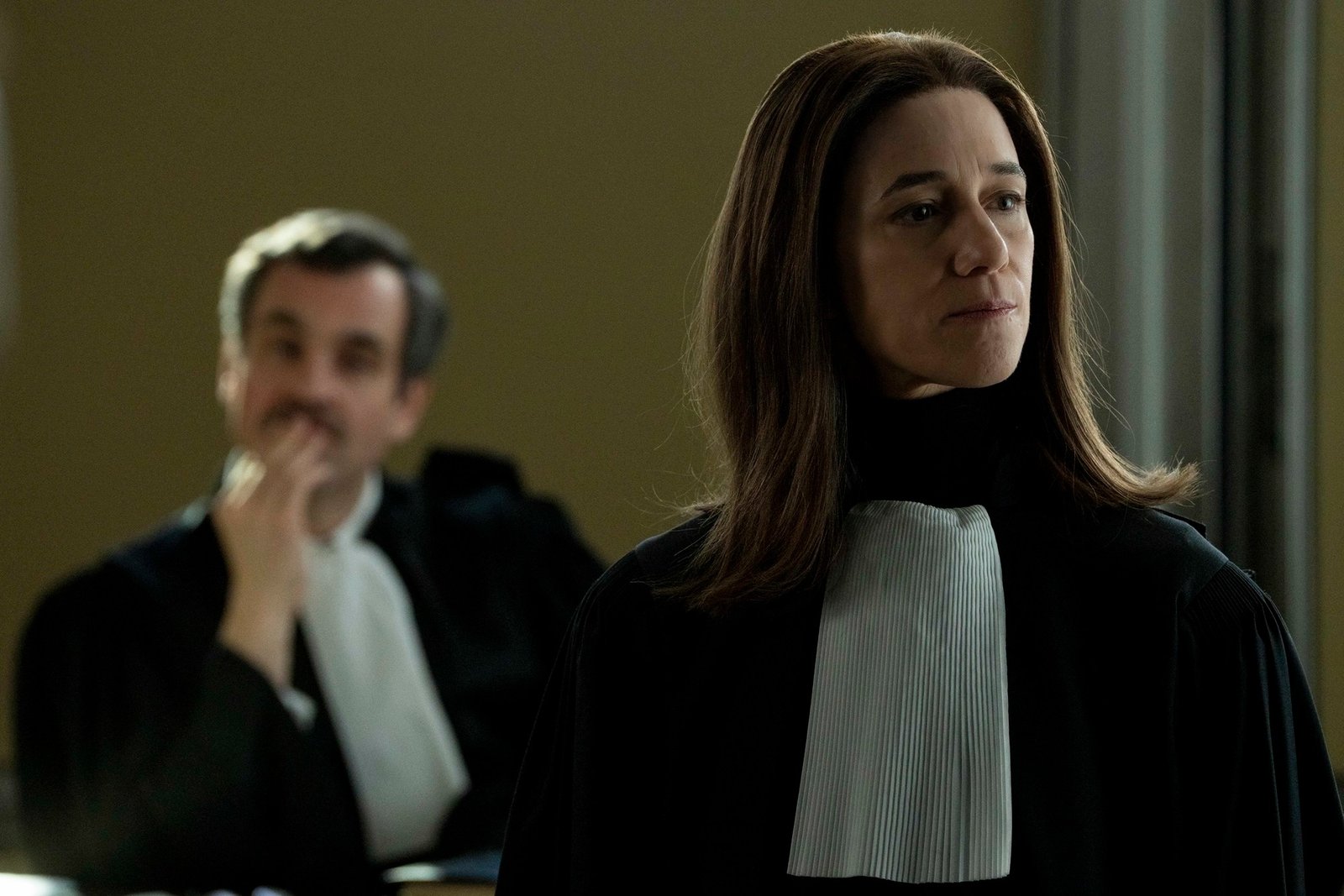
Charlotte Gainsbourg in Women on Trial
Women on Trial, one of this year’s Cannes Special Screenings, already has a theatrical release planned, as it will be distributed in France by Gaumont on 4 November. Written and directed by Lauriane Escaffre and Yvo Muller, the film is centred on the real-life story of lawyer Gisèle Halimi (played by Charlotte Gainsbourg), who defended Marie-Claire Chevalier (Saul Benchetrit) with the help of the 16-year-old secondary-school student’s mother, Michele (Cécile de France), in a case that went to court.

Set in the early 1970s, the feature follows, with graceful, non-linear storytelling, the trial (dubbed the Bobigny trial) that has been set up to prosecute Marie-Claire for the illegal abortion that she decided to put herself through after being raped by one of her classmates. In a society in which abortion is still a crime, there is little to no understanding or compassion, even if the circumstances of the choice were clearly delicate. In the eyes of the law, it seems more reasonable for the rapist to go unpunished and for the women involved to be jailed.
Thanks to Halimi’s determination – over the course of these scenes, she repeatedly insists that none of the accused women should have to apologise in court, arguing that women have been conditioned to do so and have grown accustomed to it for far too long – there is finally a glimmer of hope. This remarkable figure is remembered not only for her role in the Bobigny trial, but also for her activism in support of Algerian independence. And this trial had a considerable impact on the topic at hand, as three years later, the Veil Act of 1975 was passed, officially decriminalising abortion in France.
Women on Trial is a film that works because it centres on a story that works. It would have been very hard to make an uninteresting feature out of such powerful material. That being said, the directorial duo never become complacent enough to allow the strength of the story on paper to cause them to sleepwalk through the script. Escaffre and Muller have a solid understanding of their work as a whole and have clearly coordinated all of its aspects with a steady hand. Everything, not least Jean-Francois Hensgens’ cinematography, is supremely slick and well controlled.
All of the performances by the main cast are strong and genuinely moving, without ever feeling forced or over the top. A special mention should go to Florence Loiret Caille for her extraordinary performance: she plays a relatively minor character, Micheline Bambuck, the woman who physically allows Marie-Claire Chevalier to undergo the abortion. Her acting is superb, and her facial expressions elicit genuine laughter, which helps release the tension generated by such woeful circumstances. Grégory Gadebois, who plays Halimi’s husband, Claude Faux, is also perfectly cast, conveying the right balance of support and tenderness towards his wife while making his respect and admiration for her clearly visible.
Women on Trial is a movie that works perfectly well both as an historical document and as a powerful testament to the resilience of women through the generations. It’s not the most original film, nor is it the most visually striking, but it does not set out to be either of those things.
Women on Trial is a joint effort between ADNP Quad Films, Gaumont and France 3 Cinéma. Gaumont sells it worldwide.
