
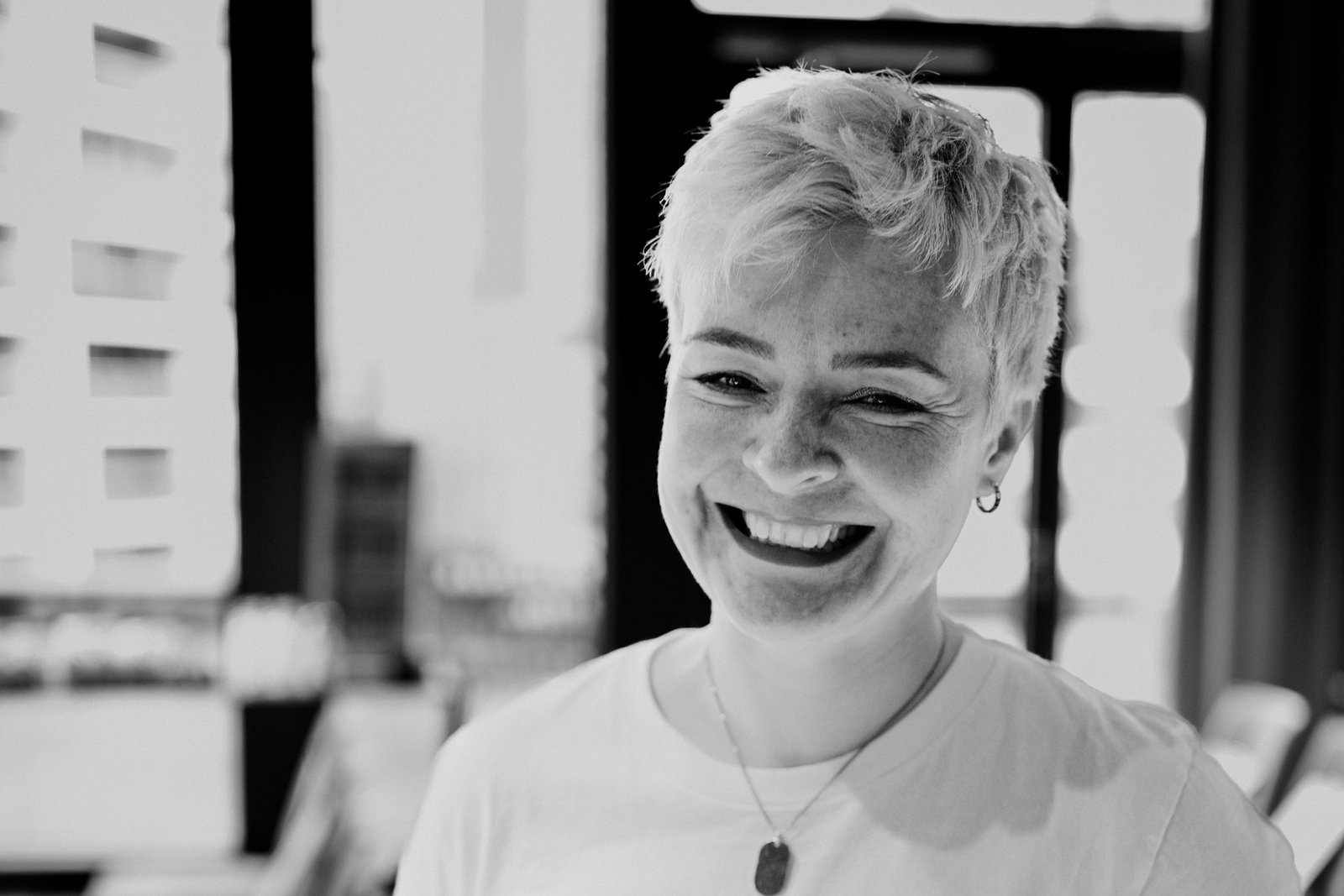
“I have the feeling that we find ourselves in a situation where we have to explain to people what a human being is”
– The German voice-over professional discusses the current situation with Netflix and whether it is possible to work with AI-generated voices in an ethical way
(© Benedikt Hahn)
Since February, German voice actors have been refusing to work with Netflix because of the new AI clause added to their contracts by the US streaming giant. The clause would allow for actors’ voices to be used in AI training without any additional remuneration. While Netflix does not intend to replicate the exact voices, it does plan to use the intonation and phrasing used to express emotions for training purposes, as these are much more difficult for AI programmes to reproduce – and much more valuable.
In summer 2025, the German actors’ union BFFS reached an agreement with Netflix on AI usage guidelines, ensuring that actors would be paid if the trained AI was also used in production. However, this agreement is not enough for members of the German Voice Over Artists’ Association (Verband Deutscher Sprecher:innen, VDS). We had a conversation with its president, voice actress Anna-Sophia Lumpe, whom we met at the Medientage Munich Special on Artificial Intelligence and Media on 22 April. We discussed the current situation with Netflix, the advantages human voices have over AI-generated ones, and whether it is possible to work with AI voices in an ethical way.
Cineuropa: Why do German voice actors currently not want to work with Netflix? Can you explain the background from your perspective?
Anna-Sophia Lumpe: It all began when, from the end of 2025, Netflix started presenting new contracts containing an AI inclusion clause. The clause says that Netflix wants to use speakers’ voices for AI training, but defines neither what exactly the AI is to be trained for, nor any restriction on the use of data. You have to understand that the contracts of voice actors are usually only signed in the studio on the day of the recording itself. Our members spontaneously made the courageous decision not to sign and walked out on Netflix. We stand behind our members, no ifs or buts. As a matter of principle, voices are not AI training material, and certainly not without remuneration.
Could you explain to someone who is a consumer of films and series what human voice actors have that AI voices don’t?
Thinking that humans and AI can even be in competition with each other is the first major mistake. What sets voice actors – and indeed all other human beings – apart from machines is our humanity, our emotions and our unpredictability. These are not weaknesses, but strengths. AI systems represent an average value defined by the general data they have been fed. Humans feel and make decisions based on their emotions, in the heat of the moment. In order to transform our voices and be someone else, we have to know who we are. We also speak when we don’t say anything. I have the feeling that we find ourselves in a situation where we have to explain to people what a human being is.
What preconceptions exist about voice-over artists?
Many people think that voice acting is easy, or that we only have to talk for a living and get paid in return. All people have a voice, so why don’t more people work as voice artists? When a layperson stands in front of a microphone for the first time, they realise just how much sound it can pick up even before they utter a single word. This job doesn’t make anyone rich: one needs a lot of idealism to work in this field. It is not for programmers to imbue machines with our voices, our very essence and being. Especially since we, as artists, have worked hard to achieve this over many years in precarious working conditions. We barely have any social security, and yet we still walk this path.
Why should people in other professions care?
We cannot allow US corporations to undermine our data protection and copyright laws. If we hand over our very essence to AI, it will lead to a complete erosion of democracy. What we are currently discussing holds true for all professions, not just the arts.
Furthermore, generative AI is energy-intensive and harmful to the environment. This is not a technology for the benefit of humanity; rather, it is a technology designed to replace humans in the name of profit.
Can AI be used ethically in the dubbing industry? I’m thinking of the new Pumuckl series, in which the voice of the new actor, Maxi Schafroth, was adjusted to match the AI-generated voice of the late Hans Clarin.
I’ve heard the new Pumuckl, too, but he doesn’t have the same dialect or the same vocal delivery. Then again, today’s children can’t remember the original voice. Was this project maybe more about chasing a trend, rather than about creating any real added value? Perhaps this is a kind of “dictatorship of nostalgia”: we’ve already had the best, and we’ll never get it back. But the new generation has a right to their own voices. For me, as an artist, it wouldn’t be enough to simply be the puppeteer and disappear behind someone else’s voice. But here, I’m speaking for myself. Would you not have watched the new season if they had used a completely new voice? Hans Clarin has lived Pumuckl and filled Pumuckl with his feelings. He touched many hearts, and it’s a part of his heritage. Who has the right to decide what happens to his voice now? I would like to see qualified individuals who produce good stories focus on what really matters: reaching a new audience with their stories.
