
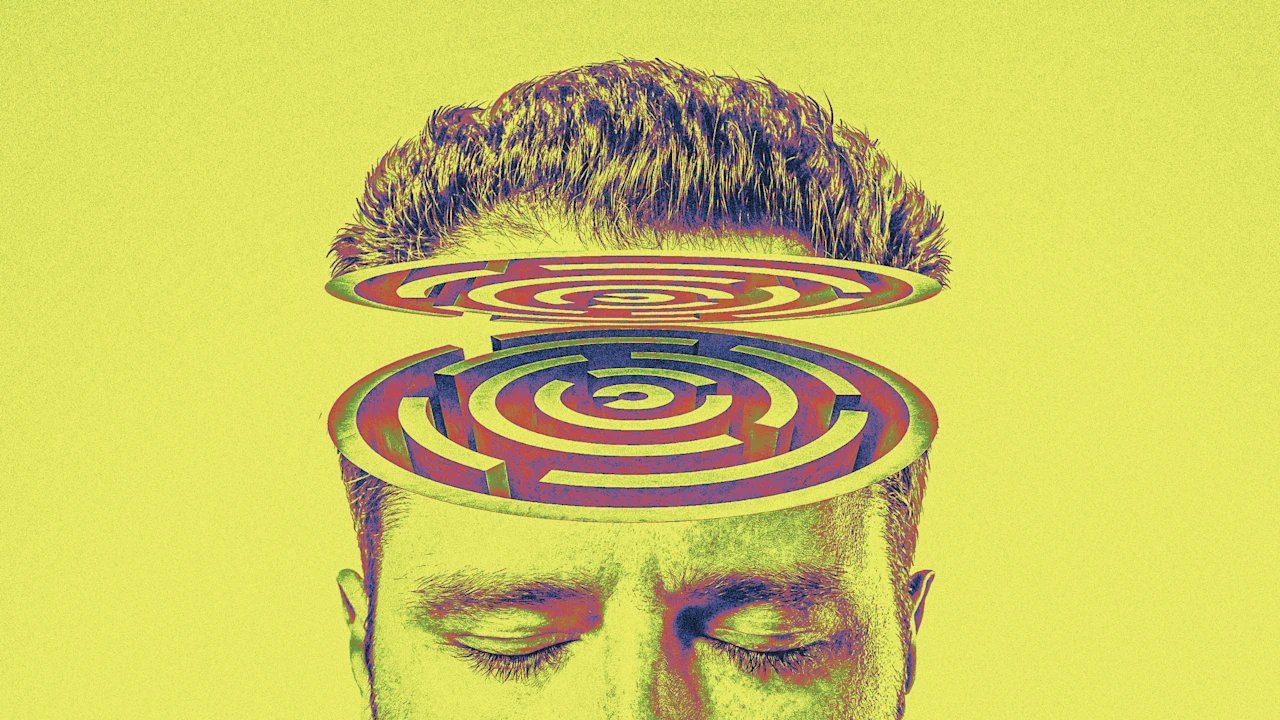
Intelligence is one of the most consequential human traits. It is also one of the most socially awkward to discuss. Few topics trigger as much discomfort, denial, or moral posturing. Suggest that IQ matters and you risk being accused of elitism, determinism, or worse.
Yet the evidence is remarkably clear. Cognitive ability remains the single best predictor of educational attainment, even after controlling for parental socioeconomic status. Large-scale longitudinal studies and meta-analyses have consistently shown that IQ predicts grades, years of education completed, and academic progression across cultures. It is also the most robust predictor of job performance, with validity coefficients that outperform individual personality traits, experience, and even employment interviews in most contexts. In fact, the higher the complexity of the job, the stronger the predictive power of intelligence. This is no fringe science. It is among the most replicated findings.
Publicly, we prefer to celebrate more socially acceptable traits: emotional intelligence, grit, resilience, authenticity. These qualities are not irrelevant, but their predictive validity is often overstated. Privately, however, our behavior tells a different story. We assortatively mate on intelligence, meaning people tend to partner with others of similar cognitive ability. We invest heavily in education systems that select for or signal intelligence, from standardized testing to elite university admissions. We use proxies such as degrees, institutions, and job titles as shorthand for cognitive ability, even when we claim to reject the notion of IQ.
{“blockType”:”mv-promo-block”,”data”:{“imageDesktopUrl”:”https:\/\/images.fastcompany.com\/image\/upload\/f_webp,q_auto,c_fit\/wp-cms-2\/2025\/10\/tcp-photo-syndey-16X9.jpg”,”imageMobileUrl”:”https:\/\/images.fastcompany.com\/image\/upload\/f_webp,q_auto,c_fit\/wp-cms-2\/2025\/10\/tcp-photo-syndey-1×1-2.jpg”,”eyebrow”:””,”headline”:”Get more insights from Tomas Chamorro-Premuzic”,”dek”:”Dr. Tomas Chamorro-Premuzic is chief science officer at Russell Reynolds, a professor of organizational psychology at UCL and Columbia University, and cofounder of DeeperSignals. He has authored 15 books and more than 250 scientific articles on the psychology of talent, leadership, AI, and entrepreneurship. “,”subhed”:””,”description”:””,”ctaText”:”Learn More”,”ctaUrl”:”https:\/\/drtomas.com\/intro\/”,”theme”:{“bg”:”#2b2d30″,”text”:”#ffffff”,”eyebrow”:”#9aa2aa”,”subhed”:”#ffffff”,”buttonBg”:”#3b3f46″,”buttonHoverBg”:”#3b3f46″,”buttonText”:”#ffffff”},”imageDesktopId”:91424798,”imageMobileId”:91424800,”shareable”:false,”slug”:””,”wpCssClasses”:””}}
In other words, we dismiss intelligence rhetorically while pursuing it relentlessly in practice. The result is a peculiar and consequential hypocrisy.
Why we are so bad at spotting intelligence
If intelligence matters this much, one might expect humans to be good at identifying it. We are not.
Decades of research show that unstructured human judgments of intelligence are noisy, biased, and often inaccurate. Brief interactions are particularly misleading. In a matter of minutes, we form impressions based on superficial cues that are only weakly correlated with actual cognitive ability.
Consider first the false positives.
Confidence is perhaps the most powerful illusion. Studies on overconfidence, including classic work by David Dunning and Justin Kruger, show that individuals with lower ability are often more likely to overestimate their competence. This phenomenon, commonly referred to as the Dunning-Kruger effect, creates a double disadvantage: the least capable are not only less skilled, but also less aware of their limitations.
In social and organizational settings, this translates into a systematic bias in favor of confident communicators. People who speak fluently, express strong opinions, and project certainty are often perceived as more intelligent than they are. Research on leadership emergence consistently shows that assertiveness and extraversion predict who is seen as a leader, even when they are unrelated to actual performance.
This helps explain a recurring organizational pathology: the overrepresentation of overconfident individuals in positions of power. In my own work, I have described how this dynamic contributes to the rise of incompetent leaders, particularly when organizations mistake charisma and self-belief for competence.
Now consider the false negatives.
Highly intelligent individuals are not always obvious. In fact, they can be systematically overlooked. People who think deeply often communicate with nuance. They hedge their statements, acknowledge uncertainty, and resist oversimplification. They may ask more questions than they answer, not because they lack knowledge, but because they are aware of complexity.
Unfortunately, these behaviors can be misinterpreted. Hesitation is seen as lack of confidence. Nuance is mistaken for ambiguity. Intellectual humility is confused with weakness. As a result, individuals who are actually more capable may be judged as less so.
The consequences of these misjudgments are profound. Hiring decisions are skewed. Promotions reward style over substance. Organizations end up with leadership pipelines that favor impression management over actual ability.
At a broader level, this dynamic reinforces inequality. Individuals who are better at signaling intelligence, whether through communication style, cultural capital, or sheer confidence, are more likely to succeed, regardless of their underlying capability: More often than not, substance is beaten by style, to everybody’s detriment.
The art of looking smart
If intelligence is both undervalued and poorly assessed, then perception becomes a critical currency. In many real-world contexts, appearing smart matters almost as much as being smart. Especially when your audience lacks the expertise to tell the difference, even if they also manage to appear smart!
The good news—or bad news, depending on your perspective—is that there are reliable ways to signal intelligence. These are not necessarily about becoming smarter, but about managing how your intelligence is perceived, or curating a reputation for being smarter than you actually are.
Here are five evidence-based strategies:
1. Speak less, but say more
Research on communication effectiveness shows that concise speakers are often judged as more intelligent. In one set of studies, participants rated brief, structured answers as more insightful than longer, rambling ones, even when the content was equivalent. Brevity signals clarity of thought. It suggests that you can distill complexity into essence. By contrast, verbosity is often interpreted as lack of structure or even lack of understanding.
2. Avoid unnecessary complexity (but signal precision)
A now-classic study by Daniel Oppenheimer found that using unnecessarily complex words makes people seem less intelligent, not more. Simplicity is often a better signal of mastery. However, this does not mean dumbing things down entirely. Strategic use of precise, domain-specific language can enhance perceptions of expertise. The key is balance: enough sophistication to signal competence, not so much that it feels like obfuscation.
3. Ask better questions
One of the most underrated signals of intelligence is the ability to ask insightful questions. Research on curiosity and learning shows that high-ability individuals tend to ask more diagnostic, forward-looking questions. In social settings, questions shift the focus from what you know to how you think. They demonstrate that you can identify gaps, challenge assumptions, and explore implications. In many cases, a well-crafted question signals deeper understanding than a superficial answer.
4. Display calibrated uncertainty
Contrary to popular belief, expressing some uncertainty can increase perceived intelligence, particularly among more sophisticated audiences. Studies on expert communication show that people who acknowledge limitations and probabilities (a common sign of metacognition) are often seen as more credible. Phrases like based on the available data or one interpretation is signal nuance and intellectual honesty. Overconfidence may be persuasive, but it is also fragile. Calibrated uncertainty, by contrast, signals depth.
5. Slow down your thinking
In an era of instant responses, speed is often mistaken for intelligence. But cognitive science suggests the opposite can be true. Drawing on the work of Daniel Kahneman, we know that fast thinking is intuitive and automatic, while slow thinking is deliberate and analytical. Taking a moment before answering signals that you are engaging in deeper processing. It suggests reflection rather than reaction. In many professional contexts, this is interpreted as intelligence.
The AI illusion
It is tempting to assume that AI tools (especially generative AI or large language models) can help us appear smarter. After all, they can generate articulate answers, summarize complex topics, and produce polished outputs in seconds, not to mention “hallucinate” (a technical euphemism for “bs”) at scale.
But there is a catch.
As AI becomes ubiquitous, its outputs are increasingly standardized. Everyone has access to the same tools, the same models, and often the same answers. This creates what I have elsewhere called “artificial certainty”: responses that sound coherent and confident, but lack true differentiation. In a way, AI is like the intellectual version of the fast food industry, and GenAI platforms like ChatGPT are like a microwave for ideas: synthetic, tasty, cheap, and addictive but not very nourishing or nutritious food for our hungry minds, let alone intellectually valuable content.
In this context, simply using AI does not make you appear smarter. If anything, it may have the opposite effect when overused. Generic, templated responses can signal lack of originality or depth. The real differentiator is not access to AI, but how you interpret, challenge, and build on its outputs.
In other words, the premium shifts from having answers to exercising judgment, especially backed by experience.
The final irony
In a more rational world, we would be better at understanding intelligence, both in ourselves and in others. We would rely more on validated assessments and less on gut feeling. We would reward substance over style.
But humans are not purely rational. We are social evaluators, navigating environments where perception often substitutes for reality. Intelligence, like many other traits, is filtered through layers of bias, status, and impression management.
The deeper question, then, is not just how smart we are, but how well we recognize and value intelligence in others.
Because if we fail at that, we risk building organizations, institutions, and societies that reward the appearance of competence over the real thing. And in a world increasingly defined by complexity, that may be the most unintelligent outcome of all.
{“blockType”:”mv-promo-block”,”data”:{“imageDesktopUrl”:”https:\/\/images.fastcompany.com\/image\/upload\/f_webp,q_auto,c_fit\/wp-cms-2\/2025\/10\/tcp-photo-syndey-16X9.jpg”,”imageMobileUrl”:”https:\/\/images.fastcompany.com\/image\/upload\/f_webp,q_auto,c_fit\/wp-cms-2\/2025\/10\/tcp-photo-syndey-1×1-2.jpg”,”eyebrow”:””,”headline”:”Get more insights from Tomas Chamorro-Premuzic”,”dek”:”Dr. Tomas Chamorro-Premuzic is chief science officer at Russell Reynolds, a professor of organizational psychology at UCL and Columbia University, and cofounder of DeeperSignals. He has authored 15 books and more than 250 scientific articles on the psychology of talent, leadership, AI, and entrepreneurship. “,”subhed”:””,”description”:””,”ctaText”:”Learn More”,”ctaUrl”:”https:\/\/drtomas.com\/intro\/”,”theme”:{“bg”:”#2b2d30″,”text”:”#ffffff”,”eyebrow”:”#9aa2aa”,”subhed”:”#ffffff”,”buttonBg”:”#3b3f46″,”buttonHoverBg”:”#3b3f46″,”buttonText”:”#ffffff”},”imageDesktopId”:91424798,”imageMobileId”:91424800,”shareable”:false,”slug”:””,”wpCssClasses”:””}}
