
“It’s important to do what is best for the project, whether that means producing, co-producing or collaborating”
– The Swiss-based producer gives us the low-down on her company, which has existed for almost 20 years, and her approach to her job
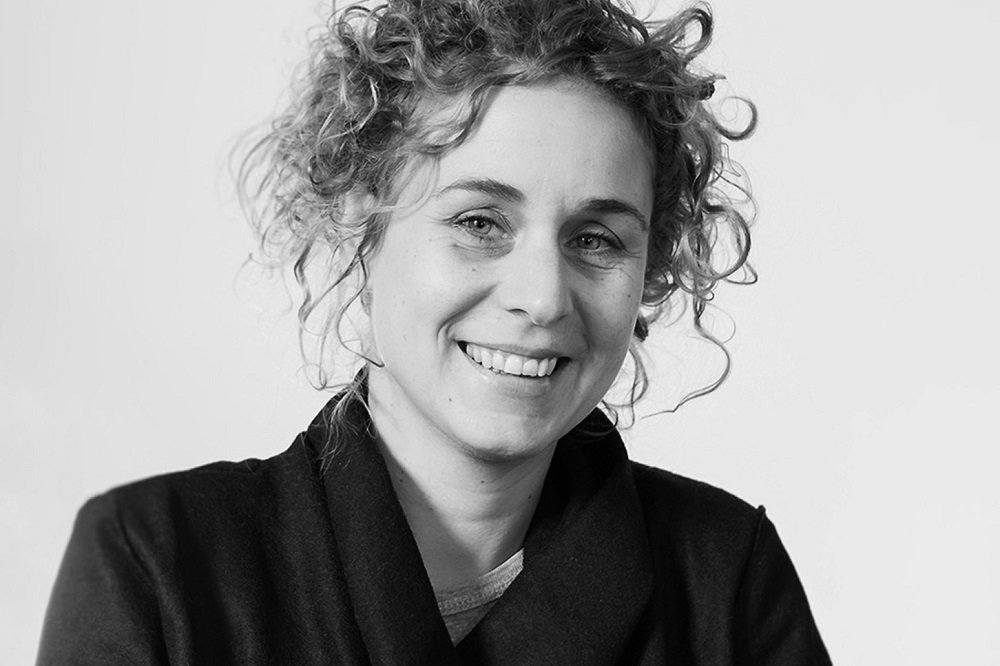
Based in Switzerland, producer Michela Pini founded her own production company, Cinédokké, while still working on different projects with several partners. She will be part of this year’s contingent of Producers on the Move at Cannes, supported by European Film Promotion. We spoke to the producer about her projects currently in development, her ideas on collaboration and her approach to co-productions.
Cineuropa: Cinédokké has existed for almost 20 years. How has it changed over that time?
Michela Pini: It has changed completely. I founded Cinédokké together with Amel Soudani after working extensively for Amka Film and Imago Film, while continuing to collaborate with them. At the beginning, we wanted to do everything. In fact, “Cinédokké” comes from “synecdoche”, a figure of speech that uses a term for a part of something to refer to the whole. We wanted to open an extras agency, do casting and provide production services. I was very drawn to the organisation side, while Amel was more interested in distribution and press. Then we started producing short films – we made almost 20 of them – while I was working as a location manager, general organiser and production manager. Then came the first feature produced by Cinédokké. For many years, I also continued working as a production manager for other films because it allowed me to tackle larger contexts. But then, I realised that if you really want to be a producer, you cannot be a production manager for someone else at the same time. You have to be present for your own projects.
I strongly believe in collaboration. I produced all of the latest projects with Olga Lamontanara. I also often used to collaborate with other production companies. I produced Unrest by Cyril Schäublin, for instance; he had his own production company but was looking for a producer. In my view, the model of the large production company as an “economic empire” no longer exists. That’s not my way of working. I fall in love with projects. For me, it’s important to do what is best for the project – whether that means producing, co-producing or collaborating. Since last year, for example, I have been working with Turnus Film, which has Butterfly Stroke by Denis Rabaglia in post-production.
And what about the projects themselves? Do you have a clear editorial policy?
There isn’t an explicitly stated editorial line like, “I only read projects about women.” But if I look back at our filmography, I see that we’ve produced many movies with female protagonists. We started out mainly with young talents and auteur cinema. We also co-produced Becaària by Erik Bernasconi, which is a feel-good movie for a wide audience, but it remains an auteur film. Then there’s Semret by Caterina Mona, Until Branches Bend by Sophie Jarvis, Mosquitoes by Valentina and Nicole Bertani and, with Amka Films, the latest film by Leonardo Di Costanzo, Elisa. Now, we’re also trying to open up a bit to genre films, such as Grave by Anna Pieri Zürcher and Pietro Zürcher, which is a dark comedy.
As an all-women team, do you feel a responsibility to support female talent?
Absolutely. I also work with men, but for me, it’s important to support women. Because even though in Switzerland there is a certain degree of pay equality in cinema, it’s true that there are fewer female directors. It’s a job that requires a great deal of time, travel and patience. So, I always say that I support women, but above all, I support parents, be they men or women. Even before any official rules existed, we always tried to allow people to bring their children to set, or to provide a babysitter and include those costs in the production budget.
How would you describe the film-funding situation in Switzerland?
It’s much more difficult nowadays for Swiss producers. On the one hand, television has decided to produce only TV series and no longer TV movies. And TV movies, especially in Ticino, allowed us to keep working, provide continuity for technicians and discover talent. For example, Love Me Tender by Klaudia Reynicke was a TV movie, and later went to Locarno and Toronto. So today, all projects end up at the Federal Office of Culture. There are more projects, and they cost more. Before, for a first feature, I would ask for 600,000 Swiss francs [approximately €655,500]; now, it’s at least 750,000 [€820,000] because otherwise I can’t pay the technicians and crew.
You are currently co-producing mainly with Italy, right?
Yes, mostly. We work mainly with Tempesta and Disparte. But the projects I am bringing to Cannes are also looking for new international co-producers. For Grave, we went looking for co-producers in Estonia, Finland and Iceland. It’s wonderful because you discover another country and other people. Switzerland co-produces more easily with neighbouring countries because we share a similar mentality, languages and culture.
Which projects are you bringing to Cannes?
Il Dominio by Klaudia Reynicke, Fliegen by Caterina Mona, Grave by Anna Pieri Zürcher and Pietro Zürcher, Pouletburg by Francesco Rizzi (Turnus Film), Dunkle Schokolade by Valentin Merz, Ibicaba by Andrea Štaka and Taking the Waters by Sophie Jarvis. Alongside these fiction projects, we are also working on documentaries such as Kaukasus by Susanne Kaelin and Farsi Pianta by Andrea Pellerani. I’m also collaborating on Mi Di, the new film by Cyril Schäublin.
