
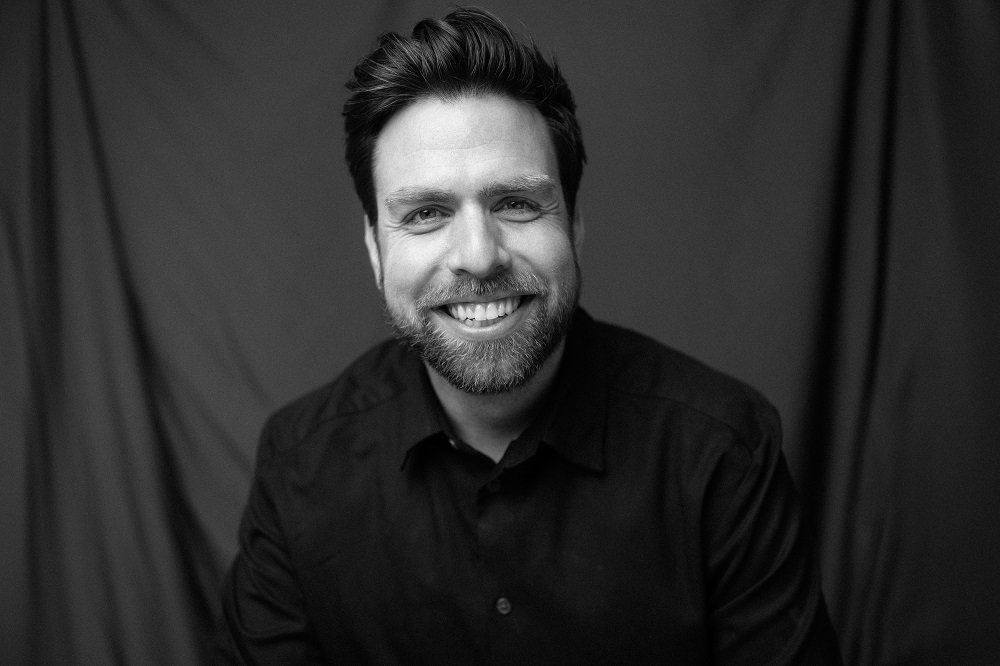
“We want to make bold cinema with ambition, urgency and stories that truly matter – and which can reach a broader audience”
– We chatted to the producer about the profile and editorial policy of his company, his work ethic, and the film he currently has in development
German producer Philipp Trauer is participating in European Film Promotion‘s Producers on the Move programme at Cannes this year. Working at Munich-based BerghausWöbke, he has produced two features by Swiss director Tim Fehlbaum, whose most recent effort, September 5, was a major international success. We spoke to the producer about the profile of his company, his work ethic and the film he currently has in development.
Cineuropa: You made films yourself before focusing on producing. How did that decision come about?
Philipp Trauer: I started experimenting with stop-motion and a MiniDV Camcorder as a teenager, and made several short films. I was interested in film and explored different professions. I did internships in television and on feature-film sets. But I realised that there was much more to filmmaking than directing, and I discovered that I could get excited about everything: cinematography, sound, directing, post-production…
My strength lies in having a basic understanding of many different areas, and then bringing them together. That’s why I decided to study production at the University of Television and Film Munich. Both of my parents are classical musicians. I’ve always been fascinated by the role of the conductor: someone who essentially understands how every instrument works, can read the score, and brings everything together. That’s what I always wanted for myself. When I produce, I want to be involved everywhere and help shape everything. It’s important to me to be able to speak to people on equal terms and to understand how things function, even in technical areas.
And is this way of working feasible at BerghausWöbke? How would you describe the profile of the production company?
It is, and I think that’s what makes it so special here. We’re a small production company, with Thomas Wöbke, Anna Eigl and myself as the three producers. We also have two additional permanent staff members: Lena Trost and Ruth Konrad. We share everything; there are no big hierarchies. We work transparently because we feel that everyone in the office makes an important contribution to the whole. The same applies to our collaboration with creatives. We are very hands-on. For that reason, we can’t handle many projects at the same time. Usually, we have one project in production and another in prep or late development. We simply can’t manage more than two projects a year, because we really try to be accessible in all areas, to always be on site – at least one of us is always on set – and to create a very close collaboration.
September 5 by Tim Fehlbaum has been a major success internationally, also in the USA. Were you able to build a network as a result?
During its entire festival run, there was hardly any time to build or maintain a network. I also felt a bit under pressure to make the most of the opportunity. Everything was very overwhelming – emotionally as well. There were moments I had never even dreamed of experiencing. But I do feel that the film has had a lasting impact. After a short recovery period following the Oscars, I started reaching out about new projects and contacting US agencies. And I’ve noticed that when I mention the film’s title, many people have seen it and thought it was great that we, as a small German underdog, were able to compete at that level. We now have international projects where we hopefully can build on that.
Does this experience also influence how you select new projects?
It reinforces what I’ve always been aiming for. I feel that our strength lies in making theatrical feature films – not series, not television movies. We want to make “commercial arthouse” films: bold cinema with ambition, urgency and stories that truly matter – and which can reach a broader audience. That applies whether they are German films that we sell internationally, or movies conceived as international projects. Personally, I tend to lean more towards the international path. It has always been my wish to work with people from other cultures. At Producers on the Move, you could already feel in the very first sessions how wonderful it is to hear all of these different languages, to know that everyone has a different background, and yet we are all doing the same thing. I find that incredibly enriching. September 5 helps us appear more confident and bring larger international projects together more quickly.
Which projects will you be taking to Cannes?
In addition to an exciting new project with Tim, we are working for the first time with director Kilian Riedhof [Gladbeck, Stella. A Life]. His film War Tourist is a satire, written by Astrid Ströher, Marc Blöbaum and himself. We definitely plan to structure it as a co-production, since the story takes place in several countries and the budget will be high. So, in Cannes, I’ll be trying to meet potential co-production partners, simply because my network in that area is not yet very extensive. That’s why the opportunity with Producers on the Move is perfect: in just a few days, I can establish much closer and broader contacts, and hopefully find partners for this project.
