
– CANNES 2026: Rafiki Fariala’s fiction debut tracks the hard yet hopeful life of a young refugee in the Central African Republic
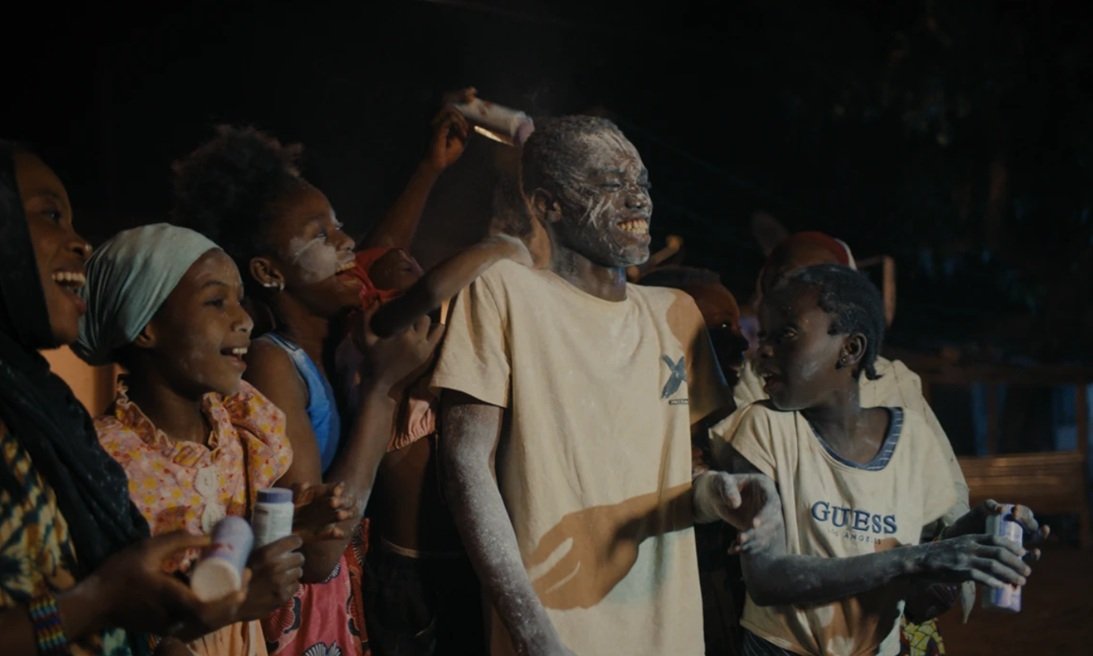
Bradley Fiomona (centre) in Congo Boy
Robert (Bradley Fiomona), a late-teenage Congolese refugee in Bangui, Central African Republic (CAR), has a pile of problems but keeps his spirits buoyant. To start, his parents are in prison for an arcane, bureaucratic mix-up involving their identity papers; from behind the chipped bars of his cell, his father (Hubert Ngbolo) pleads with Robert to become a doctor, like he claims he was (he’s actually a retired nurse, we later learn). While not pie-in-the-sky overambitious, Robert can rightly counter (like many a teen before him): “I’m an artist.” Indeed, he performs his self-penned tunes to enthusiastic crowds at Bangui’s swish nightclubs, his vocals moving seamlessly from speed-rapping to singalong refrains. Yet, like they do in various other parts of the city, whether day or night, militias from factions of the CAR civil war are known to violently gatecrash the dance floor.

Amid all this, Rafiki Fariala’s fiction debut, Congo Boy, is still one of the more predictable movies playing at Cannes this year, where it has premiered in Un Certain Regard. (His previous effort was the documentary We, Students!, which bowed in the Berlinale Forum.) It’s a harsh, but fair, assessment, especially considering the story is closely inspired by Fariala’s own experiences a decade prior: you feel the tone and plotting of the film always uplifting the audience towards optimism, no matter Robert’s challenges, with the trajectory engineered to provide him with a pat on the back by the end – he’s an audience surrogate who’s strangely devoid of character flaws. But still, with the movie’s on-the-ground authenticity and visual vibrancy, and its sense of honest testimony from a director not yet aged 30, it has the panache to be a genuine crowd-pleaser. Especially with those 8 Mile-alike rap-contest sequences.
Robert goes by “Big R” at his first gigs, yet when entering a youth talent competition backed by the UNHCR (the refugee support branch of the UN, depicted with a bit of cynicism here) at the film’s denouement, he chooses a new name with closer ties to his heritage. Congo Boy is too chipper to be an existentialist film, yet a key source of its tension comes from Robert’s wrestling over his sense of belonging, and his status as part of the very small Congolese community in this neighbouring country (a context that the screenplay, credited to Fariala and French writer Tommy Baron, could do more to tease out).
The pressures of subsisting day-to-day, with so many hazards even for an ambitious teenager (including acting as a surrogate father to his four younger siblings in a group home, run by a gendarmerie colonel), are further intensified by his identity as a refugee – as his well-meaning parents understood, given they wished to emigrate for a second time. With Boris Lojkine (Souleymane’s Story) on producing duties, Congo Boy should chime well in francophone territories and with Gen Z viewers, establishing Fariala as a promising new African voice alongside Marie-Clémentine Dusabejambo for Ben’Imana at this year’s Cannes. Still, despite its accessibility, it could do with a bit more grit.
Congo Boy is a co-production by the Central African Republic, France, the Democratic Republic of Congo and Italy, staged by Makongo Films, Unité, Kiripi Films and Karta Film. Its world sales are handled by The Party Film Sales.
