
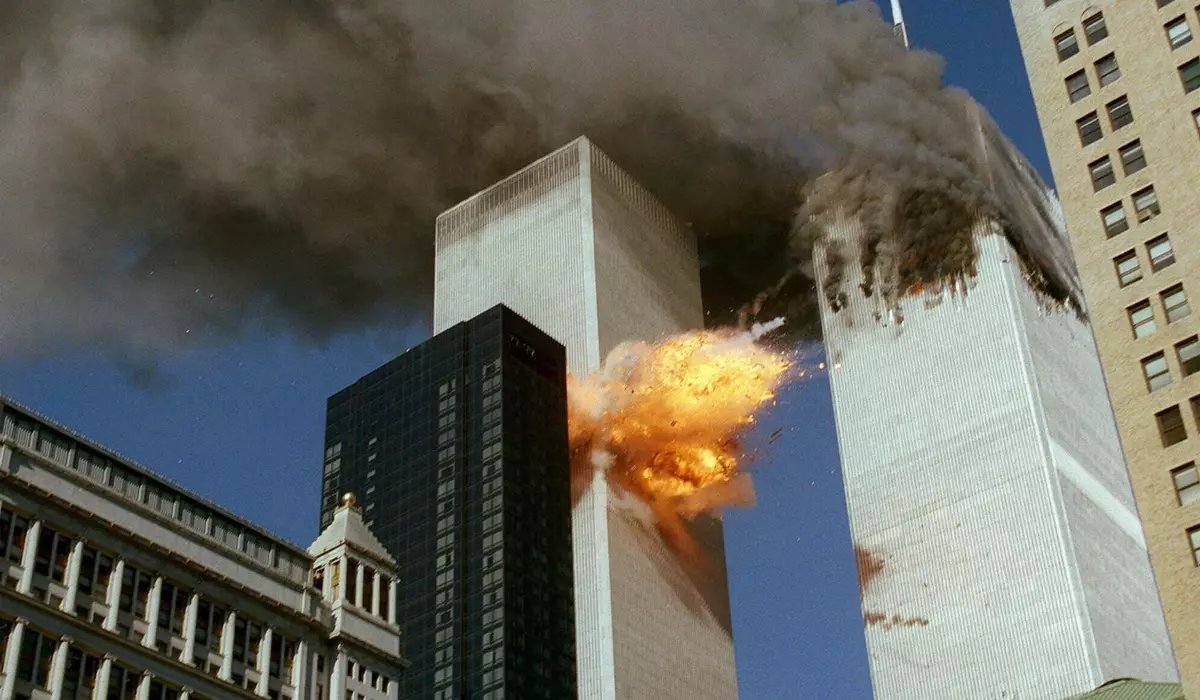
The enhanced homeland defenses built in the aftermath of the Sept. 11, 2001, terror attacks are eroding a quarter century after that horrific day, according to national security experts.
With counterterrorism expertise diminishing, key intelligence authorities left in legal limbo, and the nation facing a threat environment, the witnesses described to the House Intelligence Committee the fraying national security standards since the 9/11 Commission released its 2004 report and its 41 recommendations.
Bruce Hoffman of the Council on Foreign Relations, who testified before the committee two weeks after 9/11, warned that “the superstructure of the security architecture that emerged is either diminishing, being dismantled or falling into disrepair.”
“We are losing the expertise, knowledge and institutional memory assembled over the past 25 years,” he said Wednesday.
Mr. Hoffman noted that the 9/11 Commission’s co-chairs, on the 10th anniversary of the attacks, were disappointed that the director of national intelligence was still not “the driving force for intelligence community integration” that the commission envisioned — and said those concerns have not since abated.
He also flagged reports that new FBI agent training has been reduced from 21 weeks to the original 16-week format, raising questions about whether national security and intelligence skills training was eliminated.
Additionally, Mr. Hoffman said the National Counterterrorism Center is legally prohibited from acting against domestic terrorism, which he called “a dangerous anachronism.”
Jamil Jaffer of the National Security Institute at the Antonin Scalia Law School at George Mason University warned that al Qaeda and the Islamic State together number 30,000 to 50,000 fighters worldwide and that ISIS-Khorasan has demonstrated the capability to operate against Western interests outside its region.
Mr. Jaffer stated the U.S. is at “the highest state of threat our nation has ever faced, including and not limited to the time before the 9/11 attacks.”
He called Section 702 of the Foreign Intelligence Surveillance Act “the single most valuable intelligence collection authority the U.S. government has.” He warned that repeated cycles of near expiration of the federal spy law have caused telecommunications and technology companies to limit cooperation during gaps in authorization, calling the current temporary authorization status “a train wreck.”
Lawmakers on Capitol Hill recently extended Section 702 of FISA until June 12 so they could hash out an agreement between those seeking civil rights changes in the FISA law, which expires every two years.
Mr. Jaffer urged Congress to make Section 702 permanent and oppose any warrant requirement for it. He also and warned against rebuilding the intelligence-sharing “wall” the 9/11 Commission worked to dismantle.
The “wall” in the 9/11 Commission Report was the name of the legal and bureaucratic separation between foreign surveillance and criminal law enforcement that developed in the years before the 9/11 attacks.
“The idea today that we remain operating with a temporary authorization authority is a train wreck. A train wreck. In this era of heightened threats, Congress ought to not only reauthorize Section 702,” he said. “It ought to make it permanent, and it ought to reject any effort to impose a war requirement on that authority and rebuild the very wall that the 911 Commission advocated and that we did in fact dismantle over the last 20-plus years.”
The wall in the report was a set of protocols — rooted in interpretations of FISA that prohibited the sharing of information between intelligence agencies and law enforcement agencies, like the FBI’s criminal division.
The idea was that foreign intelligence collection operated under different legal rules than domestic criminal investigations and combining both could compromise prosecutions and violate civil liberties.
Former FBI Deputy Director and TSA Administrator John Pistole, who spent nearly 27 years at the FBI and was at the agency when 9/11 occurred, acknowledged the bureau “was not focused” on the threat of foreign terrorists using hijacked planes as weapons before the attacks.
Mr. Pistole credited the post-9/11 reforms — including the creation of the Transportation Security Administration and adoption of the 9/11 Commission’s recommendations — as essential improvements, but warned that “the threats are still out there and the risks are high.”
