
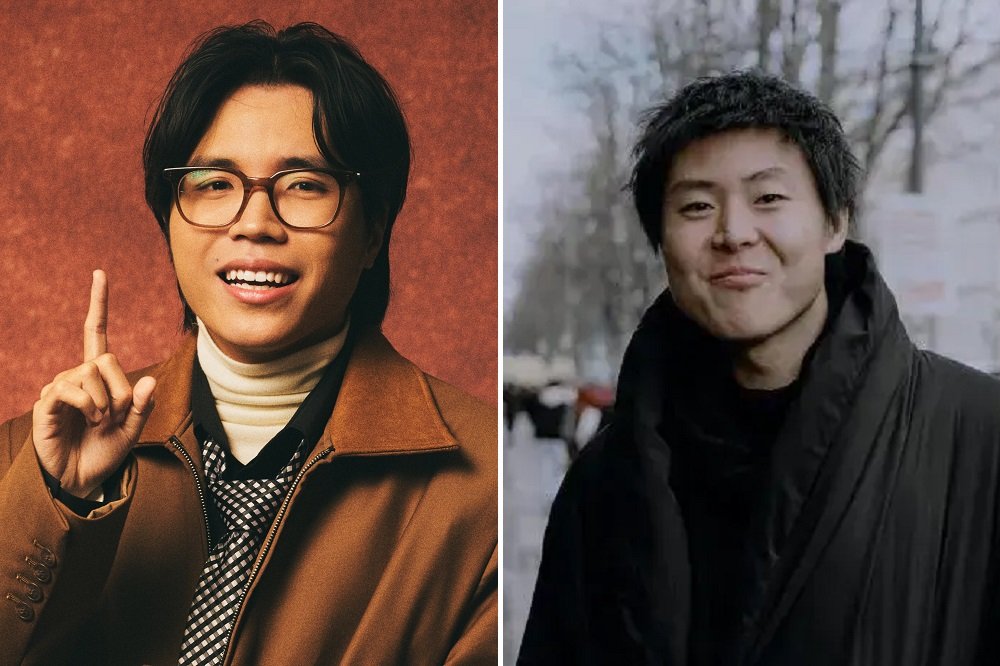
– Emerging filmmakers Thien An Nguyen and Dean Wei offer some insight into the initiative after being selected as two of its participants
Directors Thien An Nguyen and Dean Wei
The Cannes Film Festival’s Co-Production Programme continues to position itself as a key platform for emerging international auteurs seeking to connect with the European industry. Designed to support early-stage feature projects through mentoring, workshops and networking opportunities, the initiative brings together selected filmmakers with producers, labs, financiers and festival representatives from across Europe. Participants receive tailored guidance on script development, co-production strategies and international positioning, helping projects move from concept to production.

Among this year’s participants were Vietnamese filmmaker Thien An Nguyen and Chinese-German director Dean Wei, both of whom spoke to Cineuropa about their projects and their experience within the programme.
Nguyen, whose short film The Dream Is a Snail is selected for Cannes’ Palme d’or competition, described his work as “a little bit weird and dark comedy”. The film follows a man employed as a racetrack operator for snail races who gradually becomes obsessed with the strange sensation provoked by the animals. According to the director, the selection marks a milestone for Vietnamese cinema. “I think this film is the first Vietnamese team who got into the main competition of Cannes,” he explained, pointing to the growing international visibility of Vietnamese filmmakers over the past decade.
The filmmaker also stressed that his selection reflects a broader momentum within the country’s cinema scene. In recent years, several Vietnamese projects have been showcased in major festivals, while the national industry has gained increasing recognition abroad. Nguyen sees himself as part of this emerging generation pushing Vietnamese cinema onto the world stage.
Speaking about the Co-Production Programme itself, Nguyen highlighted the practical guidance offered by mentors and consultants. He explained that the initiative helped participants better understand European co-production structures and the expectations of international partners. The programme connected filmmakers at different stages of development with specific opportunities, ranging from residencies and script labs to investors and European funds.
“What was interesting is that every project received very personal advice,” he noted. “My project is still at a very early stage, so they connected me to labs and residencies. Other projects with stronger scripts were introduced to investors or co-production funds.”
Beyond financing, Nguyen argued that the Vietnamese industry still needs more international training opportunities and workshops. “It’s not only about money,” he said. “We also need support from training programmes and workshops to better understand international cinema.”
Meanwhile, Dean Wei presented his project The Apple Doesn’t Fall, which he described as a “physical comedy about the Chinese one-child family”. Raised between Germany and China and selected in the 2025 Golden Bear competition with his short film Extracurricular Activity, co-directed by Xu Yidan, the filmmaker said he hopes to create stories capable of reaching audiences beyond cultural boundaries.
“I’m not making films for one particular audience,” he explained. “I want everyone to understand them.” While acknowledging that some of the world’s greatest films are deeply rooted in local nuances, Wei said he is personally more interested in a universal cinematic language that can resonate across generations and cultures.
The director praised the programme’s mentoring structure, especially the online sessions and one-on-one exchanges with tutors. According to Wei, the advisors provided concrete guidance on how to launch an international project at an early stage, including recommendations on labs, development strategies and potential industry connections. Wei also reflected on the challenges facing young filmmakers today, noting that navigating the international industry remains difficult even for selected participants.
The Cannes Co-Production Programme has increasingly become a meeting point between emerging filmmaking territories and the European audiovisual ecosystem. By combining artistic mentorship with professional networking, the initiative offers directors from countries such as Vietnam and China an entry point into international co-production circuits, while also exposing European industry players to new cinematic voices and perspectives. For many participants, the programme represents more than a financing opportunity: it is a chance to build long-term creative relationships and to position their projects within the global independent film landscape.
