

In this edition of the San Miguel de Allende community roundup, two local Non-Governmental Organizations (NGOs) are helping to shelter and sterilize animals, a new bilingual high school has just been inaugurated in Querétaro, El Charco is providing youth conservation training and a big international book fair is coming to El Centro.
Lucky dogs get new shelter at converted bullring
Staff and volunteers of the nonprofit Lucky Dogs Club House are busy retrofitting a former bullring just outside San Miguel on the road to Querétaro as its no-kill shelter for dogs. The group moved operations there in November from its former space in Los Frailes, said Doug Meier, Mexico vice-president and U.S. president of Lucky Dogs.
The facility is one of two in San Miguel that rescues, shelters and facilitates adoptions for dogs, he said. Lucky Dogs is also the only shelter allowed to hold adoption events at the two Petco stores in town — one at City Market on Saturday afternoons and one at the Luciérnaga mall every other Sunday afternoon.
“There was a long vetting process, and we were the only ones approved,” Meier said.
Lucky Dogs did about 300 adoptions last year, he noted, and the organization has staff members on hand 24 hours a day, 365 days a year.
Rescues of dogs and cats
There are always between 80 and 100 dogs at Lucky Dogs, but typically only a few cats, Meier said, noting that there are no cats at the shelter now.
“There are other cat organizations in town, and it’s hard to do both,” he said. “You’re either one or the other, and to be set for both is challenging. Having said that, we do take cats, but we don’t go out of our way to do it.”

The group acquires animals in two ways, Meier explained. The first is through direct rescue, where Lucky Dogs representatives go out and pick up abandoned or abused dogs and bring them back to the shelter. The second is through people who rescue dogs themselves but ultimately can’t keep them.

“We always try to get that person to keep the dog and foster them, and we will help adopt them,” he said, adding that, on “Good Samaritan Tuesday,” Lucky Dogs posts photos on Facebook of dogs for whom they’re trying to find homes.
How to volunteer or donate
Volunteers are welcome at Lucky Dogs, especially to come out and walk dogs on Tuesday and Friday mornings before it gets too hot, Meier said. However, the main need right now is donations to cover the shelter’s open areas with roofing material so the dogs are protected from the sun and rain.
“It’s this massive bullring, which is great because the dogs can run around and play, so we want to divide it up into four play areas,” he said. “We are raising funds for roofing over two additional sections of the shelter that don’t have a roof. The cost will be about US $3,000.”
At some point, Lucky Dogs will be holding an open house at the shelter on a Sunday afternoon so people can come and adopt animals, but Meier said the group wants to get some more projects done beforehand.
Meanwhile, Facebook Messenger is the best way to contact Lucky Dogs, and donations can be made via PayPal, bank transfer or here.
Amigos de Animales: 25 years of free pet sterilization clinics
A San Miguel volunteer organization that has arranged to have thousands of dogs and cats spayed or neutered for free will celebrate its 25th year in operation in September.
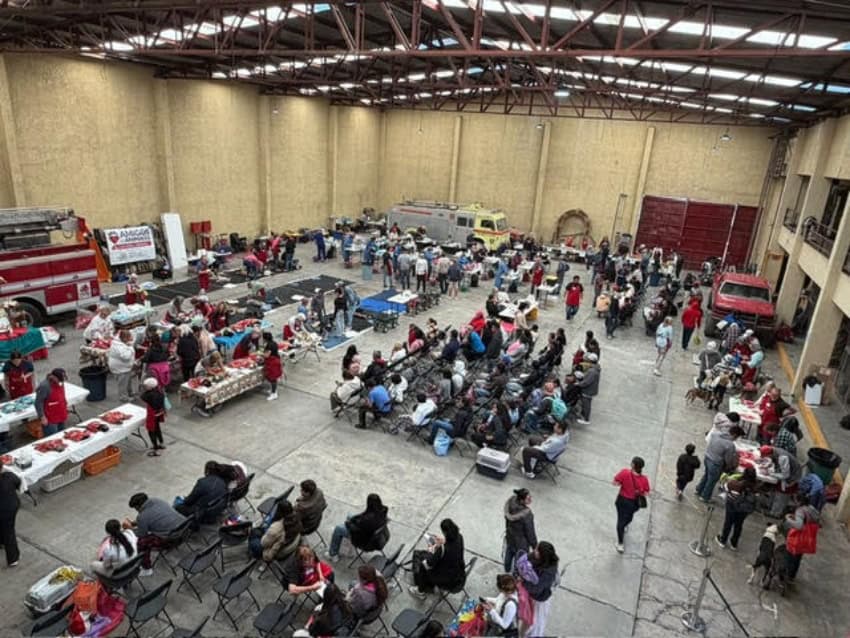
Amigos de Animales SMA will hold its next sterilization clinic Aug. 8 at the Bomberos fire station across the Salida Real a Querétaro from the Luciérnaga mall. Surgeries by 22 volunteer veterinarians will start at 9 a.m. and should finish by about 3 p.m., said Michael Friedman, a group officer who helps to organize the sterilization clinics.
“We plan to sterilize 350 cats and dogs — the same as we did in our last mass clinic in March,” he said. “We do not take appointments, and generally, people begin to line up very early in the morning to ensure a spot. In some of our past clinics, the first person in line would get there at 4 a.m. or 5 a.m. But in general, if a person is in line by 7 a.m., they will get in for a free sterilization.”
Friedman said the group also conducts weekly free clinics in rural communities surrounding San Miguel and, in 2025, started a monthly clinic just for independent rescuers in the area.
“Together with our educational programs in local primary schools, we try to approach the problem of cat and dog overpopulation in a holistic way,” he said.
How to volunteer or donate
Those interested in volunteering to help Amigos de Animales can email the group at volunteers@amigos-sma.org. Donations are also welcome since Friedman said each mass clinic costs about US $7,000. Contributions to Amigo de Animales can be made here, and the group can be contacted here.
Friedman said Amigos de Animales believes it succeeds through a singular focus on the core problem of cat and dog overpopulation in the community.
“Our mission is clear, and thus our commitment is to reduce the suffering of cats and dogs due to their overpopulation through free sterilizations,” he said, adding, “We need the community to continue to support our work by donating and by spreading the word about our programs.”
JFK American School of Querétaro constructs new high school

A brand-new high school was inaugurated on May 19 on the campus of the John F. Kennedy School, The American School of Querétaro.
Designed by London-based Emergent Design Studios, which won the international design competition, the new facility covers about 26,000 square meters with an academic building, external sports facilities and landscaped areas.
Founded in 1964, the private, non-profit institution offers bilingual classes and has a diverse group of approximately 1,400 students from pre-kindergarten through 12th grade representing 35 nationalities.
The demographic breakdown of the total student body consists of 76.7% Mexicans, 7.76% U.S. and Canadian nationals, and 15.53% from other countries. More information about the school can be found here.
El Charco hosts science, conservation scholarship recipients
The El Charco del Ingenio Botanical Garden on the northeastern edge of San Miguel currently has two scholarship recipients from the Jóvenes Construyendo el Futuro (Youth Building the Future) federal government program working in scientific and conservation areas.
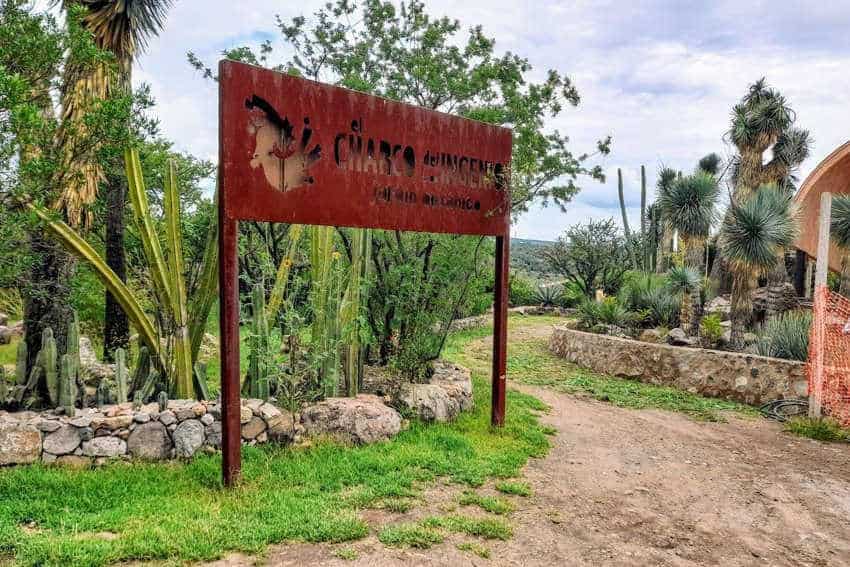
The botanical garden’s management said the young people are participating in cultural and herbarium activities such as mounting and adding specimens and collaborating on work at the seed bank by transplanting, seed cleaning and doing scheduled irrigation.
This experience “contributes to the formation of new generations committed to science, the land, and the conservation of natural heritage,” El Charco said.
Young people between the ages of 18-29 who don’t study or work can register here to train at a workplace for up to one year, and workplaces, companies and social organizations can also register to provide the training.
Free international book fair to focus on Korean culture
San Miguel will hold its third annual international book fair from May 29 to June 7 on two stages in the Jardín Principal and also at Centro Cultural Ignacio Ramírez “El Nigromante” (also known as Bellas Artes), Hernández Macías 75 and Casa de la Cultura, Mesones 71. Admission is free, and hours each day will be 11 a.m. until 9 p.m.
This year’s international book fair will feature readings, signings, presentations, workshops and live musical and dance concerts. The day-by-day schedule can be found here.
Cathy Siegner is an independent journalist based in San Miguel and Montana. She has journalism degrees from the University of Oregon and Northwestern University.
