
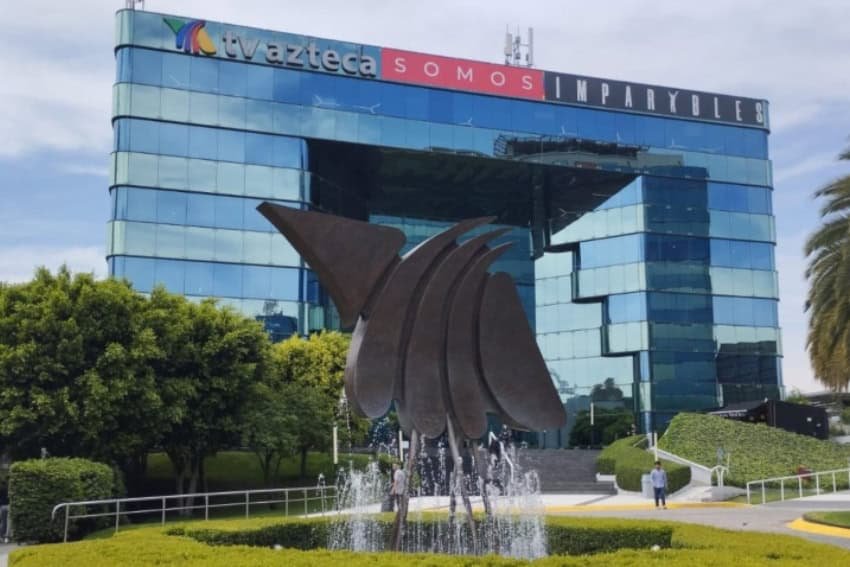
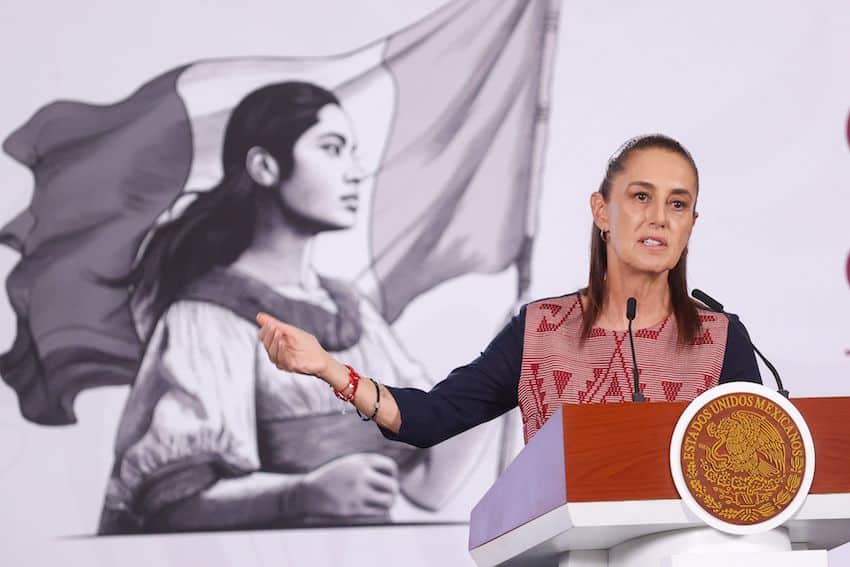
On Monday, May 25, 2026, President Claudia Sheinbaum did something no Mexican president had done quite so bluntly in modern memory. She addressed the country directly: “Don’t watch TV Azteca.”
To any foreigner, this might sound like an ordinary spat between a politician and a hostile network — the sort of thing a U.S. president might fire off about a cable channel before breakfast. But in Mexico, the comment detonated. Within hours, TV Azteca published an open letter accusing the president of “an evident attempt at censorship and a direct assault on freedom of expression and the press.” The Inter American Press Association (IAPA) and the Alianza de Medios MX warned of a threat to press freedom. Ricardo Salinas Pliego, the network’s owner, fired back on X — and then, with characteristic showmanship, posted that TV Azteca was enjoying “one of the best ratings in its history.”
Why the firestorm? Because in Mexico, the relationship between the presidency and television is not a sideshow to politics. For decades, it was politics. To understand why “don’t watch TV Azteca” is treated as something graver than a presidential comment, you have to understand where TV Azteca came from, what it has become and what its owner really wants.
A network born in the shadow of a scandal
TV Azteca did not begin as a private company. In 1993, the government of President Carlos Salinas de Gortari auctioned off the state media package known as Imevisión, which included national Channels 7 and 13. The winning bid, by a group controlled by Ricardo Salinas Pliego, came to roughly US $645 million. It was a landmark moment: for the first time, Mexican commercial television would not be a Televisa monopoly.
But there was something deeply irregular about how the deal was financed. To help cover the purchase, Salinas Pliego received a loan of US $29.7 million from Raúl Salinas de Gortari, the brother of the sitting president, who was selling the asset. The money was reportedly channeled through a Panama-registered company called Silverstar, with Salinas Pliego as its nominal owner, in transfers made shortly before he won the auction.
A questionable loan
This is not an innuendo from his enemies. Salinas Pliego admitted it himself at a 1996 press conference, offering a now-infamous justification: he said he used Raúl Salinas’s money for the media package, but that it was a loan, and that in 1993 “everyone admired President Carlos Salinas de Gortari, and it was a social distinction to be a friend of his brother.” The matter later spilled into open litigation. In 2003, Raúl Salinas sued Salinas Pliego in civil court to collect the debt. Salinas Pliego has said he eventually repaid it.
Whatever one concludes about the legalities — and Salinas Pliego has never been convicted of any wrongdoing in the transaction — the optics are damning. The man buying a state broadcaster borrowed millions from the president’s brother, routed through an offshore shell. The most important television privatization was controversial right from the start. That original sin is precisely why Sheinbaum, defending herself this week, reached back to “the sale of Imevisión in 1993” to frame the network’s history.

From challenger to duopoly partner
Whatever its murky origins, the new company succeeded commercially. Rebranded as Televisión Azteca, it quickly challenged Televisa and turned what had been a television monopoly into a duopoly. Between them, the two conglomerates came to hold over 90% of Mexico’s commercial television concessions — an extraordinary concentration of the airwaves in two private hands.
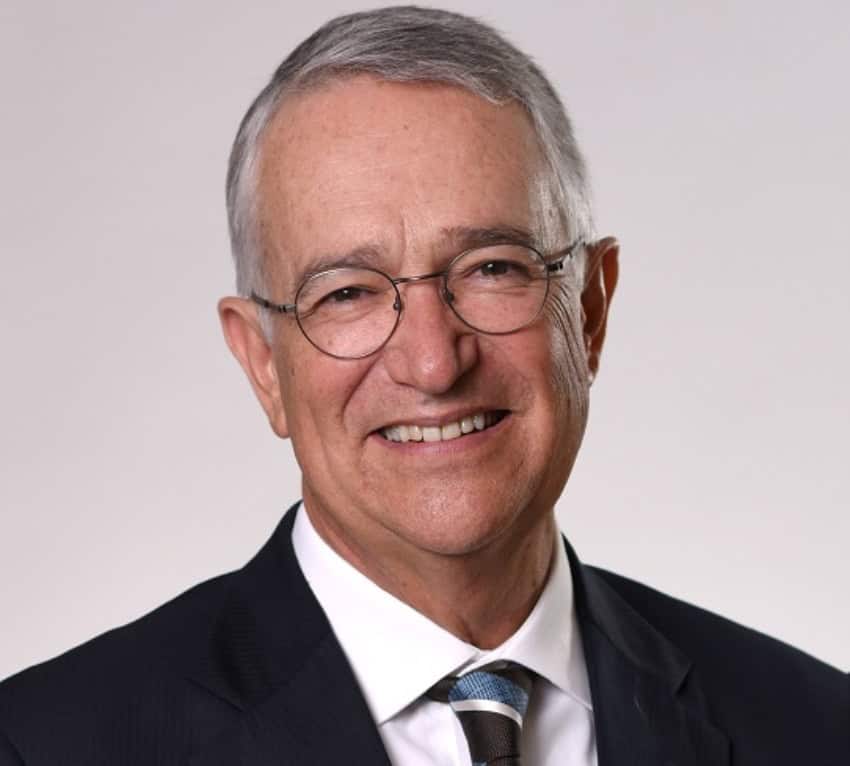
Today, TV Azteca is the second-largest broadcaster in the country, behind Televisa. And it is widely understood to be the advertising engine for the rest of Salinas Pliego’s empire, which includes the Elektra retail chain, Banco Azteca, TotalPlay and Italika motorbikes — businesses that target Mexico’s lower-middle and working classes. The network gives Salinas Pliego something money alone cannot buy: a megaphone and leverage over governments and rivals.
It’s worth noting that during Andrés Manuel López Obrador’s presidency, Salinas Pliego was an ally. He sat on a business advisory council — alongside Televisa and Grupo Imagen, the country’s third-largest network — that spoke into the ear of President López Obrador. The rupture came later, and over money.
The tax war — and the birth of a movement
You cannot separate this week’s clash from the fiscal battle underneath it. For roughly 18 years, Grupo Salinas waged legal war against the SAT, Mexico’s tax authority, over enormous tax assessments. The SAT estimated the conglomerate’s combined liabilities at around 74 billion pesos (close to US $4 billion). In November 2025, the Supreme Court ruled that Salinas Pliego’s companies owed the treasury some 51 billion pesos.
Then came the settlement. In January 2026, the SAT announced that Grupo Salinas would pay 32.13 billion pesos — about 37% less than originally claimed — to liquidate the bulk of its debts, on a payment schedule stretching into 2027. TV Azteca’s portion, roughly 10 billion pesos, was paid in full up front; Elektra is paying its share in monthly installments. Sheinbaum has repeatedly noted that Salinas Pliego “has paid every month.” Soon after, in February 2026, TV Azteca filed for concurso mercantil — a voluntary insolvency reorganization — citing the financial strain of the tax payment, the pandemic and roughly US $600 million owed to creditors in the United States.
Is Salinas Pliego running for president in 2030?
It was against this backdrop that the politics turned overt. In a late-August 2025 interview, Salinas Pliego declined to rule out a presidential run in 2030. On Sept. 12, 2025, at TV Azteca’s own facilities, he launched the Movimiento Anticrimen y Anticorrupción (MAAC) — the Anti-Crime and Anti-Corruption Movement — surrounded by his own network’s commentators, including journalist Sergio Sarmiento and star anchors Javier Alatorre and Leonardo Curzio. Three days later, on Sept. 15, he posted a viral “counter-grito” video, telling Mexicans it was time to say “enough” and to throw out the country’s left. His slogan — “Life, property and liberty” — and the movement’s MAGA-like framing made the ambition hard to miss. Polls circulated a few days later showing a majority of respondents would view him favorably as a candidate.
Whether MAAC is a genuine political project, a shield against his legal troubles or a vehicle for an actual 2030 candidacy is exactly what Mexican analysts are debating. But the through-line is unambiguous: the owner of Mexico’s second-largest broadcaster is openly building a political movement aimed at removing the governing party from power.
Y yo bien preocupado de la campañita que traen en mi contra desde el @GobiernoMX, jajaja.
No mentiras, sigo trabajando por un mejor México, y aquí seguiré haciéndolo. pic.twitter.com/IuMj02QS73
— Don Ricardo Salinas Pliego (@RicardoBSalinas) May 27, 2026
Salinas has TV Azteca, but the president has the mañanera
Here is how the spark actually caught. During the Q&A that follows the president’s daily morning press conference — the mañanera — a reporter asked Sheinbaum about a collective called “Mexicanos al Grito de Paz,” which has been running a campaign against her government by hanging banners that depict Mexican officials and brand them “narco-politicians.” What stood out, the reporter noted, was that the people amplifying those messages in the media appeared to be close to Salinas Pliego.
The president paused for a few seconds and answered: “Don’t watch TV Azteca.” There was a long silence, then laughter. She acknowledged that Salinas Pliego would surely lash out at her on X at that very moment, and then added that she had proposed to Luisa María Alcalde that they hand out a new award — “the Mythomaniac of the Week. Ta-daaaah.” (She really said ta-da.) The rest of her answer argued that the public is well aware of the lies, which is why Morena’s approval remains so high.
In response, virtually all of TV Azteca’s entire programming lineup — down to “Ventaneando,” the longest-running entertainment show in Mexican television history, on the air since 1996 — devoted airtime to telling the president they would fight to defend freedom of speech.
‘It’s not censorship, it’s an opinion’
The next morning, May 26, Sheinbaum refused to back down — but she reframed. “When I said yesterday, ‘don’t watch TV Azteca,’ that’s an opinion; it’s not censorship,” she said. “I’m not using the power of the State to censor a television station.” She pointed out that the entire TV Azteca lineup had spent the previous day attacking her, which she offered as proof that free expression is alive and well.
Salinas Pliego, meanwhile, declared that on the very day the president asked Mexicans not to watch TV Azteca, the network broke audience records.
Both sides, in other words, claim the mantle of democracy. The president says she is exercising free speech and the right to reply against a network that traffics in falsehoods. The network says the head of state, who controls the apparatus of the entire government, cannot pretend her words are just one citizen’s “opinion.”
The question I want to leave open
Here is where I’ll be transparent: what follows is my opinion, and I’m hoping to start a conversation with you in the comments.
First, the case for press freedom is real and should not be waved away. There is a meaningful difference between a private citizen saying, “I don’t like TV Azteca,” and a president using the most powerful platform in the country to tell us as citizens not to watch a specific network. Even if no concession is revoked, no advertiser is leaned on and no journalist is fired, her statement matters. That is why the press-freedom organizations reacted the way they did, and they are right to be vigilant. A government that decides which outlets are legitimate is walking toward a door no democracy should want opened.
But we also have to be honest about what TV Azteca is in this moment. This is not a neutral newsroom being bullied for asking tough questions. Its owner has launched a political movement, flirted openly with a 2030 presidential run and is locked in a multibillion-peso fight with the same government his network attacks nightly. When the line between “critical journalism” and “the media arm of an opposition political project” dissolves, citizens are entitled — obligated, even — to ask who benefits from what they’re being shown. Healthy skepticism toward a press that flatters you is essential; so is skepticism toward a press that attacks on behalf of its owner’s interests. The discerning citizen owes neither blind loyalty nor blind hostility to the network or to the president.
And now the question I really want to put on the table.
Does the president deserve this scrutiny?
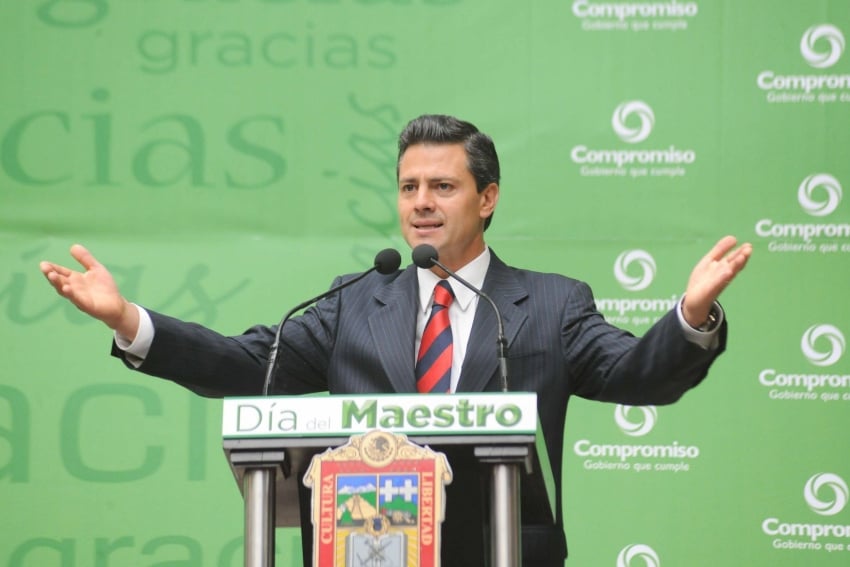
We criticized President Enrique Peña Nieto for being a leader who seemed to cut a ribbon somewhere almost every day — so “mediático,” so addicted to the photo op, that critics asked whether he cared more about putting on a show than sitting at a desk and governing.
López Obrador and Sheinbaum have flipped the model entirely. The daily mañanera is not a ribbon-cutting; it is a marathon, hours long, in which they present their work, but also field questions, set the day’s narrative and — as we saw this week — name their enemies. It is arguably the most sustained, deliberate daily media operation any Mexican president has ever run.
A new kind of politics
So here is what I keep turning over: if a president chooses to live in the media every single day, doesn’t that invite exactly this kind of scrutiny and conflict? When you make the morning broadcast the center of national power, you also make every word a presidential act, with a president’s full weight behind it. “It’s just my opinion” becomes a harder thing to claim from behind the seal of the republic. The medium of governing has changed radically since Peña Nieto — but if the presence is greater than ever, shouldn’t the public scrutiny be greater too?
I don’t think the answer is obvious, and I don’t think it cuts cleanly for either Sheinbaum or Salinas Pliego. Tell me where you land. Is “don’t watch TV Azteca” an abuse of the pulpit, a fair shot at a politically compromised network, or simply the inevitable cost of a presidency that has chosen to be on television every morning of its term?
Join the debate in the comments below.
Maria Meléndez writes for Mexico News Daily in Mexico City.
