
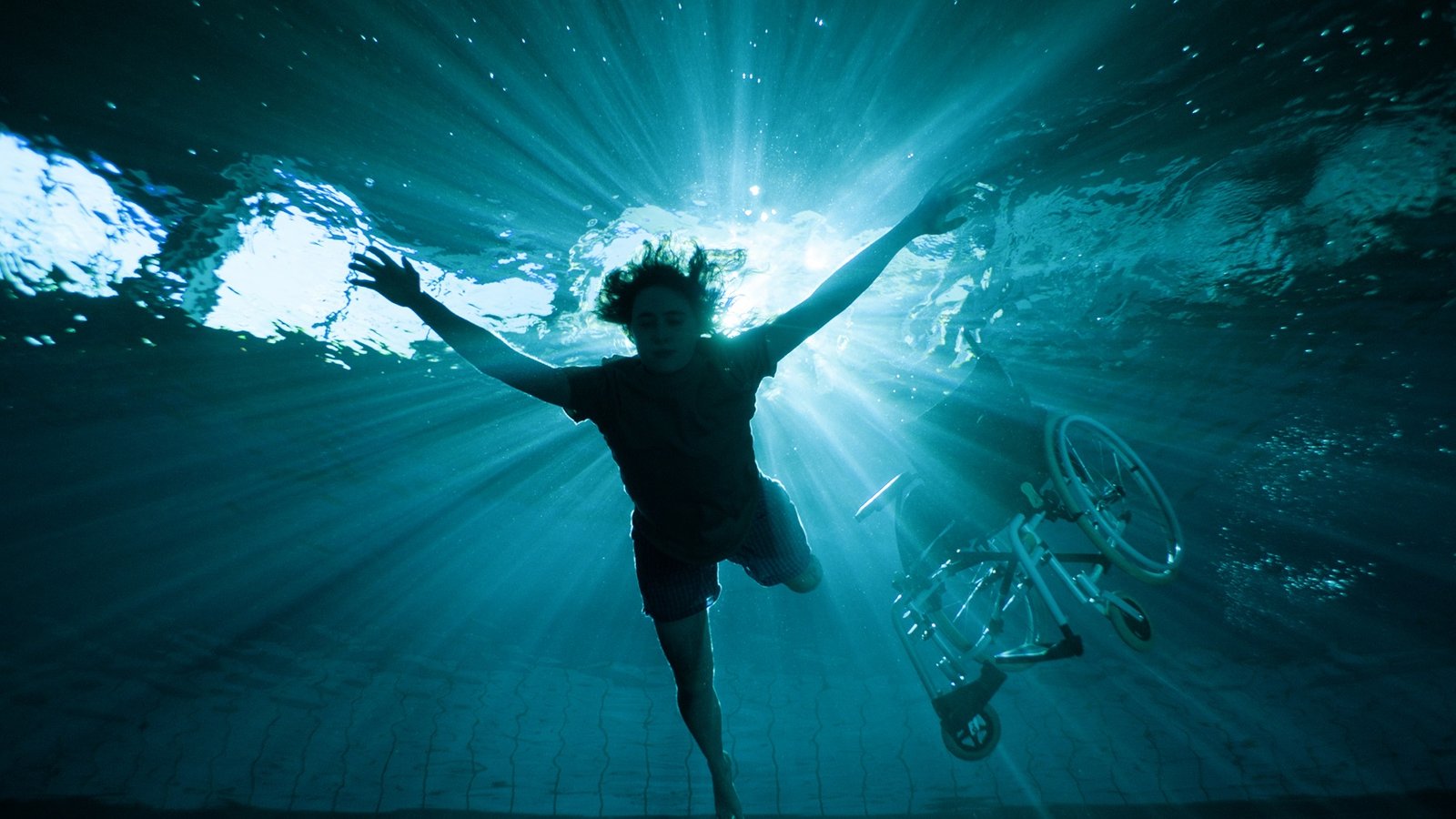
– Mari Sanders delivers a poignant, dynamic and dazzlingly lucid first feature film about a young woman catapulted into the world of disability
Lucia Zemene in Stand Up
“I didn’t know what to do with my life. I just wanted to live, to feel good. But that was my life before. There was my life before and my life afterwards.” The subject of disability has been tackled on the big screen countless times before (from Frank Borzage’s Lucky Star in 1929 to Born on the Fourth of July, Step by Step, Rust & Bone, Untouchable and My Left Foot, to give just a few examples), but Stand Up – Dutch director Mari Sanders’ first feature film, which was unveiled in the Tribeca Film Festival’s International Narrative Competition – offers up an especially intense and personal variation on theme, since the filmmaker was himself born with a disability and all the actors with disabilities in the film genuinely live with disabilities in real life.
But this guarantee of honesty and realism wouldn’t automatically result in a good film, were it not for the director and screenwriter’s keen sense of what’s important and of pacing, which allows him to adapt his nigh-on documentary-style sensibility to ensure a highly effective fictional impact. Carefully dosing emotions to prevent the story’s poignant lead character from veering into excessive pathos (“don’t be a drama queen”), the director delivers a highly relatable depiction of the identity of disability and the complex journey to find it, by way of realisations, choices, self-acceptance and the desire to change oneself without wanting to change the world.
“What’s the point of any of it? I can’t do anything: walk, drive; I can’t even orgasm”. Vera (Lucia Zemene) is a young 23-year-old woman living life to the full with her group of girlfriends when a terrible accident outside a nightclub upends her life: she wakes up in hospital, with one leg amputated just above the knee. A long physical (phantom pain, rehabilitation, wheelchair, impossibility of a prosthetic limb without invasive and uncertain surgery, etc.) and primarily psychological (existential doubt, temptation to end her life, confrontation with her old life and her circle of friends) journey of resilience ensues. She has to change and get back to trusting her body (with the help of a physiotherapist played by Kendrick Etmon), which is far from easy (“I just want to feel something”). And Vera also makes the acquaintance of Xander (Daan Buringa), a provocative and charismatic, young person her age who’s the leader of a small but tightly knit group of people with disabilities who no longer expect anything from the “normed” world. Here, on the frontier between two worlds, Vera must find her own path…
Incredibly direct and incisive, Stand Up is a highly accurate snapshot of the lives of youngsters living with disabilities. Following in the lively wake of its protagonist, this (very well acted) film progresses at pace, creating a touching sense of deeply held empathy and holding up a mirror (for her parents, friends, other people with disabilities, the physio, the alter ego Xander) to a fate which might be considered cruel and which definitely is in a certain sense, but which is also fully embraced and depicted with admirable pride in this pure and simple yet brilliant film.
Stand Up was produced by The Film Kitchen (Netherlands) in co-production with Neda Film (Greece), BNNVARA (Netherlands) and ERT (Greece). Loco Films are steering world sales.
(Translated from French)
