
– Alisa Kolosova’s deeply intimate film follows friends coping with a suicide, and explores healing through acceptance and connection
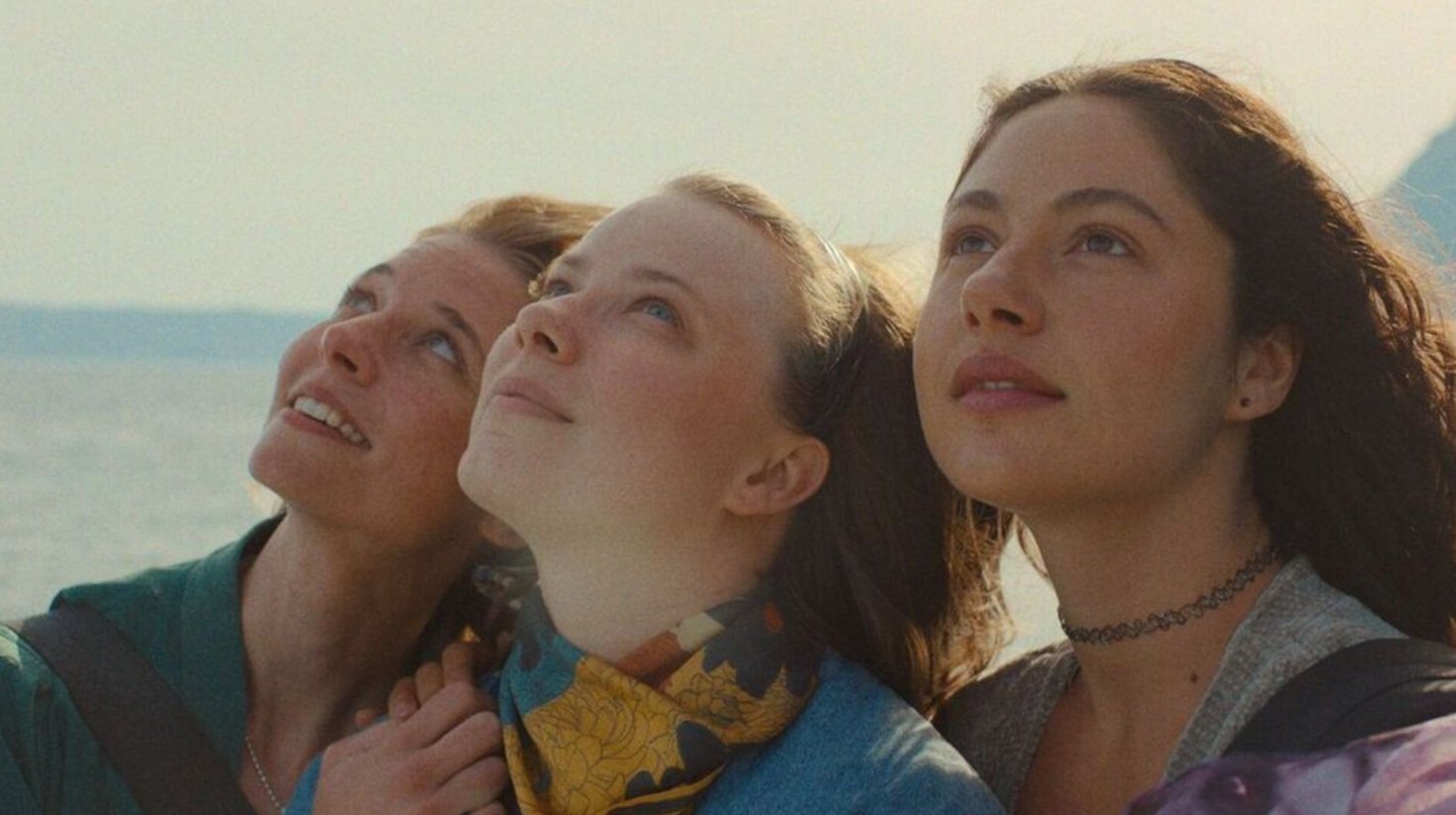
Svenja Jung, Saskia Rosendahl and Soma Pysall in I Spy with My Little Eye
World-premiered in the International Narrative Competition of this year’s Tribeca Film Festival, I Spy with My Little Eye, directed by Alisa Kolosova, is centred on the story of Yalda (Soma Pysall), Solveigh (Saskia Rosendahl) and Lou (Svenja Jung), who have been close friends since childhood. After Solveigh’s sudden suicide, the other two question what went wrong and who should care for her five-year-old daughter. As they clear her flat, they revisit shared memories and slowly rediscover their bond.
Written by Judith Rose Gyabaah, based on a number of letters that belonged to her mother, I Spy with My Little Eye is a deeply intimate film, which largely focuses on simple scenes and powerful close-ups of the characters – not necessarily in a strictly technical sense, but in a psychological one. The camera lingers on faces and emotions, drawing the audience into the characters’ inner worlds.
Evelyn Rack and Billie Mind’s editing is extremely interesting because it brings together different periods of time, mixing the girls’ childhoods with the aftermath of the suicide. This choice is quite common in films that deal with similar themes, but the clever part is that the scenes from the past are not simply tacked on to the present-day story, without adhering to a chronological order. Instead, the choices actually make sense at specific moments of the film, which means that there is an internal narrative that makes the movie easier to follow.
Nonetheless, sometimes, it feels as though the film could have benefited from a clearer choice of pace. At some points, the tension gets ramped up, but then quickly comes down again in the next sequence. This is overall an interesting approach, but in a few scenes, there is no consistency in the way the audience is left to feel about the story, which comes with the risk that certain viewers may lose interest in the characters’ emotions and motivations. The tone of the film, however, is fairly original, as the shift in focus differentiates it from your average story about suicide.
In fact, I Spy with My Little Eye refuses to pass a clear-cut judgement on the person who chooses to end their life. Instead, it returns to shared memories of love and connection, capturing the way those left behind desperately comb through the past for signs, clues or explanations. Yet in doing so, those memories inevitably become altered, overshadowed by the need to find a motive for what happened in the minds of the surviving characters. The painful questions that arise after a loved one is lost to suicide, such as “Why did they do it?”, “Didn’t they love me enough to stay?” and “Could I have done something to prevent it?”, can come to dominate the grieving process. These haunting questions are familiar to many and will resonate even beyond such extreme circumstances, touching on broader experiences of loss.
Ultimately, the picture suggests that searching endlessly for reasons may be the wrong approach. Rather than remaining trapped in the past, it proposes a different path through grief: one rooted in acceptance and in the possibility of a better future, particularly through the two women’s relationship with Solveigh’s daughter. Its underlying message is that healing comes not from endlessly revisiting what cannot be changed, but from finding the strength to move forward.
I Spy with My Little Eye was produced by Germany’s Maverick Film, BR Bayerischer Rundfunk and WDR Westdeutscher Rundfunk. Epsilon Film handles its world sales.
