
What would you do if you found out you had cancer just before your birthday? Nino, a journalist turned filmmaker, Pauline Loquès explores what it means to receive a bombshell diagnosis when your life feels like it’s only beginning.
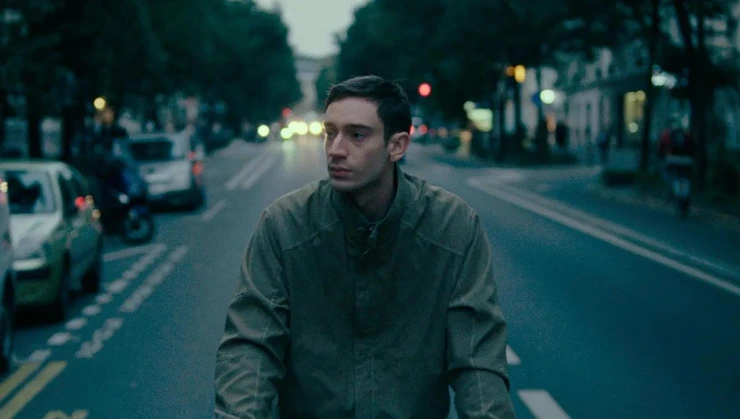
Based partially on Loquès’ own experience with a loved one lost to cancer, Nino is set against the backdrop of Paris, following 28-year-old Nino (Théodore Pellerin) as he receives the troubling news from his doctor. He has cancer. The good news for him is that due to his age, he can receive chemotherapy within a couple of days. But it comes at a cost. He will become infertile and has to produce sperm to keep in storage, should he want children in the future. After attempting to produce sperm and realising he has lost his apartment keys, Nino drifts across Paris. He reconnects with an old classmate, celebrates his 29th birthday with his mother and friends and prepares himself for chemotherapy.
Pellerin’s Nino is doe-eyed and timid. In his position, you’d expect tears or anger at the news that he has cancer. But there are no tears or anger. He politely questions whether the news can be true. When the doctor confirms it, he meekly asks what his chances of dying are. Nino carries the news alone for the majority of the film. As we follow his journey through Paris, we observe his solitude, which is not borne out of depression, but habit.
The framing of the film and the settings of Paris through a collection of different settings and neighbourhoods feels immense. It only adds to the timidity of Nino. Amongst the backdrop of the big city, he feels small despite his sizeable height. His reserved nature gives him an air of fragility, emphasising how young he is.
Loquès chooses to tell Nino’s story at the beginning of his journey with a cancer diagnosis, as opposed to the end of his journey with it. In doing so, the film is able to portray what it truly means to want to choose life. The Nino at the beginning feels like he is resigned to dying, but through sharing the news with a select few people and reminiscing about his deceased father, he chooses life. The scenes with his old classmate, Zoé, played by Estelle Meyer, are the best parts of the film. The dialogue is sparse between the two of them, but there is a chemistry which feels romantic and platonic, and it gains meaning as Zoé helps Nino with his sperm sample. It is not a sexy scene or one filled with passion; it is sweet and gentle.
Tenderness is the best adjective to describe this film, because there is so much care and careful framing of the relationships Nino has with his friends that lead to him choosing life. Nino is not a film which intends to make you burst out crying at every other heartfelt moment; it is a contemplative and intimate portrayal of what it means to receive grave news, process it and choose to fight for a future which feels out of reach.
★★★★ 1/2
In UK cinemas on June 19th / Théodore Pellerin, William Lebghil, Salome Dewaels, Jeanne Balibar, Camille Rutherford / Dir: Pauline Loquès / Curzon / 15
Discover more from
Subscribe to get the latest posts sent to your email.
