
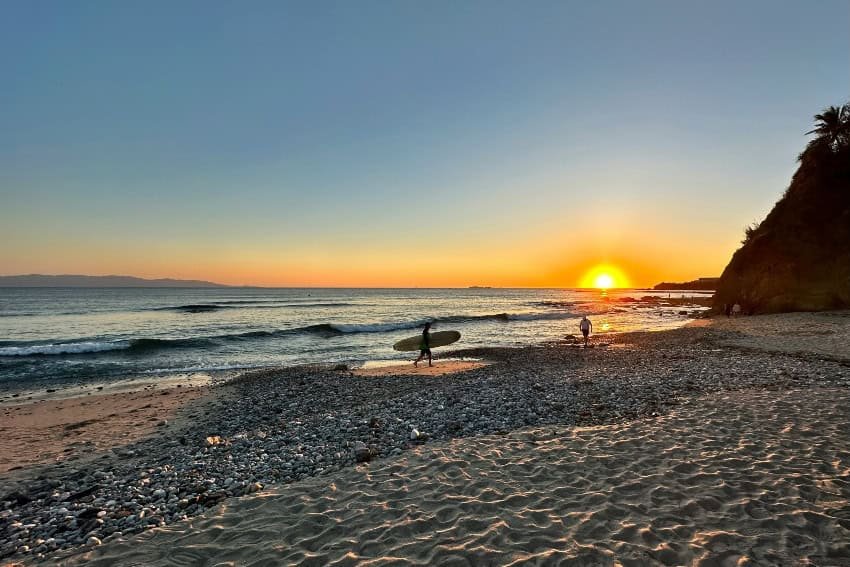
On any given morning in Puerto Vallarta, the soundtrack is familiar. Waves roll onto the shore, vendors set up for the day and the hum of life settles in across one of Mexico’s most beloved coastal cities.
And inside a home office overlooking a landscape better known for vacations than global advocacy, Suzanne York is working on some of the world’s biggest challenges.
As director of Transition Earth, York, a native of Vancouver, Washington, spends her days connecting human rights, women’s empowerment, population growth, climate change, resource consumption and environmental sustainability issues. The organization works internationally, engaging policymakers, activists, educators and young people around the world.
What makes her story remarkable, though, isn’t simply the scope of the work, but where it happens.
How to change the world from Puerto Vallarta
For decades, the assumption was that meaningful global change originated from power centers such as Washington, London, New York or Brussels. Yet the digital age has completely redrawn that map. Today, a person with expertise, commitment and a reliable internet connection can influence international conversations from almost anywhere —including Puerto Vallarta.
York’s journey into environmental and social advocacy spans years of research and writing focused on ecological health. Before leading Transition Earth, she worked with organizations examining how human well-being and environmental sustainability are deeply interconnected.
What she represents is a growing phenomenon in Mexico. Globally engaged professionals are choosing to base themselves in communities that offer a different pace of life while remaining connected to international networks.

Puerto Vallarta may seem an unlikely headquarters for discussions about climate resilience, reproductive rights and sustainable futures. Yet perhaps that’s precisely the point.
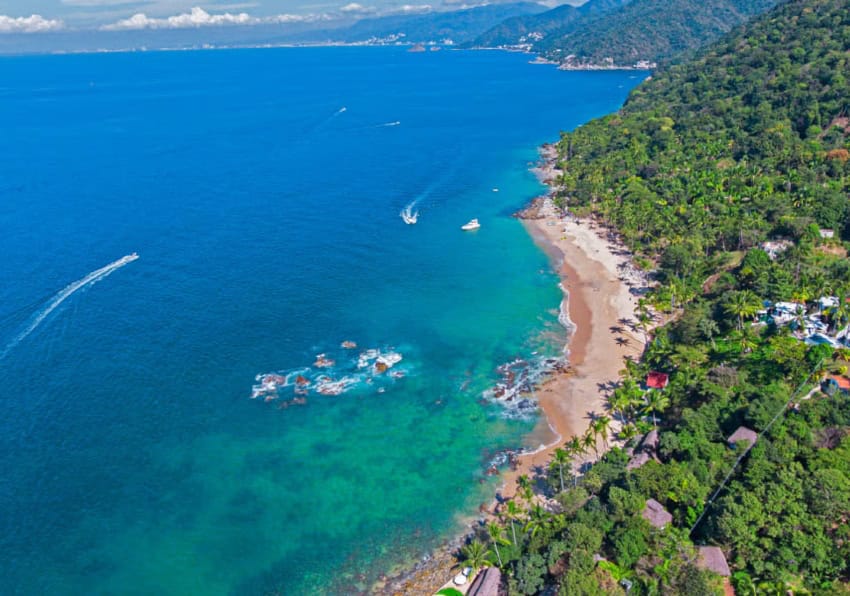
The city sits where mountains meet the Pacific, and nature isn’t an abstraction here. The ocean, forests and wildlife are part of daily life. For York, that daily connection serves as both inspiration and reminder.
The ‘remote work’ revolution
“There’s no doubt Puerto Vallarta is beautiful, and seeing the sun almost every day is conducive to a good workday,” she says. “I’m grateful to live here. I love both the mountains and the bay, and both are motivations for supporting ways to protect the planet for all inhabitants.”
At the same time, she sees firsthand the pressures rapid growth can create.
“The rapid growth of the area shows what’s at stake,” York explains. “Development impacts people and animals, such as crocodiles displaced by disappearing wetlands. It’s important to me to find solutions that balance the needs of nature and people, here and around the world.”
The global coronavirus pandemic in the early 2020s accelerated a shift that was already underway. Organizations became more comfortable operating remotely, and international collaboration moved online. Geographic distance became less important than intellectual connection.
For York, that’s created an unusual opportunity to contribute to global conversations while living in a place that offers daily reminders of what those conversations are ultimately about.
Tying the abstract to the local
The mission of Transition Earth centers on creating a thriving environmental future through digital media, events and educational outreach. Yet dedicating a career to issues that are planetary in scale comes with its own challenges.
“There are days when I think it would be easier to work on different issues,” York says. “Helping audiences understand the links between health, the environment, human rights and population growth can be difficult because these are complex, big-picture challenges that often feel abstract or distant from people’s everyday lives.”
Yet she believes understanding those connections is essential.
“Our problems, and the solutions, are connected,” she says.
Part of Transition Earth’s work involves making those connections tangible by highlighting local stories from around the world. York’s travels have also taken her to communities facing environmental and human rights challenges firsthand.
“Sharing stories of how a community in Borneo is bringing healthcare and sustainable jobs while protecting orangutans at the same time helps break down big-picture issues and show how problems can be addressed,” she says.
Staying positive in the face of adversity
Many of the issues York works on are enormous and complex, and like anyone immersed in global challenges, she occasionally struggles with discouragement.
“These are certainly big-picture issues that don’t have simple solutions, and I definitely have days where I don’t feel too hopeful about the state of the world,” she admits.
When that happens, Puerto Vallarta itself often provides perspective.
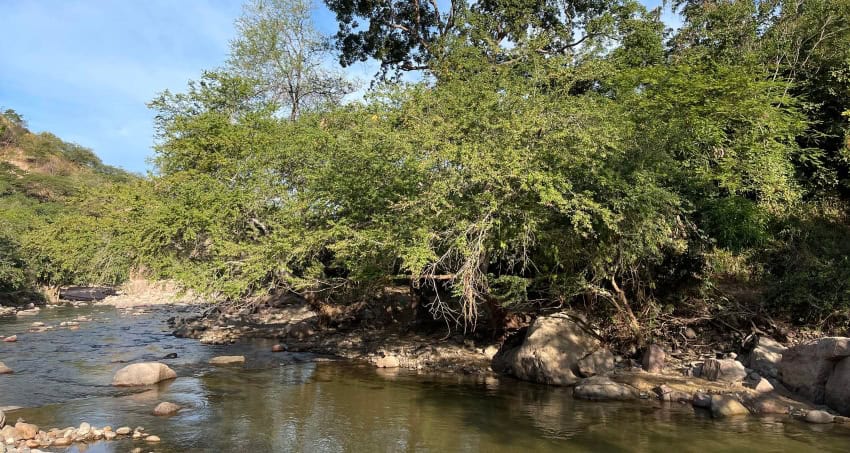
“I often go for walks here in Vallarta. To nearby estuaries, the path along the Pitillal River, the beach or even the Malecón. Being outside and in or near nature usually gives me a nice attitude adjustment.”
She also draws inspiration from younger generations.
“I am fortunate to work with two young people at Transition Earth who give me inspiration,” she says.
One of them is Josh Mirondo, a Ugandan writer who focuses on the connections between reproductive health and climate change. Another is Martha Nimusiima, who writes about climate change, women’s rights and biodiversity.
At the intersection of difficult problems
“These two young people have inherited a world of difficult problems, and raising their voices gives me hope.”
Change rarely arrives through a single breakthrough. More often, it emerges from thousands of conversations, articles, presentations and connections that gradually shift public understanding. York’s work places her at the intersection of those conversations.
From Puerto Vallarta, she participates in webinars with experts on different continents, collaborates with partner organizations and publishes ideas that reach audiences far beyond Mexico’s shores. That reality challenges traditional notions of influence.
Today, impact isn’t necessarily measured by where an office is located. It’s measured by the quality of ideas, the strength of networks and the ability to inspire action.
York says most people are no longer surprised that she works from Puerto Vallarta.
“I don’t think people are that surprised these days,” she says. “The world changed a lot during and after Covid, and the reaction I usually get is envy that I’m in Puerto Vallarta.”
Living in a virtual world
Like many professionals whose careers have become increasingly digital, she acknowledges missing some face-to-face interactions but appreciates the opportunities created by virtual collaboration.
“It’s fortunate that so much now takes place online,” she says.
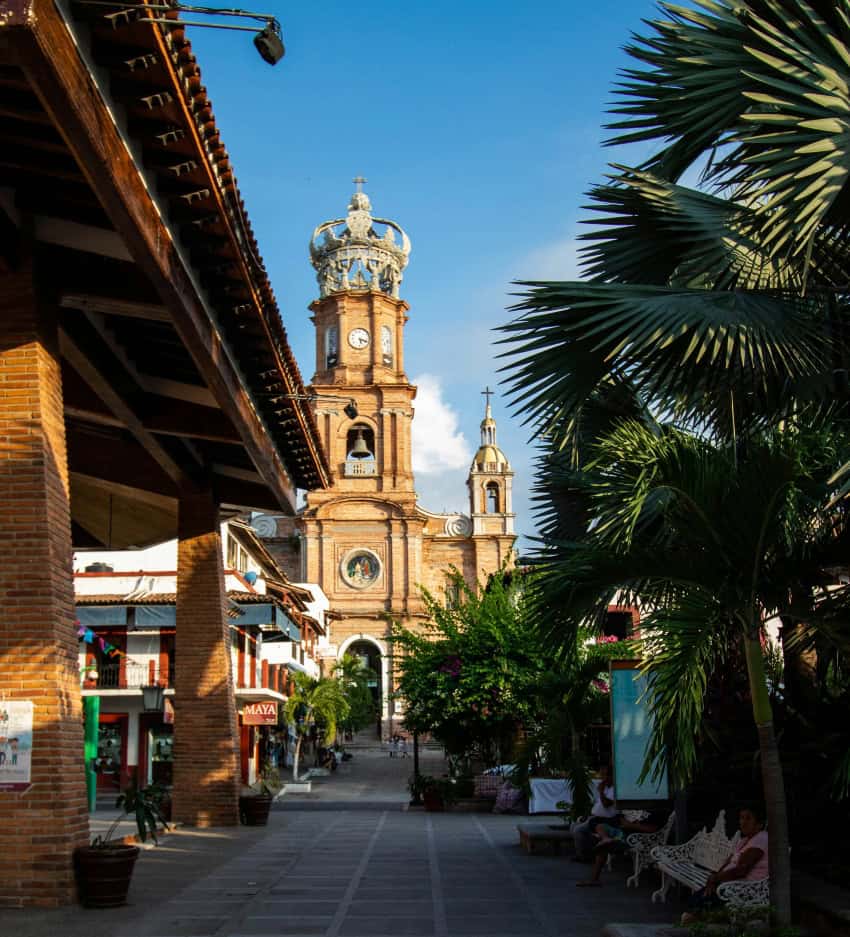
York’s story is also about Mexico itself. For years, Puerto Vallarta has attracted artists, entrepreneurs, retirees and remote workers seeking a different way of living. Increasingly, it’s also becoming a place where globally connected careers can flourish. York embodies that possibility.
Her office may be in a beach community, but her focus extends across continents. There’s something distinctly hopeful about that image. At a time when headlines often emphasize division and crisis, York’s work suggests another narrative.
That individuals still have the capacity to influence systems larger than themselves. That geography no longer determines the limits of participation. And that meaningful work can be rooted in a place chosen for quality of life rather than proximity to power.
York is fully aware of the privilege and opportunity that arrangement provides.
“I know I’m lucky to be here and to be able to work on issues that I’m passionate about,” she says. “How great is it that a home office allows for this to happen?”
Even paradise has problems
At the same time, she notes that even paradise isn’t immune to larger global issues.
“There are problems even in a beach town paradise. Just like anywhere, I can see the big-picture problems are also local. The important point is that these conversations about pressing problems need to happen everywhere.”
York’s awareness of those changes is reinforced by conversations close to home. Her partner, Jack Bramy, a San Francisco Bay Area native, is the creator and moderator of the popular Facebook group Vallarta and Beyond – The Real Deal. Through the community, they regularly see residents discussing the effects of growth, development, infrastructure challenges and environmental changes across the region.
Those firsthand accounts offer another window into how global issues such as sustainability and resource management play out at the local level.
As the afternoon sun settles over Banderas Bay and another day in Puerto Vallarta unfolds, York returns to the ongoing work of building connections between people, communities, and ideas. The challenges she addresses are global. The solutions will require cooperation across borders, cultures and generations.
And some of that work, quietly and persistently, is happening from a desk on Mexico’s Pacific coast.
For young people hoping to create positive change, York offers a message grounded in realism and optimism.
“It sounds a bit cliché to say never give up, but it’s true,” she says. “No one has a crystal ball and can predict the future. The world situation seems bleak, but positive change can happen.”
She pauses before adding the principle that continues to guide her own work.
“We owe it not just to young people and future generations, but to all of us, to keep trying to make things better. It could be a long road, but we need to try.”
Charlotte Smith is a writer and journalist based in Mexico. Her work focuses on travel, politics, and community. You can follow along with her travel stories at www.salsaandserendipity.com.
