
);
}
function setButtonState(button, state) {
const hint = button.parentElement && button.parentElement.querySelector(‘[data-author-follow-hint]’);
const followLabel = button.dataset.followLabel || ‘Follow’;
const followingLabel = button.dataset.followingLabel || ‘Following’;
const signinLabel = button.dataset.signinLabel || ‘Sign in to follow’;
const loadingLabel = button.dataset.loadingLabel || ‘Saving…’;
const pendingAuthLabel = button.dataset.pendingAuthLabel || ‘Loading…’;
button.classList.remove(‘is-following’, ‘is-loading’, ‘is-auth-required’);
if (state === ‘loading’) {
button.classList.add(‘is-loading’);
button.disabled = true;
button.textContent = loadingLabel;
if (hint) {
hint.textContent=”Updating your followed authors…”;
}
return;
}
if (state === ‘pending-auth’) {
button.classList.add(‘is-loading’);
button.disabled = true;
button.textContent = pendingAuthLabel;
if (hint) {
hint.textContent=”Checking your sign-in status…”;
}
return;
}
button.disabled = false;
if (state === ‘following’) {
button.classList.add(‘is-following’);
button.textContent = followingLabel;
if (hint) {
hint.textContent = followingLabel === ‘Unfollow’
? ‘Remove this writer from your followed list.’
: ‘Click again to unfollow.’;
}
return;
}
if (state === ‘signin’) {
button.classList.add(‘is-auth-required’);
button.textContent = signinLabel;
if (hint) {
hint.textContent=”Sign in to follow writers and manage your list.”;
}
return;
}
button.textContent = followLabel;
if (hint) {
hint.textContent=”Click to follow.”;
}
}
function renderWidgets(scope) {
const root = scope || document;
root.querySelectorAll(‘[data-author-follow-widget]’).forEach(function (widget) {
const button = widget.querySelector(‘[data-author-follow-button]’);
if (!button) {
return;
}
const staffId = widget.dataset.staffId;
const hasToken = !!getBearerToken();
if (!isPianoIdentityReady() && !hasToken) {
setButtonState(button, ‘pending-auth’);
return;
}
if (!hasToken) {
setButtonState(button, ‘signin’);
return;
}
if (followedAuthorsMap.has(String(staffId))) {
setButtonState(button, ‘following’);
} else {
setButtonState(button, ‘follow’);
}
});
}
function renderManageList(container) {
if (!container) {
return;
}
const hasToken = !!getBearerToken();
if (!isPianoIdentityReady() && !hasToken) {
container.innerHTML = (
‘
‘
);
return;
}
if (!hasToken) {
container.innerHTML = (
‘
‘
);
return;
}
const followedAuthors = Array.from(followedAuthorsMap.values());
if (!followedAuthors.length) {
container.innerHTML = (
‘
‘
);
return;
}
container.innerHTML = followedAuthors
.map(function (author) {
return (
‘
‘
);
})
.join(”);
bindEvents(container);
renderWidgets(container);
}
async function refresh(scope, options) {
const forceFetch = !!(options && options.force);
if (!hasFollowWidgets(scope)) {
return;
}
// Wipe the cached map BEFORE the first render so a user-switch can’t
// momentarily display the previous user’s “Following” state.
discardCacheIfTokenChanged();
renderWidgets(scope);
const manageContainer = document.querySelector(‘[data-author-follow-manage-list]’);
const managePreferencesContainer = document.querySelector(‘[data-author-follow-manage-preferences]’);
const hasToken = !!getBearerToken();
if (!isPianoIdentityReady() && !hasToken) {
renderWidgets(scope);
renderManagePreferences(managePreferencesContainer);
renderManageList(manageContainer);
return;
}
if (!hasToken) {
renderManagePreferences(managePreferencesContainer);
renderManageList(manageContainer);
return;
}
try {
await loadFollowedAuthors(forceFetch);
renderWidgets(scope);
renderManagePreferences(managePreferencesContainer);
renderManageList(manageContainer);
} catch (error) {
console.warn(‘Unable to load followed authors.’, error);
if (error && error.code === ‘AUTH_REQUIRED’) {
renderWidgets(scope);
renderManagePreferences(managePreferencesContainer);
renderManageList(manageContainer);
}
}
}
function startLoginPoll() {
if (loginPoll) {
clearInterval(loginPoll);
}
let attempts = 0;
loginPoll = setInterval(function () {
attempts += 1;
if (getBearerToken() || isLoggedIn() || attempts > 25) {
clearInterval(loginPoll);
loginPoll = null;
refresh(document, { force: true });
}
}, 1000);
}
function stopPianoReadyPoll() {
if (pianoReadyPoll) {
clearInterval(pianoReadyPoll);
pianoReadyPoll = null;
}
}
function startPianoReadyPoll() {
stopPianoReadyPoll();
let attempts = 0;
pianoReadyPoll = setInterval(function () {
attempts += 1;
if (isPianoIdentityReady() || getBearerToken() || attempts > 40) {
stopPianoReadyPoll();
// Non-forced: if bindPianoInitRefresh already fetched, the TTL
// dedupes this call. If it lost the race, this call wins.
refresh(document);
}
}, 500);
}
function bindPianoInitRefresh() {
if (pianoInitBound) {
return;
}
pianoInitBound = whenPianoReady(function () {
// The Piano init callback is the canonical “identity is ready” signal;
// cancel the fallback poll so it can’t issue a redundant second fetch.
stopPianoReadyPoll();
refresh(document, { force: true });
});
}
async function handleWidgetClick(widget, button) {
const staffId = widget.dataset.staffId;
if (!getBearerToken()) {
setButtonState(button, isPianoIdentityReady() ? ‘signin’ : ‘pending-auth’);
if (typeof window.showPianoLogin === ‘function’) {
window.showPianoLogin();
startLoginPoll();
}
return;
}
// If the identity changed since the cache was last filled, drop the stale
// map before the follow/unfollow decision below — otherwise the click
// could issue the wrong action against the previous user’s state.
discardCacheIfTokenChanged();
setButtonState(button, ‘loading’);
try {
if (followedAuthorsMap.has(String(staffId))) {
await apiRequest(apiBaseUrl + “https://www.washingtontimes.com/” + staffId, { method: ‘DELETE’ });
followedAuthorsMap.delete(String(staffId));
removePushlyFollowedAuthorId(staffId);
} else {
const author = await apiRequest(apiBaseUrl + “https://www.washingtontimes.com/” + staffId, {
method: ‘PUT’,
body: JSON.stringify({
push_enabled: followDeliveryPreferences.push_enabled,
email_fallback_enabled: followDeliveryPreferences.email_fallback_enabled,
}),
});
followedAuthorsMap.set(String(staffId), author);
appendPushlyFollowedAuthorId(staffId);
}
saveStoredFollowDeliveryPreferences(
deriveFollowDeliveryPreferences(Array.from(followedAuthorsMap.values())),
);
syncPushlyFollowedAuthorsProfile();
renderManagePreferences(document.querySelector(‘[data-author-follow-manage-preferences]’));
renderWidgets(document);
renderManageList(document.querySelector(‘[data-author-follow-manage-list]’));
} catch (error) {
console.warn(‘Unable to update followed author.’, error);
if (error && error.code === ‘AUTH_REQUIRED’) {
setButtonState(button, ‘signin’);
}
renderWidgets(document);
}
}
function bindEvents(scope) {
const root = scope || document;
root.querySelectorAll(‘[data-author-follow-widget]’).forEach(function (widget) {
if (widget.dataset.followWidgetBound === ‘true’) {
return;
}
widget.dataset.followWidgetBound = ‘true’;
const button = widget.querySelector(‘[data-author-follow-button]’);
if (!button) {
return;
}
button.addEventListener(‘click’, function () {
handleWidgetClick(widget, button);
});
});
root.querySelectorAll(‘[data-author-follow-manage-preferences]’).forEach(function (container) {
if (container.dataset.followGlobalPreferencesBound === ‘true’) {
return;
}
container.dataset.followGlobalPreferencesBound = ‘true’;
async function handlePreferenceChange() {
const pushInput = container.querySelector(‘[data-author-follow-global-pref=”push”]’);
const emailInput = container.querySelector(‘[data-author-follow-global-pref=”email”]’);
if (!pushInput || !emailInput) {
return;
}
const previousPreferences = {
push_enabled: followDeliveryPreferences.push_enabled,
email_fallback_enabled: followDeliveryPreferences.email_fallback_enabled,
};
const payload = {
push_enabled: !!pushInput.checked,
email_fallback_enabled: !!emailInput.checked,
};
// Drop a stale map if the identity changed before iterating — we
// don’t want to issue follow updates against the previous user’s
// authors with the current user’s bearer token.
discardCacheIfTokenChanged();
const followedAuthors = Array.from(followedAuthorsMap.values());
saveStoredFollowDeliveryPreferences(payload);
managePreferencesPending = true;
pushInput.disabled = true;
emailInput.disabled = true;
try {
await Promise.all(
followedAuthors.map(function (author) {
return updateFollowPreferences(author.id, payload);
}),
);
renderManagePreferences(container);
renderWidgets(document);
renderManageList(document.querySelector(‘[data-author-follow-manage-list]’));
} catch (error) {
console.warn(‘Unable to update author follow preferences.’, error);
saveStoredFollowDeliveryPreferences(previousPreferences);
pushInput.checked = previousPreferences.push_enabled;
emailInput.checked = previousPreferences.email_fallback_enabled;
} finally {
managePreferencesPending = false;
pushInput.disabled = false;
emailInput.disabled = false;
}
}
container.addEventListener(‘change’, function (event) {
const target = event.target;
if (!target || !target.matches(‘[data-author-follow-global-pref]’)) {
return;
}
handlePreferenceChange();
});
});
}
function init(scope) {
const root = scope || document;
if (!hasFollowWidgets(root)) {
return;
}
bindEvents(root);
renderWidgets(root);
bindPianoInitRefresh();
startPianoReadyPoll();
refresh(root);
}
window.WTAuthorFollow = {
init: init,
refresh: refresh,
};
document.addEventListener(‘DOMContentLoaded’, function () {
init(document);
});
window.addEventListener(‘focus’, function () {
if (hasFollowWidgets(document)) {
refresh(document);
}
});
document.addEventListener(‘visibilitychange’, function () {
if (!document.hidden && hasFollowWidgets(document)) {
refresh(document);
}
});
} else {
window.WTAuthorFollow.init(document);
}
})();
FILE – The William McChesney Martin …
more >
–
Associated Press
–
Wednesday, June 24, 2026
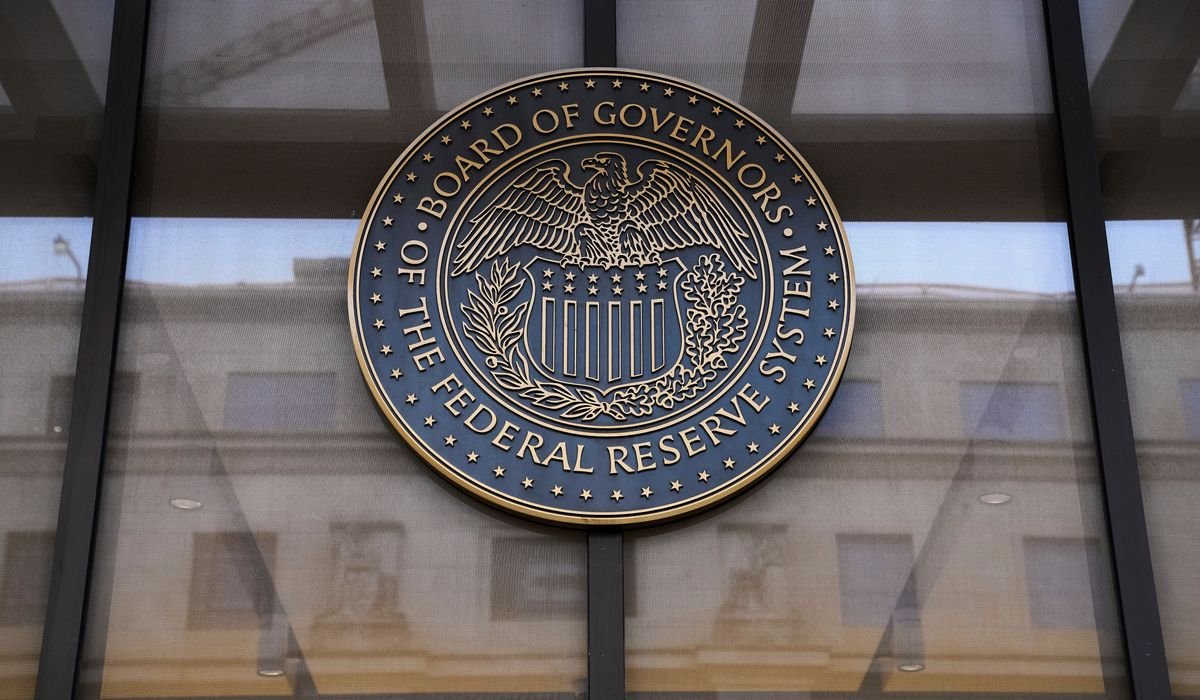
NEW YORK — All 32 of the nation’s biggest banks passed the Federal Reserve’s annual “stress test” of the financial system, the central bank said Wednesday, a sign that the banking system would remain healthy even if a major economic contraction occurred.
The annual stress test measures whether a bank’s capital, a financial cushion it uses to absorb losses, would remain at healthy levels even after hundreds of billions of dollars in projected losses. The tests are required under the Dodd-Frank Act, the law passed after the 2008 financial crisis that nearly brought down the global financial system.
The 2026 scenario that the Fed used is similar to the one they used last year. In the Fed’s scenario, unemployment would rise from 5.5% to 10% and the U.S. economy would contract 4.6%. Housing prices would fall 30% from their current levels and the stock market would plunge 58%.
The scenario would result in the nation’s 32 biggest banks facing $708 billion in loan losses, but the overall capital ratio of these banks would fall only 1.6 percentage points, from 12.8% to 11.2%. By law and regulation, these large banks’ common equity Tier 1 capital ratio must remain above 4.5%, plus additional buffers that vary by bank.
The stress test applied only to the nation’s most systematically important banks, those whose failures would bring significant turmoil to the financial system.
A bank that performed poorly on the stress test could face higher capital requirements, which could limit its ability to pay dividends or buy back stock. Banks typically announce their plans for dividends and share repurchases after the Fed releases the stress-test results. Shortly after the Fed’s announcement, JPMorgan Chase said it would increase its quarterly dividend to $1.65 a share from $1.50 a share, and intends to buy back an additional $50 billion in stock.
Latest Video
