
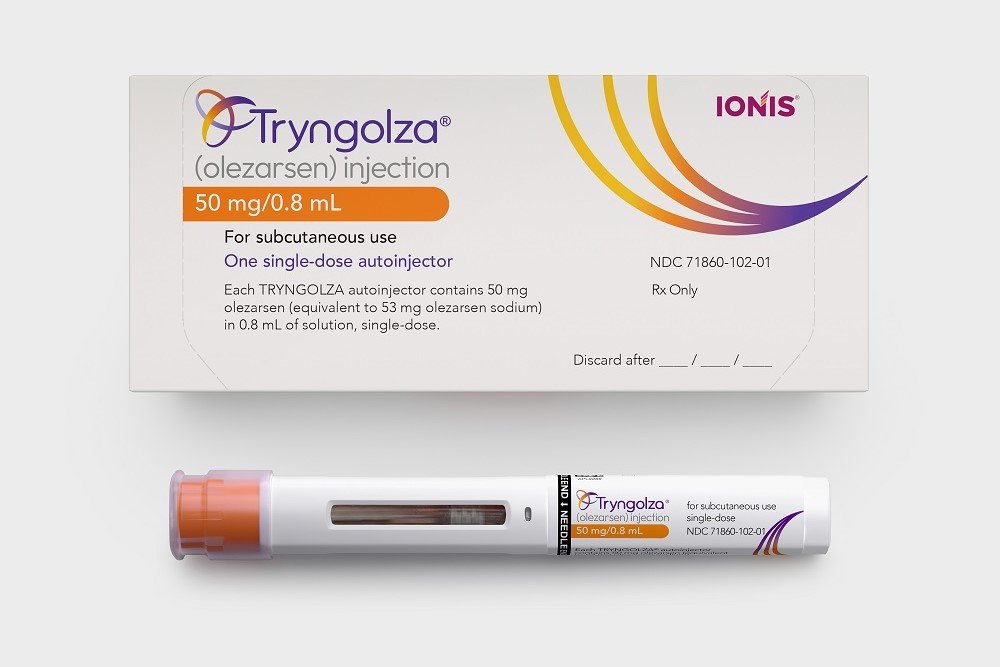
A metabolic disorder that leads to high levels of fat in the blood and life-threatening pancreatic complications now has its first FDA-approved medicine, an RNA-targeting therapy developed by Ionis Pharmaceuticals.
The Wednesday regulatory decision for the drug, olezarsen (brand name Tryngolza), covers its use alongside diet and exercise to treat adults with severe hypertriglyceridemia, or sHTG. For this indication, the FDA approved two doses of the drug, which is administered monthly via an auto-injection device. Carlsbad, California-based Ionis said it expects this new product will become available in July.
In sHTG, triglycerides, a type of fat, rise to dangerously high levels in the blood. This chronic condition stems from a combination of factors including obesity, lifestyle, and genetics. Patients with sHTG have a higher risk of developing a range of cardiovascular problems. The most severe complication of sHTG is acute pancreatitis, which is sudden inflammation of the pancreas. This complications manifests as severe abdominal pain that requires hospitalization. According to Ionis, an estimated 3 million people in the U.S. live with sHTG.
Tryngolza was developed to lower the body’s production of apoc-III, a liver protein that regulates triglyceride metabolism in the blood. The drug is an antisense oligonucleotide designed to bind to apoc-III messenger RNA, degrading it to lead to lower levels of apoc-III. Lowering levels of this key protein is intended to lead to greater clearance of triglycerides from the blood.
The FDA submission for Tryngolza was based on two Phase 3 clinical trials. Results showed the study drug lowered fasting triglyceride levels by up to 72% compared to a placebo measured at six months; those reductions were sustained at 12 months. Results also showed Tryngolza significantly reduced acute pancreatitis events by up to 91%. The most common adverse reaction in the studies were injection site reactions and higher levels of liver enzymes. Tryngolza’s label advises clinicians to consider liver enzyme testing. Detailed data from the trials were published earlier this year in the New England Journal of Medicine.
Tryngolza was first approved in 2024 as a treatment for familial chylomicronemia syndrome (FCS), a rare inherited form of sHTG. This subset of patients is much smaller than the overall sHTG patient population, totaling about 3,000 in the U.S.— most of them undiagnosed, according to Ionis.
Ionis reported $107.5 million in Tryngolza sales for 2025 in the FCS indication. While the company projects between $100 million and $110 million in Tryngolza sales this year, the larger sHTG market puts the product on a stronger revenue growth trajectory. In an investor presentation, Ionis projected peak sales of this drug could top $3 billion.
Tryngolza’s growth potential is a key part of Ionis’s business strategy. For decades, Ionis partnered with larger companies that continued later-stage development and commercialization of its RNA-targeting medicines, paying the biotech royalties from sales. Ionis’s largest source of revenue continues to be Biogen’s royalty payments for Spinraza, a therapy for spinal muscular atrophy.
In recent years, Ionis has shifted toward keeping and commercializing its own assets. Tryngolza for FCS was the first drug Ionis developed and commercialized on its own. Last year, the company added another one with the FDA approval of Dawnzera, an antisense oligonucleotide developed for preventing swelling attacks from the rare disease hereditary angioedema.
In a research note, William Blair analysts Myles Minter and John Boyle said Tryngolza’s sHTG approval was expected given the strong clinical trial results. They added that the muted stock price reaction might be due to the focus of some investors on upcoming data from Arrowhead Pharmaceuticals’ small-interfering RNA therapy Redemplo. Last year, Redemplo became the second approved therapy for FCS. Key Phase 3 data readouts for the drug in sHTG are expected in the third quarter of this year.
When Tryngolza first reached the market in FCS, Ionis’s list price for the drug was $595,000 a year. The company is now slashing that annual price to $40,000. Analysts don’t expect the price cut will dent Ionis’s finances.
“Tryngolza’s expansion into the sHTG market should provide substantial growth due to the metrics from its launch in familial chylomicronemia syndrome (FCS) as well as pancreatitis risk reduction data in hand,” the William Blair analysts said in the note. “We continue to believe that sheer prescribing volume will far outweigh the list price reset, as reflected in management’s increased Tryngolza peak sales guidance from >$2 billion to >$3 billion.”
Photo by Ionis Pharmaceuticals
