
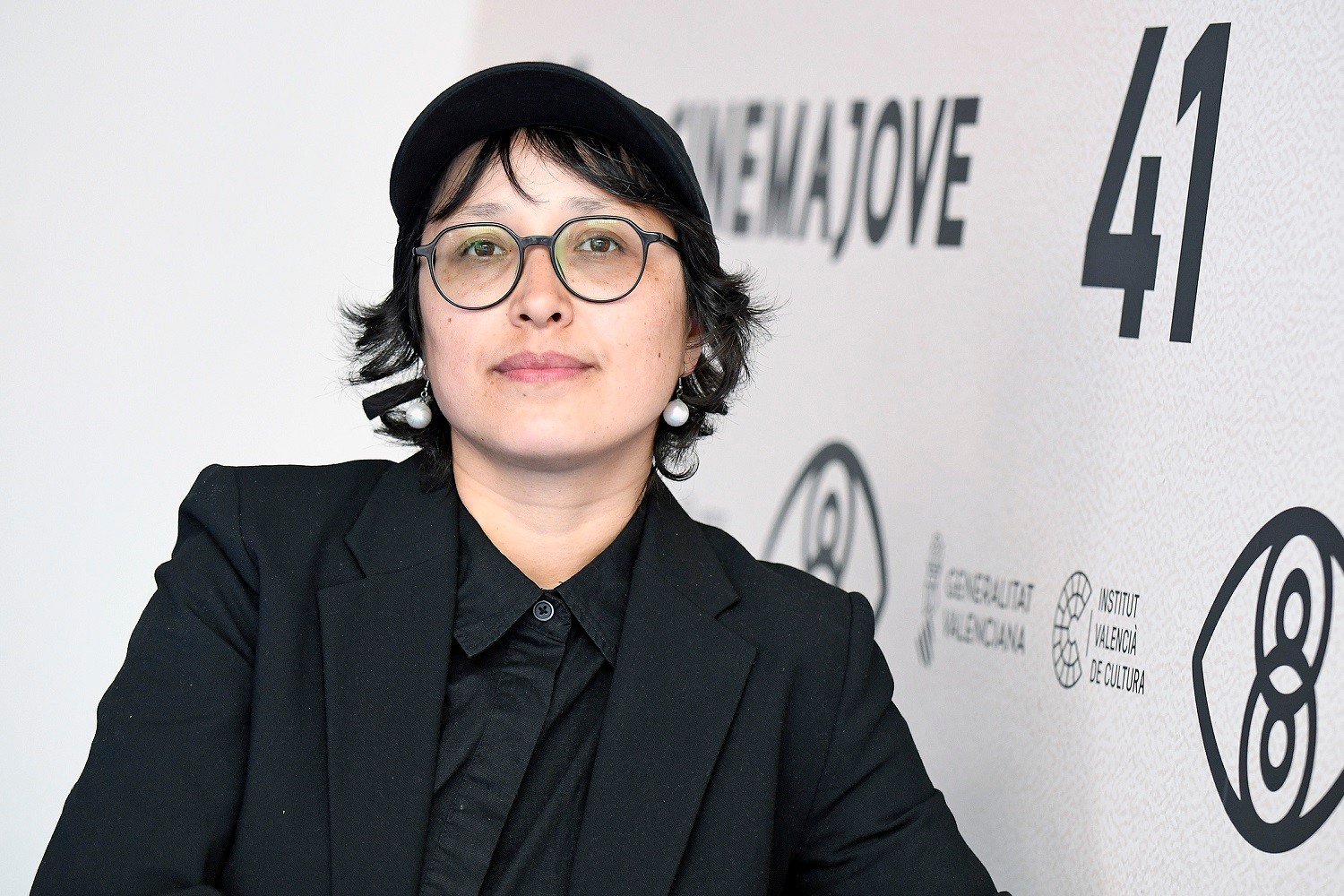
– The German-based Afghani filmmaker talks about the symbolism of flowers, romantic comedies, concealed dildos, feminism and traumatised men
(© Cinema Jove)
After having opened this year’s Berlinale, Shahrbanoo Sadat paid a visit to the 41st edition of Cinema Jove with her third feature, No Good Men, which picked up the Audience Award and a Special Mention for Best Director in the official section. We chatted to her at the Valencian event.
Cineuropa: Your movies have taken part in important events such as the Berlinale and Cannes. What relationship do you have with festivals?
Shahrbanoo Sadat: Every film requires years of work. No Good Men took me six years, and when I finished it, I was so exhausted that I didn’t care about festivals or premieres; all I wanted to do was rest. However, when you finish a feature, there are producers, financiers and partners who want to see it travel. The important thing is the kind of run the film will have: where it’s premiered, how it’s received by the industry, whether it finds distributors or sales agents. But for me, the best thing is the year following the premiere because it’s such a joyful time: it involves travelling, meeting other filmmakers, journalists and programmers, discovering other titles and thinking about what you’re going to do next.
Your movie blends romantic comedy and sociopolitical critique. Was it difficult to combine these elements?
Life is already a comedy. If you look carefully, you’ll see that our contradictions, our social and political problems, and even our way of navigating the world have a comical aspect to them. I don’t think you need a special point of view; it’s enough to simply watch. Afghanistan has a small film industry and very few movies shot from the point of view of local directors. The combination already existed in real life; all I did was to show it from within.
No Good Men begins with a credit sequence embellished with vividly coloured flowers. What do they symbolise?
My father was obsessed with cacti. We used to live in the mountains in Afghanistan, and he would convert any object you like into a flowerpot. One day, I saw a cactus blossom, and it had a huge impact on me. While I was working on No Good Men, I was thinking about the patriarchy and I wondered whether truly good men actually existed. Then I connected those images: the patriarchy is like a cactus field, and a good man is like a flower that can bloom in the middle of them all. It’s not a common occurrence, but when it does appear, it’s a really beautiful thing.
In your previous films, the main characters were children; now, the main role is played by a woman.
In my first few movies, I was very interested in other people’s stories. What’s more, in Afghanistan, identity is usually linked to family and community, not to the individual. With No Good Men, I began to wonder who I am as a woman, what I want and what it means to assert your individuality in a patriarchal society. I also pondered motherhood, the women in my family who never had a choice and the system that engenders these inequalities.
One version of the film poster shows a vibrator. One imagines that must have had quite an impact on the Afghan audience.
Yes, it was difficult to find actresses because many of them were scared of the kissing and vibrator scenes. These things – or even more intense things – also occur in conservative societies; it’s just that they’re concealed. In Afghanistan, there’s a whole black market for sex toys, as people have the same human needs everywhere in the world. The difference is that in some places, they pretend they don’t exist.
There’s a scene where the main character interviews women, which brought to mind Love Meetings by Pier Paolo Pasolini.
I didn’t know that film, but it’s something that really interests me. My idea was to interview thousands of women in Kabul to ask them about love and about whether they think that good men exist. I wanted to show that it wasn’t only my personal experience, but rather something collective.
You have stated that Afghan men are traumatised. Why?
Many of them are trapped in this rigid idea of what it means to be a man: to provide for the family, to be the head of the household and to be the main authority figure. For generations, nobody questioned that model. Now, there are women who are questioning it, and that causes discomfort. I shot this film from a place of love, not hate. I like men. A good man is wonderful, even though I’ve learned that I don’t need one in order to be happy. I think there’s a male identity crisis. If a man is not already the absolute provider or the top authority figure, people ask who he is. That generates insecurity and causes some people to see feminism as a threat. I have also observed that women have usually created support networks among themselves. Men are often alone; there’s an epidemic of male solitude. It’s hard for them to express their vulnerability, even among friends. Even so, I believe in change. If different models of being male exist, then the new generations will be able to follow other pathways.
(Translated from Spanish)
