
– Italy’s Entertainment and Environment Observatory data shows a rise in both cases, as is now the reality throughout Europe owing to a series of initiatives
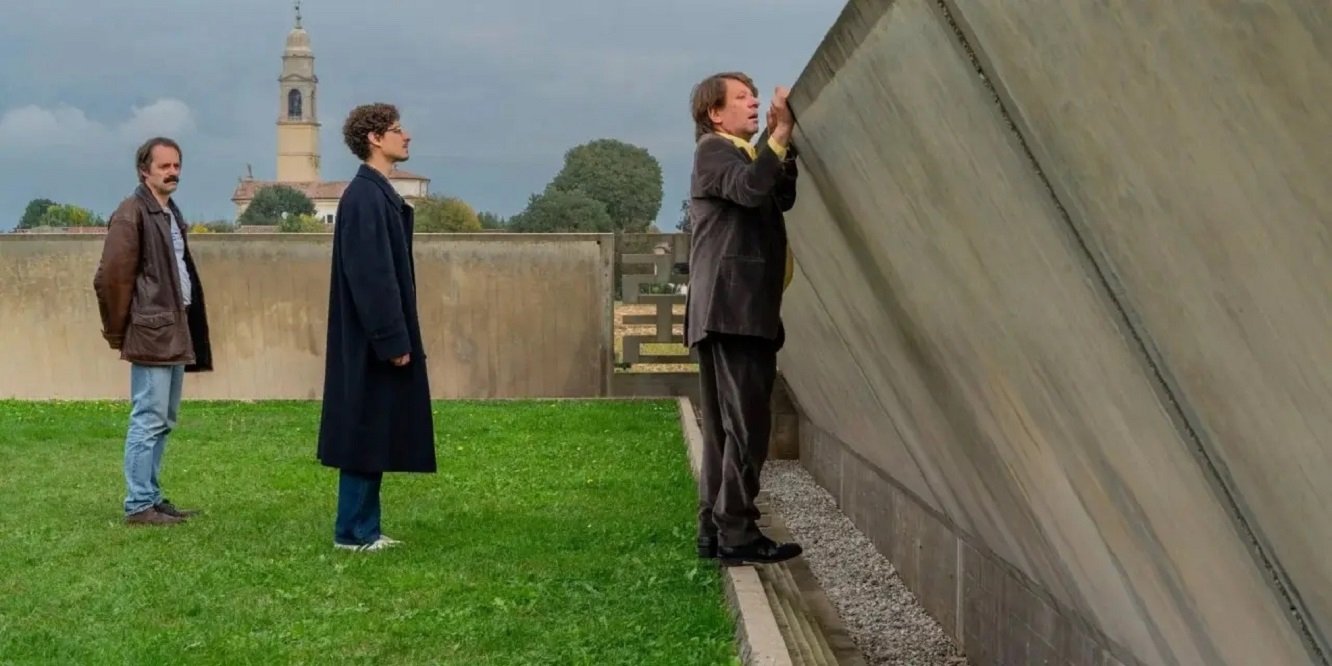
The winner of 8 David di Donatello awards, The Last One for the Road by Francesco Sossai is just one of many Italian films to have been granted Green Film certification in 2025
The Italian entertainment industry is tightening its timings on environmental sustainability. The number of film productions conforming to green criteria is rising, as are energy efficiency improvements in cinemas. This is what’s emerged from the review carried out by the country’s Entertainment and Environment Observatory over its first two years of operations, having been founded to support the audiovisual and theatrical sectors’ transition to ecological practices.
According to data gathered by the Observatory, over the past two years the sector has seen a significant increase in the number of works produced with environmentally friendly certification. Simultaneously, as a result of resources made available by the Italian National Recovery and Resilience Plan (PNRR), energy efficiency improvements have been made in 270 national cinemas.
“In the two or so years that it’s been active, the Observatory has demonstrated an undeniable convergence of themes and practices in our entertainment industry in the direction of environmental sustainability”, explains the Observatory’s scientific director, Marco Gisotti. “Not only have mainstream directors such as Riccardo Milani, Paolo Virzì, Alice Rohrwacher and Maura Delpero shown a diffuse interest in going back to basics, protecting our historical-environmental patrimony and feeling concern over the climate crisis in their works, the film industry itself has increased the number of works made in line with sustainable criteria, and no fewer than 270 cinemas and 363 theatres have carried out energy efficiency improvements, with the help of PNRR funds. Our job is to assess good practices and ensure that all sector businesses and professionals can access these practices, reducing waste as well as costs, improving artistic performances and providing the audience with a more comfortable, safe and sustainable experience”.
As far back as 2017, Italy’s Trentino Film Fund and Commission launched the T-Green Film initiative to incentivise environmental sustainability in cinemas, which gave rise to the first European regional fund to reward and provide certification to films whose production teams are respectful towards the environment in their work. Today, Green Film has become a tool for certifying sustainability of European audiovisual productions, thanks to an independent verification organism which checks productions are respecting specified sustainability criteria.
In the animation sector, Green Film, CineRegio (a network of 53 European film funds) and Ecoprod (France’s leading association when it comes to sustainable production) gave life to ANiMPACT, with the aim of incorporating the principles of environmental sustainability throughout the entire entertainment sector, promoting training activities, research, monitoring and innovation sharing between sector operators. On 25 June, on the occasion of Annecy’s MIFA market, the official launch of ANiMPACT’s pilot phase was announced at the end of a two-month-long public consultation (read our article).
Ecoprod has started to collaborate with Eurimages – which introduced an additional selection criterion in 2023, based on the sustainability of support for co-productions – on a toolkit for sustainable international co-productions and an e-learning platform called Step Up, which was presented at last year’s EFM. “It’s a tool to drive and facilitate change, creating an international hub for knowledge and experience sharing”, explained Els Hendrix, chair of Eurimages’ Sustainability Study Group (read our article).
Many European countries are moving in the same direction. From this year, for example, the new Nordic Ecological Standard (NES) will be applied in Denmark, Finland, Norway and Sweden, with the aim of reducing the sector’s environmental impact and guaranteeing a more responsible and competitive audiovisual landscape (read our article).
Just this February, in the most recent edition of the Berlinale’s EFM, the European Commission presented its MEDIA Carbon Calculator, a free and unique tool aimed at helping audiovisual producers from all over the EU measure the carbon footprint of their film productions (read our article). In order to understand current legislative trends, best practices and the tools available to reduce the sector’s carbon footprint, professionals can now consult a report entitled “The transition to green in the audiovisual sector”, curated by Eric Munch, in which the European Audiovisual Observatory (EAO) provides an overview of the audiovisual sector’s direct and indirect environmental impact, paying particular attention to carbon emissions generated by external shoots. The study addresses the implications of recent EU directives, including corporates’ responsibility to carry out sustainability reporting (CSRD) and rules around energy efficiency.
Munch also reflects on the growing energy consumption of data centres which serve streaming platforms and content distribution networks, whilst also addressing emerging ecological concerns relating to artificial intelligence (read our article).
In terms of distribution, in April Europa Distribution hosted the fifth edition of its online Green Distribution Lab, a workshop dedicated to sustainable practices in film distribution. Presented items included the study, “Environmental evaluation of film distribution companies in France”, which was carried out by the CNC in 2025 as part of its “Action!” plan and which demonstrates that a direct correlation between the number of films distributed and emissions generated does not exist: what matters most is the business type and, first and foremost, the film distribution methods employed. Measures which distributors can already adopt in order to reduce their environmental impact include collaborating with cinema operators to reduce the volume of print materials, designing promotional materials in line with eco-design principles, reducing the number of digital campaigns, optimising data transfer, reducing the number of events, and transitioning to low-carbon-emissions transport methods (read our article).
(Translated from Italian)
