
– The event returns with master classes, international co-production discussions, pitching initiatives and a renewed focus on talent development across the audiovisual sector
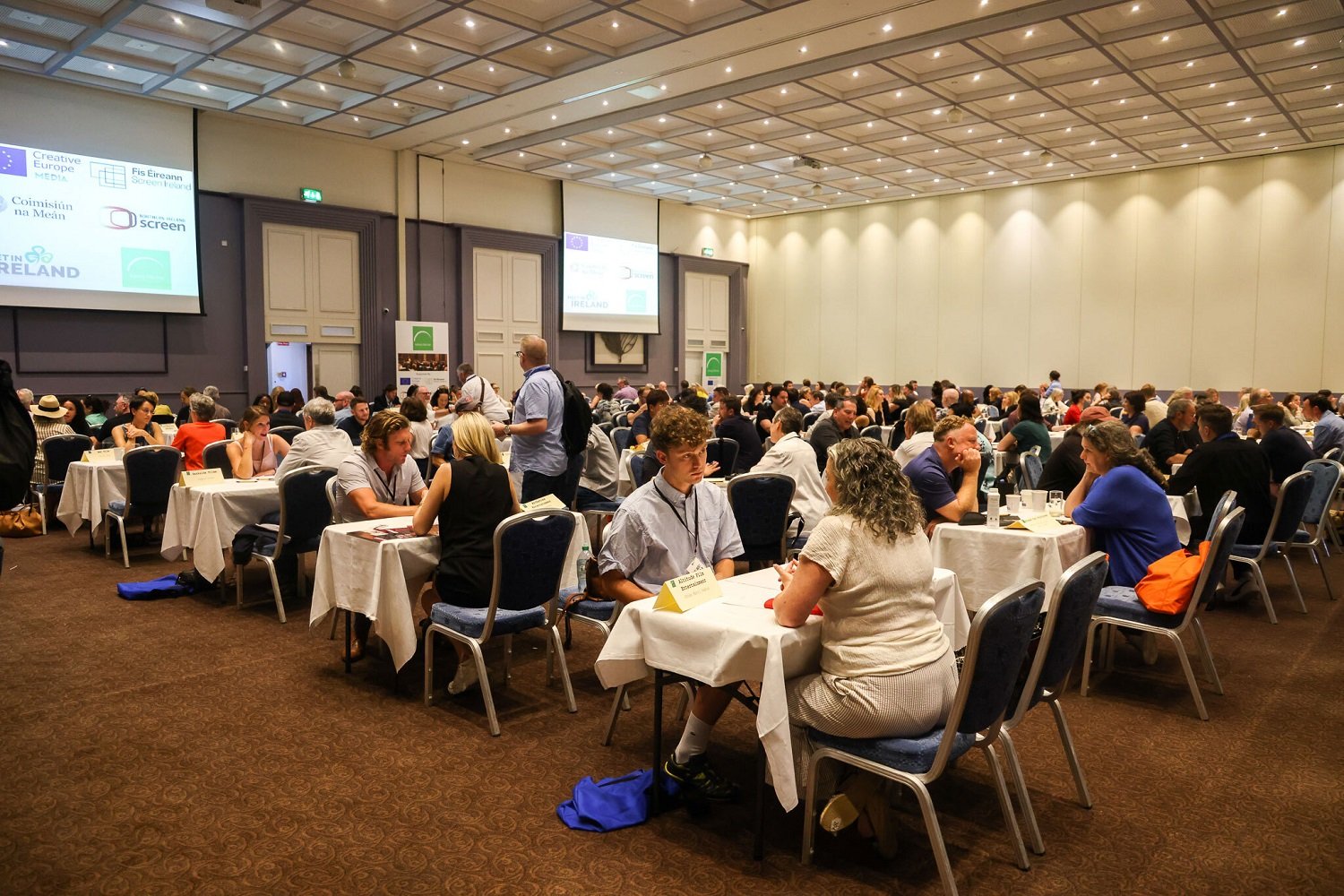
A previous edition of the event (© Emilija Jefremova/Galway Film Fleadh)
The Galway Film Fair is set to welcome industry professionals from around the world as it unfolds alongside the 38th Galway Film Fleadh from 9-12 July. Bringing together filmmakers, producers, screenwriters, actors, craftspeople and decision-makers, Ireland’s leading industry event combines conferences, master classes, panels, workshops and networking opportunities aimed at strengthening both the Irish and international audiovisual sectors.
The programme opens on 9 July with the Fleadh Forum, the festival’s annual state-of-the-industry conference, supported by Screen Ireland. This year’s keynote conversation welcomes Sundance Institute senior programmer and director of strategy John Nein, who will reflect on the current state of independent cinema, the evolving international festival landscape and the future of global filmmaking after more than 25 years at one of the world’s most influential institutions for independent film.
Alongside the conference, the Galway Film Fleadh’s Immersive strand returns with eight virtual reality experiences presented across three venues in the city. Featuring projects ranging from an adaptation of Samuel Beckett‘s Not I to immersive works exploring environmental themes, the programme continues the festival’s commitment to emerging forms of audiovisual storytelling.
Professional development remains at the heart of this year’s Film Fair through an extensive series of master classes dedicated to different disciplines across the filmmaking process. Irish filmmaker Frank Berry will lead the Directors’ Masterclass, reflecting on a career defined by socially engaged storytelling as his latest feature, The Lost Children of Tuam, premieres at the festival. The programme also includes an Actors Masterclass with British performer Rory Kinnear, moderated by Irish casting director Maureen Hughes, while production designer Charles Wood will offer an in-depth exploration of world-building for film after a career spanning productions such as Guardians of the Galaxy, Avengers: Endgame and Project Hail Mary.
Technical crafts are equally well represented. A practical lighting master class led by gaffers Barry Conroy and James McGuire will demonstrate contemporary lighting technologies and workflows, while a dedicated workshop with casting directors Thyrza Ging and Cassandra Han offers actors practical guidance on self-taping and audition techniques. Elsewhere, a session on Smart VFX explores how visual effects can be strategically integrated into productions to maximise creative ambition while maintaining financial efficiency.
International collaboration forms another key pillar of the programme. A panel entitled “International Co-Production in Practice” brings together representatives from the Estonian Film Institute, Picture NL and Film Fund Luxembourg alongside the producers of How to Divorce During the War to discuss financing strategies, incentive schemes and the realities of multinational partnerships. Complementing these discussions, Creative Europe Desk Ireland hosts a session examining the transition from Creative Europe to the proposed Agora EU programme and the opportunities it could offer the cultural and creative sectors from 2028 onwards.
The programme also addresses wider questions facing the industry. Panels explore the future of documentary filmmaking in an increasingly risk-averse market, the impact of ten years of the 50/50 gender equality campaign, and the creative and commercial realities of developing successful television comedy for international audiences. Another discussion examines the growing importance of casting as a financing tool, bringing together producers, casting directors, sales agents and talent representatives to analyse how strategic cast attachments can help unlock funding and international co-productions.
Irish talent development remains central to the Film Fair’s mission. The annual Pitching Competition once again offers emerging and established screenwriters the opportunity to present projects before a panel of industry professionals, with the winner receiving a €3,000 development prize sponsored by Wild Atlantic Pictures. Previous participants have gone on to secure development funding, producer attachments and completed feature productions. Meanwhile, the inaugural Rough-Cut Showcase presents an early look at Gavin FitzGerald‘s documentary Anam Na Mara, providing festival programmers, sales agents and distributors with an opportunity to discover the project during post-production.
The programme also extends beyond film to include sessions on video-game pitching and composer-focused discussions, reflecting Galway Film Fair’s increasingly multidisciplinary outlook. Together, the diverse range of events reinforces the Fair’s role as one of Ireland’s principal meeting points for audiovisual professionals, combining practical industry training with conversations on creativity, financing and the evolving international marketplace.
